


Estimated reading time: 37 minutes
The water you drink, the air you breathe, and the food you eat all link you with your environment. Chemicals travel throughout the world via different pathways; some of them can be harmful to living organisms while others are harmless at normal concentrations. Environmental toxicology examines what happens when these substances come into contact with living organisms, from pond algae to people who live in cities. It examines how pollutants move through the air, water, soil, and food, and how exposure levels and dose affect their effects. This field combines chemistry, biology, ecology, and public health. These connections matter because the evidence helps set rules that keep our water safe, our food clean, and wildlife protected. This guide sets out the main points in simple, student-friendly language.

Key Takeaways
- Environmental toxicology examines the effects that pollutants and other stressors have on organisms, populations, communities, and ecosystems.
- ToxicityIn chemistry and biology, toxicity measures how poisonous a chemical is. It determines the potential for injury or death through ingestion, inhalation, or skin absorption. More is not automatic. It is dependent on the substance, dose, route of exposure, and the organism.
- Toxic substances enter the environment through industry, agriculture, mining, waste, transportation, and natural processes.
- Acute or chronic effects may be passed on indirectly through food webs.
- A chemical accumulates within an individual organism through bioaccumulation, and its concentration increases as it moves up the food chain through biomagnification.
- Scientists conduct laboratory tests and field investigations using databases such as the US EPA ECOTOX Knowledgebase.
- Before making decisions, assess risks by combining exposure and uncertainty data with toxicity data.
- Today’s problems involve chemical mixtures, microplastics, emerging contaminants, and climate change.
What Is Environmental Toxicology? A Simple Explanation
Environmental toxicology examines the effects that pollutants and other chemical or biological stressors have on organisms, populations, communities, and ecosystems. To link pollution to its effects on wildlife and humans, researchers examine exposure levels, dose, and toxicity. Researchers then use this evidence to conduct risk assessments, which help inform decisions intended to protect environmental and human health.

Definition of Environmental Toxicology
At its core, environmental toxicology is about the biology of pollution. A toxicant is any substance that can cause harm, whereas a pollutant is a toxicant that enters the environment in large amounts. Scientists pose practical questions such as: Which chemicals end up in rivers, soils, and the air? How much of each chemical does a plant, fish, or person absorb? What occurs within an organism following exposure? To answer these questions, researchers use chemistry, biology, and ecology. A 2024 mini-review in Frontiers in Environmental Science defines these terms and cautions that some related terms are sometimes used interchangeably, even though their meanings differ (Sauvé, 2024). Getting the terminology right matters because clear definitions lead to clear experiments and honest communication.
Why Environmental Toxicology Looks Beyond Human Health
Paracelsus introduced the idea that toxicology is the science of poisons by stating that the dose makes the poison. This implies that almost any substance can be harmful, even water, if taken in excess. Nowadays, toxicology examines how chemical, biological, or physical agents can harm living organisms. Environmental toxicology goes beyond this by investigating all types of life, not merely humans; it covers plants, animals, fungi and microbes, as well as entire populations and communities. Sauvé’s review notes that this broad scope makes environmental toxicology more difficult to study than human toxicology alone, since thousands of species react differently to chemicals (Sauvé, 2024).
Environmental Toxicology, Ecotoxicology, and One Health
Environmental chemistry is closely related, but the two fields ask different questions: one focuses on where chemicals end up and how they change as they move through the air, water, and soil, whereas environmental toxicology examines the effects these chemicals have on living organisms. Knowledge from both areas is important, and they generally influence each other. Ecotoxicology has developed from this work, with a special focus on populations, communities, and ecosystems rather than individual species. The One Health approach has recently brought together human, animal, and environmental health. One Health states that the health of humans, animals, plants, and ecosystems is closely linked and interdependent, a viewpoint which is adopted by the FAO, the OIE, UNEP, and the WHO (Sauvé, 2024).
In the silent dark of the turning earth,
A quiet shadow alters birth.
Through veins of rivers, clear and deep,
The unseen, heavy metals creep.

Lead in the soil where seedlings wake,
Mercury trapped in the frozen lake,
A molecule shifts, a cell divides,
Where poison in the water hides.

The falcon’s egg, too thin to hold,
The frog that speaks in voices old,
Deformed by currents thick and slow,
Where synthetic rivers daily flow.

We breathe the air of particulate skies,
Where invisible ash and vapor rise,
Bioaccumulating in the bone,
A legacy carved in flesh and stone.

The dosage makes the quiet bane,
The lingering measure of our pain,
A ledger kept in wing and leaf,
Of progress bartered for our grief.

Yet in the science, clear and bright,
We trace the poison to the light,
To heal the soil, to clear the air,
And mend the earth with watchful care.

Google. (2026). Gemini (September 6 version), https://gemini.google.com/
Related reading: NYC STEM’s virtual Environmental Toxicology conference lets young innovators explore this field firsthand.
Why Does Environmental Toxicology Matter?
Environmental toxicology matters because its results affect our everyday lives, whether it’s the safety of our drinking water or the health of local wildlife. Scientists in this field identify which chemicals are harmful and at what concentrations, turning pollution concerns into concrete evidence regulators can use to make decisions.
How Environmental Toxicology Connects to Human Health
This field is especially important because of its effects on human health. A 2022 progress report in The Lancet Planetary Health stated that pollution was behind approximately nine million premature deaths worldwide in 2019, which is equivalent to about one in every six of all deaths (Fuller et al., 2022). The same report noted that over 800 million children worldwide have blood lead levels exceeding 5 µg/dL. These figures describe disease and death, not ecological toxicity, so we should not confuse the two types of evidence.. By explaining how contaminants affect wildlife, poison food chains, and contaminate the water and soil people depend on, environmental toxicology contributes to the overall understanding of the issue. This evidence helps governments decide which chemicals to regulate and how strictly.
How Toxicity Data Protects Wildlife, Food, and Water Quality
This science helps protect wildlife and ecosystems; for instance, it helps explain why fish die after a spill or why frog populations decline near farms that use pesticides. Restoration teams then formulate restoration plans and pollution limits based on these findings. Food systems also improve because contaminants can accumulate in the crops, animals, and fish people consume; safety standards therefore rely on toxicity data. Water quality programs work similarly: if tests show a chemical harms aquatic life at certain levels, authorities can set limits to keep rivers and lakes healthy for wildlife and human use. To conclude, the field provides the measurements that underpin the safeguards we rely on every day. This work promotes evidence-based environmental protection, with decisions made on data, not speculation.
How Environmental Toxicology Supports Evidence-Based Decisions
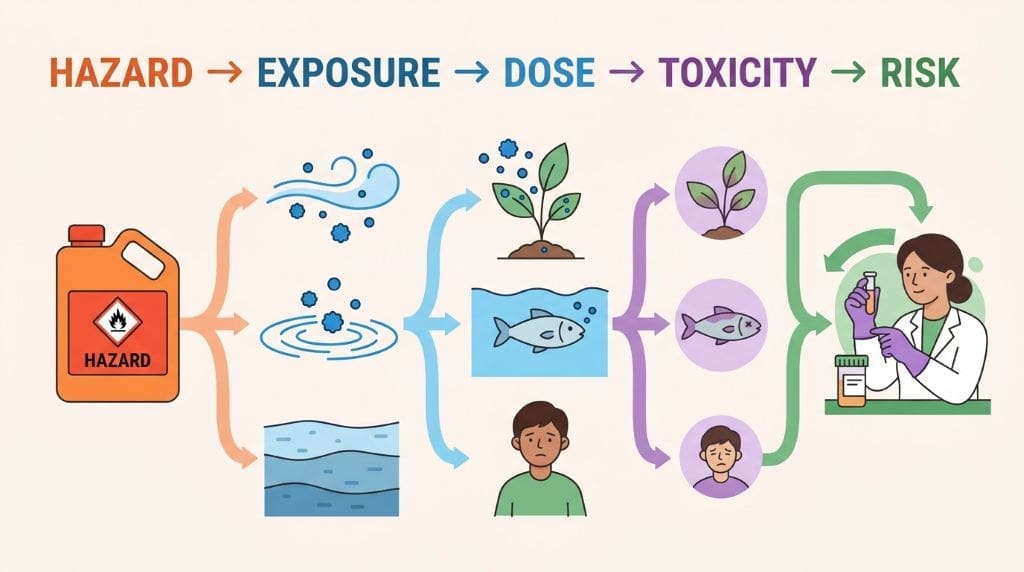
The five factors which link a chemical to its effects are hazard, exposure, dose, toxicity, and risk. A hazard is the inherent ability of a substance to cause harm. ExposureContact between a substance and an organism. More, by contrast, refers to the contact between the substance and an organism. The dose is the quantity that actually enters the body. Toxicity is the harmful effect that ensues. RiskThe chance that harm occurs, given the hazard and the exposure. More then combines all these factors. For example, a chemical may be highly hazardous yet still involve a low risk if no organism is ever exposed to it. Similarly, a chemical that is only weakly hazardous can still pose a real risk if there is heavy, continuous exposure. Environmental toxicologists evaluate the hazards and doses, after which the risk assessors compare these figures with the actual exposure in order to estimate the probability of harm.
Environmental toxicology safeguards the environment by relying on solid evidence rather than on fear. Rather than suppose that every chemical is harmful, scientists work out when and how harm takes place and at what dose. This kind of information enables regulators to make well-informed decisions. For instance, if it is found that a certain metal impairs fish reproduction, they can establish water quality standards below that level. Such decisions strike a balance between ensuring safety and the requirement to use chemicals in medicine, farming, and industry. To sum up, the field converts concerns about pollution into specific questions that science can address. Its aim is not to ban all chemicals, but to find out which ones are actually harmful and at what doses. Monitoring programmes then use this data to assess whether the protective measures are working over time.
What Are the Major Types of Environmental Toxicants?
Environmental toxins come in many forms, and none affect organisms the same way. The impact of these toxins varies by substance, dose, route of exposure, duration of contact, the organism involved, and environmental conditions. A certain chemical may be lethal to insects but not pose a threat to mammals. In other cases, a chemical might be harmless in small amounts but become hazardous as it builds up over years. A third type could cause damage only in warm water or affect organisms only in their early life stages. For this reason, scientists rarely make general statements such as “this chemical is toxic”. Instead, they ask: toxic to which species, at what dose, by what route, and under what conditions? The main categories listed below are the ones researchers investigate.

- Heavy metals include lead, mercury, cadmium, chromium, and arsenic.
- Pesticides are used in farming and for pest control, and include insecticides, herbicides, and fungicides.
- Industrial chemicals consist of solvents, flame retardants, and polychlorinated biphenyls (PCBs).
- Pharmaceuticals and other emerging contaminants consist of medicines, personal care products, and PFAS compounds.
- Plastics and microplastics include not only large pieces but also small fragments and fibres that measure less than 5 mm.
- Substances like DDT do not decompose and thus travel over long distances.
- Toxic substances that occur naturally comprise arsenic from rocks, cyanotoxins from algae, and toxins from plants.
In actuality, the different categories tend to blend together; for instance, a polluted river can contain metals from mining, pesticides from farms and microplastics from urban waste. This is the reason why environmental toxicologists typically investigate mixtures of chemicals rather than looking at them one at a time. The following section deals with the way in which these substances enter living organisms.
Effects of Heavy Metals on Human Health and Ecosystems
Metals including lead, mercury, cadmium, chromium, and arsenic figure at the top of most of the watch lists. As a review from 2020 in the journal Heliyon makes clear, since metals cannot be broken down, they stay in the soil, water, and sediment for long periods (Briffa, Sinagra, & Blundell, 2020). Although some of these metals provide essential nutrients in small amounts, they become harmful when they accumulate in excess; other metals serve no known biological function and can cause toxicity even at low doses. The same review points out that bacteria in water and in sediment are able to convert inorganic mercury into methylmercury, a more toxic form which builds up in food chains. Several of these metals are known or probable human carcinogens, according to international organisations, and arsenic, cadmium, and chromium(VI) compounds rank among the most prominent examples.
Pesticides, Industrial Chemicals, and Other Emerging Contaminants
A further important group consists of pesticides, industrial solvents, flame retardants, and polychlorinated biphenyls (PCBs). These chemicals were developed in order to kill pests and support industrial processes, however, many of them remain in the environment for decades. Current worries pertain to pharmaceuticals and personal-care products, as the medicines poured into the wastewater can end up in rivers and might have an effect on aquatic life even at low concentrations. Persistent organic pollutants such as DDT are not easily broken down and can travel a long distance from their point of origin. Microplastics introduce an additional element of complexity since their physical, chemical, and biological effects are still under study. Lastly, naturally occurring toxins include arsenic, which can filter from rocks into groundwater, and toxins released by certain algae that contaminate drinking water.
How Do Toxicants Enter the Environment?
Find the different ways in which toxic substances enter the environment through a wide variety of ordinary sources, for example, factory discharges and farm runoff as well as vehicle exhaust and domestic cleaners. Once they have been released, they rarely remain in one place; rather, they travel through the air, water, and soil until they finally end up in an organism.
The Journey of a Toxicant: A Simple Environmental Toxicology Flow
Toxic substances rarely stay where people release them. When industries pour chemicals into rivers, and along the coast, agricultural runoff carries fertilisers and pesticides from farmlands into streams. Burning fuel in vehicles, power stations, and fires emits gases and particles into the atmosphere. Mining rocks releases metals, and waste disposal can also release them. Chemicals previously buried can filter into soil and groundwater. Although wastewater treatment plants can remove many pollutants, they cannot remove all of them, and household products like cleaners and paints add to overall pollution. Accidents such as oil spills and tanker leaks can cause sudden contaminant releases. Once a toxic substance enters the air, water, or soil, it begins a journey scientists can follow step by step, with each stage influencing how much of the chemical eventually reaches living organisms.
Source → Environmental medium → Exposure pathway → Organism → Biological response
- A source is a point at which a toxic substance is released. Sources could be a factory, a farm, or a vehicle.
- Any environmental medium could be air, water, soil, or sediment that carries the toxic substance.
- Exposure pathwayThe route by which an organism meets the chemical. More: When a toxicant enters the organism by a particular route.
- The organism is the living entity that takes up the toxicant.
- The biological response ranges from harmless to harmful effects.
Exposure Routes and Pathways of Toxicants
Organisms encounter toxicants in three main ways: breathing them in, eating or drinking them, or absorbing them through their skin. Fish absorb chemicals from water via their gills, whereas land animals may inhale vapours or consume contaminated food or water. Skin contact is also important, particularly with chemicals in soil, water, or dust. How a toxicant enters the body influences both how much the body absorbs and the extent of the damage it causes. For instance, inhaling mercury vapour can quickly affect the brain, but eating mercury through food produces a different result. The chemical’s form also matters; a chemical attached to sediment may not affect water fleas, but the same chemical can affect them when dissolved in water. Exposure routes reveal which organisms environmental toxicology affects. In short, the route from the source to the body determines the outcome.
What Happens When a Chemical Spills Into a Fish Tank?
A classroom observation can make this process tangible. Consider a hypothetical science experiment in which a student accidentally tips a small bottle of copper sulfate into an aquarium; here, the copper sulfate is the source, the water in the tank is the environmental medium, and the mode of exposure is direct contact, since the chemical moves through the water. The organisms concerned are the fish, plants, and snails in the tank. Their biological response might include stress, reduced feeding, or even death if the concentration is high. This sequence illustrates the importance of source control, dilution, and removal. The same principles apply on a much larger scale in a real lake or river. The classroom scenario is hypothetical, not a description of an actual event.
How Do Toxicants Affect Organisms and Ecosystems?
Toxic substances can have an effect at all levels. Within cells, they may damage membranes, DNA, and proteins; this in turn causes tissues and organs to function improperly and, as a result, harms the entire organism. Acute toxicity occurs rapidly, sometimes within hours or days, and can be fatal. Chronic toxicity, on the other hand, develops slowly as a result of long or repeated exposure and may result in reduced growth, fertility, or lifespan. Since a population consists of many individuals, small effects can accumulate. For instance, a contaminant which slows down reproduction can reduce a population even if no adults die. When sensitive species decrease and more tolerant ones increase, the community changes. Eventually, ecosystem processes such as nutrient cycling and decomposition can also become slower. That is why environmental toxicologists make use of these various levels to understand and measure the damage.

Development of Neurotoxicity in the Brain
The nervous system as it is developing requires special consideration. A significant review published in The Lancet Neurology found that the number of industrial chemicals known to be harmful to the developing human brain increased from five to eleven between 2006 and 2013 (Grandjean & Landrigan, 2014). The six new chemicals identified were manganese, fluoride, chlorpyrifos, DDT, tetrachloroethylene, and polybrominated diphenyl ethers. The authors stress that a child’s brain is particularly susceptible and that permanent damage can result from low levels of exposure during early development. This evidence relates to developmental neurobehavioral effects in humans and does not by itself explain how the same chemicals affect ecosystems. Nevertheless, it illustrates why the timing, dose, and early-life exposure are at the heart of toxicology.
Cobalt and Nickel Toxicity in Marine Phytoplankton
Ecosystem-level questions usually start with small organisms. A 2023 study examined metals such as cobalt and nickel released during potential seabed mining of polymetallic nodules and their direct effects on two marine phytoplankton species (Ou et al., 2023). The results revealed a hormesis-like response in the diatom Skeletonema costatum and the dinoflagellate Prorocentrum donghaiense. At low metal concentrations, growth, pigment production, and protein synthesis increased, but at high concentrations these effects reversed: pigments and proteins decreased while antioxidant enzymes increased. The researchers attribute these changes to stress responses and oxidative damage. These findings apply only to these two species under laboratory conditions, so researchers cannot generalise them to all aquatic organisms. Nevertheless, the study shows that a single metal can both stimulate and harm, depending on concentration and timing.
Toxicants Travel Through Food Webs
Harm doesn’t necessarily cease with the species that comes into contact with a contaminant since indirect effects can spread via species interactions, as a 2020 review in Processes points out (Fleeger, 2020).In India, the veterinary drug diclofenac poisoned vultures that fed on cattle carcasses after farmers gave the cattle the drug. With the vulture numbers collapsing, feral dog populations around the carcasses increased, and cases of human rabies from dog bites went up. This sequence shows how one chemical can travel through a food web and have an impact in areas distant from its original target. The same review also states that contaminants can modify competition, predation, and even habitat recovery following oil spills, thus introducing uncertainty into ecological risk assessment. To put it simply, indirect effects mean that a pollutant’s full impact is often greater than its direct toxicity.
Evolutionary Tolerance to Chloride in Freshwater Species
Evolution introduces an additional level of complexity. A study published in Evolutionary Applications in 2017 investigated whether evolutionary history can predict chloride tolerance in freshwater animals (Brady, Richardson, & Kunz, 2017). In a sample of 55 fish, amphibian, and macroinvertebrate species, closely related species tended to have similar levels of chloride tolerance, indicating a phylogenetic signal. More surprisingly, populations of spotted salamanders and wood frogs situated near salty roads were less tolerant of chloride than those found in woodlands. The researchers propose maladaptation or transgenerational effects rather than the local adaptation that textbooks usually describe. The findings indicate that the variation found within a species can be just as important as the variation between species when establishing protective limits. This has implications for regulators since a single test on one population might not be adequate to represent the entire species.
What Are Bioaccumulation and Biomagnification?
Bioaccumulation and biomagnification are two separate processes. The first occurs within an individual organism over time, whereas the second occurs along a food chain, from one trophic level to the next. Understanding the difference matters because it influences how scientists determine which contaminants pose the greatest risk to top predators, including humans.

Bioaccumulation
Bioaccumulation is the buildup of a chemical within a single organism over time. If a fish absorbs more of a substance than it can metabolise or excrete, its body burden increases. Mercury is a classic example because bacteria in water and sediment form methylmercury, which readily enters tissues (Briffa et al., 2020). Over time, even low concentrations in water can lead to high concentrations in an animal. Persistence, chemical properties, metabolic capacity, and exposure duration all matter. In other words, bioaccumulation is a story about one organism and its lifetime of exposure to a contaminant. It is a gradual process, often invisible until concentrations reach harmful levels. That is why scientists measure both environmental and tissue levels.
Biomagnification
Biomagnification moves a contaminant up the food chain. Each trophic level consumes many organisms from the level below, so a persistent, poorly excreted chemical concentrates as it moves up. Consider a simple chain: algae absorb a contaminant from the water, zooplankton eat the algae, small fish eat the zooplankton, large fish eat the small fish, and a fish-eating bird tops the chain. If each step retains most of the chemical, the bird can end up with a far higher concentration than the water itself ever held. This pattern is prominently well documented for methylmercury and certain persistent organic pollutants. Crucially, it depends on food-web structure and the contaminant’s properties. Not every pollutant biomagnifies.
Why Not Every Pollutant Biomagnifies
The idea that every chemical behaves like mercury is wrong. Many compounds dissolve in water and leave the body quickly, so they do not enter the food chain, meanwhile, microorganisms or sunlight break down others before they can accumulate. With regard to chemicals that persist, the place of an organism within the food web, the time of year, and the physiological features of the species all affect the calculations. Because of this, scientists assess the fate of each contaminant instead of using a single general rule for all cases. Persistent, fat-soluble chemicals that organisms cannot easily metabolise show the clearest example of biomagnification.. This small set of properties matters. Pollution as a whole drives the striking patterns observed in classic studies. That is why accurate definitions matter in this field. Clear language helps students and regulators avoid overestimating or underestimating real risks.
How Do Scientists Study Environmental Toxicity?
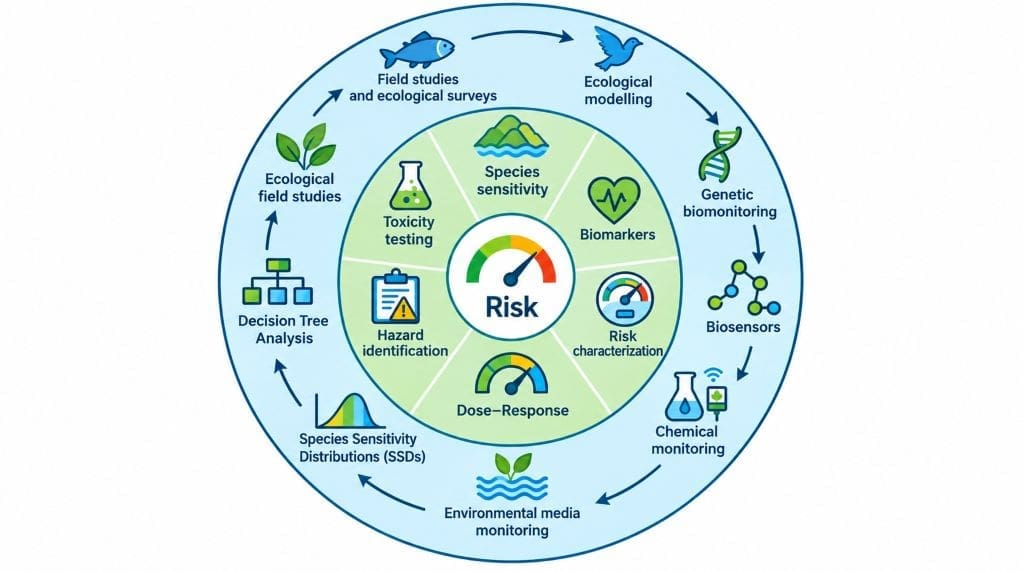
To study environmental toxicity, scientists use a range of complementary tools. In the laboratory, researchers expose organisms to known concentrations of chemicals and record their responses, such as survival, growth, and reproduction. Common summary values include the LC50 and the no-observed-effect concentration, both of which allow fair comparisons between different chemicals. Field studies then test whether laboratory predictions hold in real habitats. Biomarkers provide early indications of molecular or physiological disturbances in organisms, whereas chemical analysis determines the actual amounts of substances present in water, soil, or tissue. Ecological monitoring involves observing populations and communities over time, and species sensitivity distributions compare how different organisms respond to the same chemical. Together, these methods form the evidence base for risk assessments. No single method gives a full picture.

Curated Databases: How ECOTOX Organizes the Evidence
Curated databases gather the evidence together. The ECOTOXicology Knowledgebase (ECOTOX), as explained in Environmental Toxicology and Chemistry, puts toxicity test results from the scientific literature into a single searchable system (Olker et al., 2022). By mid-2021, it included over one million test records drawn from more than 52,000 references, covering more than 12,000 chemicals and 13,000 species. The curators compare the studies with predefined criteria and input the methods, the species involved, and the endpoints into standard fields. It is noteworthy that a small number of model species, such as the rainbow trout and the fathead minnow, account for the majority of the records, while thousands of species are represented by data from just one or two references. This uneven representation decides what scientists can say with confidence, and so gaps in the database tend to be the areas that researchers decide to focus on
Lessons from Arctic Toxicity Testing
A review of the Arctic toxicity tests reveals the impact of data quality on risk assessment (Eldridge, de Jourdan, & Hanson, 2022). The researchers evaluated 253 tests and found that 207—about 82 per cent—failed at least one key reliability standard. Tests involving oil-related contaminants were the most numerous; crustaceans were well represented, while algae, seabirds, and microbes were mostly missing. Mortality was the most frequently observed endpoint, whereas sublethal effects were uncommon. The authors recommend establishing standard Arctic testing methods, using reference toxicants, and increasing chronic endpoints. The wider implications of their findings extend well beyond the Arctic region: the value of toxicity data depends on the reliability and ecological relevance of the tests. Inadequate or missing data can either conceal actual risks or give a false sense of security. Both issues deserve careful consideration.
Lab vs. Field: Why Both Kinds of Evidence Matter
Evidence from controlled laboratory tests differs from real-world field observations, both with limitations. In a laboratory test, researchers examine only one chemical, one type of organism, and one endpoint, which makes the results reproducible but also somewhat artificial. Meanwhile, field studies include real mixtures, real weather conditions, and genuine food webs, but they are harder to interpret because many factors change at once. Strong conclusions generally depend on both types of evidence. For instance, a laboratory test might show that a pesticide harms mayfly larvae at a particular dose. Furthermore, a field survey then examines whether mayfly numbers actually decrease in streams adjacent to those that have been sprayed. This process, moving back and forth from the laboratory to the field and then back again, is the usual pattern in environmental toxicology research. For this reason, field scientists value transparency in how they collect and report data.
Methodology sequence
- The Question: What information do we need concerning a chemical and an organism?
- Exposure can be achieved by administering controlled doses in the laboratory or by measuring exposure in the real world.
- Record survival, growth, reproduction, or biomarker signals as measurements.
- Description of the biological response: an account of the effect observed.
- An analysis of the data should be carried out to fit the dose-response relationships and to estimate values such as the LC50.
- Interpret what the results mean, along with their limitations.
Difference Between Environmental Toxicology and Environmental Risk Assessment
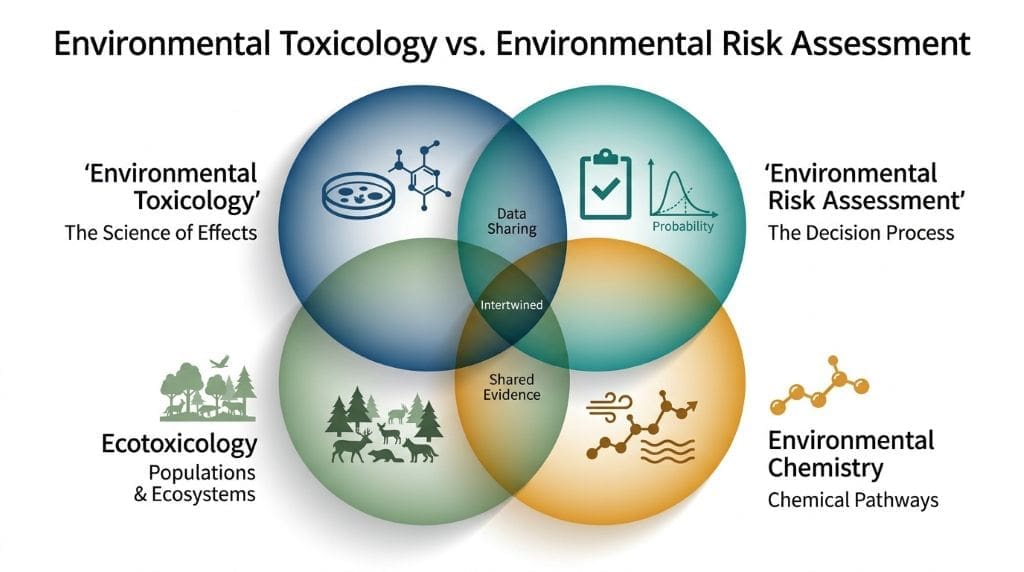
Several fields are closely linked to environmental toxicology and are frequently confused with one another. Ecotoxicology examines the effects of contaminants on populations, communities, and ecosystems, using a holistic approach rather than relying on single-species tests. When environmental chemistry is applied to the environment, it looks at where chemicals end up and how they change in the air, water, soil, and sediment. Another related field is environmental health, which focuses on how pollution and other environmental factors affect human health. Environmental risk assessment, by contrast, is not a science of effects; it is a decision-making process that combines toxicity data with exposure estimates to assess the probability of harm. Sauvé’s mini-review emphasises that the different fields are related rather than interchangeable (Sauvé, 2024). At the same time, Eldridge and colleagues show that reliable, ecologically relevant test data form the foundation of any valid risk assessment (Eldridge et al., 2022).
Environmental Toxicology and Its Related Fields
Environmental toxicology is persistently confused with other disciplines that have different areas of concern. Although ecotoxicology, environmental chemistry, environmental health, and environmental risk assessment all address parts of the same problem, they approach it from different angles: some focus on the chemical itself, while others focus on the organism, the ecosystem, or the decision that follows.
| Field | Main focus | Typical question |
| Environmental toxicology | How pollutants and other stressors affect organisms and ecosystems. | What does this chemical do to this organism, and at what dose? |
| Ecotoxicology | Contaminant effects on populations, communities, and ecosystems. | How does this pollutant change a food web over time? |
| Environmental chemistry | Where chemicals go and how they transform in the environment. | Where does this chemical end up, and what does it become? |
| Environmental health | How environmental factors affect human health. | Which exposures explain illness in a community? |
| Environmental risk assessment | Combining hazard, exposure, and uncertainty to estimate risk. | How likely is harm, and is that level acceptable? |
Hazard vs. Risk: What’s the Difference?
It is easier to distinguish between hazard and risk. For example, if someone places a bottle of domestic bleach on a high shelf, the bleach can burn skin and eyes and poison anyone who consumes it. The level of risk, however, depends on exposure; if the bottle stays sealed and is out of reach, the risk is low, but if a child drinks from it, the risk becomes both immediate and high. Similarly, a harmful chemical inside sealed industrial machinery poses only a minor environmental risk until a leak lets it enter a stream. Therefore, risk assessment must consider two factors: how harmful the substance is and the amount of exposure that actually occurs. If there is any uncertainty about either factor, confidence in the final estimate decreases.
Turning Toxicity Data into Risk Estimates
Toxicity data inform risk assessment at several points. Laboratory dose-response results tell assessors which concentrations harm test organisms. Environmental chemistry data reveal where the chemical is found and at what levels. Assessors then compare predicted environmental concentrations with concentrations expected to be safe, an approach summarized in reviews of ecological risk assessment, such as Vighi and Villa’s overview of 21st-century challenges (Vighi & Villa, 2013). Safety factors and species sensitivity distributions add caution to account for uncertainty. In the end, a risk assessment is only as strong as the toxicity data beneath it, which is why data quality reviews matter so much. Assessments must also account for local conditions, because temperature, pH, and salinity can change toxicity.
Where Is Environmental Toxicology Used?
You can see how important environmental toxicology is when you look at the situations in which its evidence is used. Regulators, conservationists, farmers, and public health officials all rely on toxicity data. For instance, a government which is deciding whether or not to sell a pesticide has to know the effect of the chemical on fish and on pollinators. If a city wants to reopen an old factory site, it has to find out whether the soil is safe. When a conservation organisation is handling an oil spill, it needs to know which species are the most sensitive. In all these cases, toxicity data enables a difficult decision to be made on the basis of measurable figures. The examples listed below illustrate the wide extent of this requirement. Nothing of the above would function properly without reliable data. properly without reliable data.
Real-World Applications of Environmental Toxicology
Environmental toxicology is seldom limited to a laboratory or a textbook; its research results influence decisions in water, soil, food, and industry.

- Setting limits for rivers, lakes, and drinking water in order to protect water quality.
- Soil and contaminated-site assessment: determining when land requires cleanup.
- Assessing pesticides: balancing the harm caused to pests against the harm it causes to bees, fish, and other species not targeted by the pesticide. species.
- Industrial pollution monitoring tracks releases and assesses wildlife near factories.
- Wildlife conservation and spill response: identifying the most sensitive species after accidents.
- Food safety: checking for residues and contaminants in crops, livestock, and fish.
- Environmental regulation: writing permits and standards supported by toxicity evidence.
- Public-health protection: linking environmental exposures to disease prevention.
These uses share a common thread. Each one pairs a chemical with an organism, a dose, and an environment, then asks whether harm is likely. In practice, the field’s findings end up in laws, permits, cleanup plans, and health advisories.
Environmental Toxicology in India
India offers vivid examples. The country’s Central Pollution Control Board oversees a national water-quality monitoring program, and the Environment (Protection) Act of 1986 authorises authorities to set standards for pollutants in air, water, and industrial discharges. Rivers such as the Ganga and Yamuna receive continuous attention because of industrial and municipal waste, and toxicity data help prioritise which pollutants require the tightest control. A 2022 review reported that air pollution remains above WHO guideline levels across 93 percent of India and that India had the world’s largest estimated number of air pollution-related deaths in 2019 (Fuller et al., 2022). Meanwhile, the earlier vulture story illustrates how a single veterinary drug created an ecological and public-health crisis across South Asia. These examples show why India invests in monitoring, testing, and cleanup research.
Public Health and the One Health Connection
Public health and One Health principles connect these areas. When a water body becomes polluted, it affects everyone. People who drink the water, fish that live in it, and crops irrigated with it all face risks. Toxicity data help determine how much treatment is necessary and when to issue warnings. The One Health framework emphasises that human, animal, and ecosystem health are interconnected (Sauvé, 2024). Protecting a river safeguards both people and fish. This understanding explains why environmental toxicology spans chemistry, biology, medicine, and ecology. Students who study this field early see these connections in daily life. For example, after heavy rain, many cities warn swimmers because runoff often carries contaminants into the water.
Current Challenges in Environmental Toxicology
The field faces several major difficulties, and scientists acknowledge them. A key problem is chemical mixtures, as real environments generally contain more than one pollutant at a time. For instance, reviews such as Vighi and Villa’s indicate that several chemicals, even at low concentrations, can have combined effects (Vighi & Villa, 2013). Yet most safety tests still examine chemicals individually. New contaminants, including pharmaceuticals, PFAS, and new flame retardants, are appearing faster than scientists can investigate their effects. Microplastics further complicate the situation because their effects are not yet fully understood. In sum, new chemicals are being developed faster than science can keep up, and this gap remains a major, unsolved research challenge.

Long-Term, Low-Dose Exposure and a Changing Climate
Another area of focus is long-term, low-dose exposure. While traditional tests evaluate mortality over days or weeks, many real-world exposures last a person’s entire lifetime at extremely low concentrations. Chronic effects on growth, reproduction, and development are harder and more expensive to measure, which is why researchers examine them less frequently. The earlier Arctic review stated that in the Arctic tests, mortality was the main endpoint, whereas sublethal effects were seldom recorded (Eldridge et al., 2022). At the same time, climate change is altering the conditions beneath all studies. Warmer water, ocean acidification, and changes in rainfall can affect how chemicals behave and how sensitive organisms are. Sauvé’s short review also claims that research should incorporate mixtures and climate interactions into environmental toxicology (Sauvé, 2024). These areas are actively being researched and raises more questions than settled answers.
Translating Lab Results to Real Ecosystems
Species differences create their own problems: a chemical harmless to one organism can be devastating to another, and the total number of species is far greater than the number that can be tested in laboratories. As the ECOTOX database and others show, most data are available for only a small number of model species, while thousands of other species have only limited data (Olker et al.). When researchers apply findings from laboratory tests to complex ecosystems, they add uncertainty because indirect effects, seasonal variation, and species interactions can change outcomes in ways single-species tests cannot account for. Fleeger’s review notes that indirect effects can either increase or mask direct toxicity, which in turn makes predictions more difficult (Fleeger, 2020). Furthermore, the field has extensive knowledge of a small number of organisms and very little about most others. Closing this gap is a priority stated in recent literature.
The Data Gap Across Species and Ecosystems
Above all, uncertainty must be addressed honestly. Risk assessments include safety factors and use conservative assumptions because the data are incomplete. Scientists distinguish between what is established and what remains under investigation. For instance, the acute toxicity of many metals and pesticides is well known, while the effects of mixtures and the long-term effects of microplastics remain open questions. Vighi and Villa say that ecological realism, improved models, and a clearer treatment of variability and uncertainty are the ways forward (Vighi & Villa, 2013). Funding must also reflect the multidisciplinary character of the work, as Sauvé points out. It is important to maintain a balanced tone: these are limitations to address, not grounds for rejecting the field. Just as in the case of any honest science, it is defined as much by its open questions as by its established
Frequently Asked Questions About Environmental Toxicology
Environmental toxicology is the science that examines the effects of pollutants and of other chemical or biological stressors on organisms, on populations, on communities and on ecosystems. It examines exposure, dose, and toxicity, and applies research results to environmental protection, wildlife conservation, and public health. These results also support environmental protection, wildlife conservation, and public health. Related fields include ecotoxicology, environmental chemistry and risk assessment.
It provides evidence for ensuring clean water and safe food. Scientists determine which chemicals harm particular organisms and at what dosage levels. Regulatory authorities then set limits and develop cleanup standards. If this area of study had not existed, decisions about pollution would have had to depend on guesswork rather than data.
Toxicology is the broader science that deals with poisons and usually concentrates on one species, particularly humans. Ecotoxicology looks at contaminants in the natural environment and studies their effects at the population, community, and ecosystem levels. Ecotoxicology is regarded as a branch of environmental toxicology.
Industrial discharges, agricultural runoff, emissions from vehicles and power stations, waste and wastewater disposal, and accidents can introduce these substances into ecosystems. After they enter water or soil, toxic materials move along defined pathways. Organisms further absorb them through ingestion, eating, or skin contact.
Bioaccumulation is the build-up of a chemical within an individual organism when it takes it in faster than it can metabolise. Mercury is a typical example of a persistent chemical.
Biomagnification increases contaminant concentrations up the food chain because predators take up chemicals from their prey; it mostly applies to persistent, fat-soluble substances and does not cover all pollutants.
Laboratory experiments involve organisms such as algae, water fleas, and fish, which are exposed to different concentrations. Researchers then observe how the organisms survive, grow, and reproduce before reporting values such as the LC50. They collect real-world evidence from field studies and databases like the EPA ECOTOX Knowledgebase.
It involves combining toxicity data with information regarding exposure. The assessors compare the predicted concentrations in the environment to the safe levels and include safety factors in order to allow for uncertainty. This risk assessment is helpful when making decisions on permits, cleanups, and safety standards.
Of course. The way in which people are exposed to contaminants is through the air, water, food, and contact with the skin. Heavy metals, pesticides, and certain industrial chemicals can have an adverse effect on human health, including that of the developing brain. Pollution is linked to millions of deaths taking place prematurely all over the world each year.
Begin by learning biology and chemistry at school, then make use of free resources such as the US EPA ECOTOX Knowledgebase and various online toxicology tutorials. Carrying out science fair projects on water quality or plant growth gives you hands-on experience. Lastly, university courses in environmental science build on this foundation.
HazardThe built-in ability of a substance to cause harm. More is a substance that can cause harm at any concentration. Risk is the probability of harm, determined by the amount of exposure or dosage. A very hazardous chemical would pose only a minor risk if carefully sealed, but a serious risk if dumped into a stream.
The quantity of substance taken up decides whether or not an effect takes place or show the severity of it. Paracelsus states that a dose turns a substance into a poison. A small dose may be harmless whereas a larger dose causes observable injury. In fact, dose-response relationships are at the heart of the science.
Your Environmental Toxicology Learning Pathway
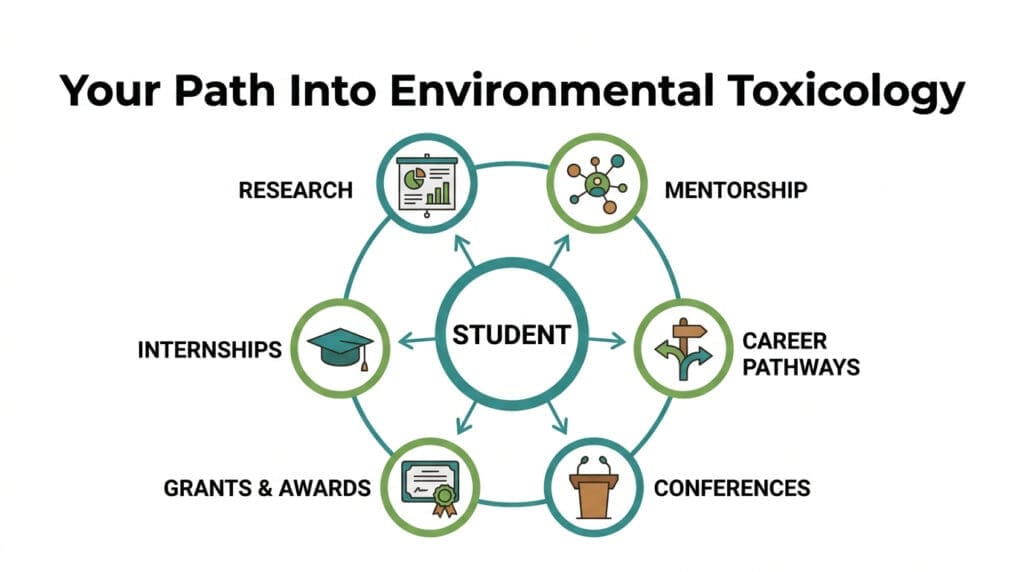
A learning pathway can make this subject easier to grasp. First, clarify the terms, then link each toxicant to its sources and the ways people come into contact with it. Next, consider the effects from the cellular level up to entire ecosystems, then examine how these substances accumulate in food webs. Combine reading with experiments and theoretical work to build a stronger foundation. Experiments could determine seed germination quality or use simple kits to test the quality of water in a local pond. Many schools encourage such projects as part of their science curriculum. The NYC STEM blog offers further suggestions for student projects. Free online resources, such as the EPA ECOTOX Knowledgebase, let interested students explore the real data professionals use. To sum up, the pathway moves from words to ideas to measurements and then to decisions. Each stage prepares the way for the next one.
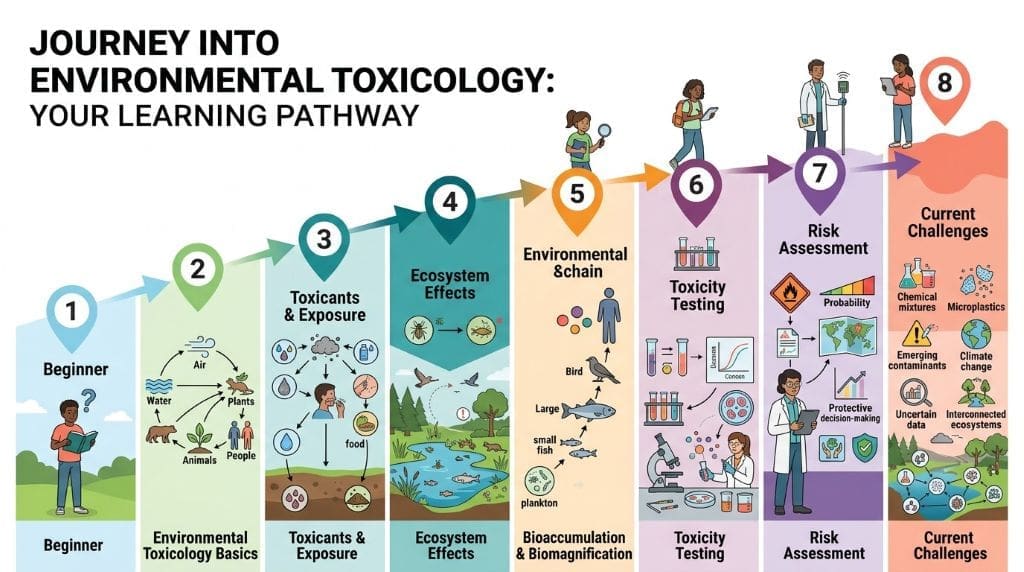
- Beginner: learn the definition of environmental toxicology and key terms.
- Understand the fundamentals of environmental toxicology: hazard, exposure, dose, toxicity, and risk.
- Toxicants and exposure: pollutant sources and pathways to organisms.
- The effects of an ecosystem extend from cells and organs through to populations, communities, and food webs.
- Bioaccumulation and biomagnification refer to how chemicals build up within organisms and throughout food chains.
- Toxicity testing uses laboratory assays, field studies, and databases like ECOTOX.
- How risk assessment combines toxicity data with exposure in order to make decisions.
- The current challenges include mixtures, emerging contaminants, microplastics, and climate change.
From Factory to Fish: Tracing One Contaminant’s Journey
Environmental toxicology establishes its relevance by bringing together topics that are frequently kept apart in classrooms. Chemistry deals with what a molecule is and how it reacts. Biology shows what happens in a cell when that molecule reaches it. Ecology explains how the damage moves through a food web. Environmental science sets the entire account within landscapes, rivers, and airsheds, and public health looks at the effects on people. A student who tracks one contaminant from factory to fish to family has, in effect, carried out the kind of work done by the whole field. It is this kind of journey that makes the field important, and it is accessible to anyone who is willing to ask careful questions and then check them against evidence. For students in Grades 8 through 12, that sense of curiosity is exactly the right place to start.
How This Guide Was Compiled
The evidence is based on ten open-access, peer-reviewed studies. Each DOI has been cross-checked with the official publication record, and all the claims have been matched to the scope of their source. The statistics relating to human health are kept separate from the ecological findings, and any uncertainties are clearly stated. For instance, the Arctic test review is only used when its particular context is relevant. The organisation has checked government resources, such as the US EPA ECOTOX Knowledgebase and India’s Central Pollution Control Board, for the links listed in the Verified Resources section. We made these editorial decisions in line with EEAT principles: transparent sourcing, citing specific publications, first-hand verification, and a clear indication of the guide’s intended audience. We do not claim any search-engine metrics, and the internal links lead to live pages on nycstem, which were verified at the time of writing.
Verified Resources
- US EPA – ECOTOXicology (ECOTOX) Knowledgebase Resource Hub. https://www.epa.gov/comptox-tools/ecotoxicology-ecotox-knowledgebase-resource-hub
- US EPA – CompTox Chemicals Dashboard. https://www.epa.gov/comptox-tools/comptox-chemicals-dashboard
- US EPA – Students and Educators resources. https://www.epa.gov/students
- US National Library of Medicine – ToxTutor, free toxicology tutorials. https://toxtutor.nlm.nih.gov/
- World Health Organization – air quality and lead poisoning factsheets. https://www.who.int/
- Central Pollution Control Board, Government of India. https://cpcb.nic.in/
- Open-access journals hosting the ten cited studies: Heliyon; Frontiers in Environmental Science; MDPI Toxics; MDPI Processes; The Lancet Planetary Health; Evolutionary Applications; Environmental Toxicology and Chemistry.
Focus Key Phrase and Synonyms Used
Focus key phrase: environmental toxicology.
The following synonyms and natural variations are used in the article: pollution toxicology; the study of environmental toxicants; the science of toxicants in the environment; toxicology of environmental contaminants; environmental contaminant toxicology; ecological toxicity research; ecotoxicology (used as a related but not identical term).
References
Brady, S. P., Richardson, J. L., & Kunz, B. K. (2017). Incorporating evolutionary insights to improve ecotoxicology for freshwater species. Evolutionary Applications, 10(8), 829-838. https://doi.org/10.1111/eva.12507
Briffa, J., Sinagra, E., & Blundell, R. (2020). Heavy metal pollution in the environment and their toxicological effects on humans. Heliyon, 6(9), Article e04691. https://doi.org/10.1016/j.heliyon.2020.e04691
Eldridge, R. J., de Jourdan, B. P., & Hanson, M. L. (2022). A critical review of the availability, reliability, and ecological relevance of Arctic species toxicity tests for use in environmental risk assessment. Environmental Toxicology and Chemistry, 41(1), 46-72. https://doi.org/10.1002/etc.5247
Fleeger, J. W. (2020). How do indirect effects of contaminants inform ecotoxicology? A review. Processes, 8(12), 1659. https://doi.org/10.3390/pr8121659
Fuller, R., Landrigan, P. J., Balakrishnan, K., Bathan, G., Bose-O’Reilly, S., Brauer, M., Caravanos, J., Chiles, T., Cohen, A., Corra, L., Cropper, M., Ferraro, G., Hanna, J., Hanrahan, D., Hu, H., Hunter, D., Janata, G., Kupka, R., Lanphear, B., … Yan, C. (2022). Pollution and health: A progress update. The Lancet Planetary Health, 6(6), e535-e547. https://doi.org/10.1016/S2542-5196(22)00090-0
Grandjean, P., & Landrigan, P. J. (2014). Neurobehavioural effects of developmental toxicity. The Lancet Neurology, 13(3), 330-338. https://doi.org/10.1016/S1474-4422(13)70278-3
Olker, J. H., Elonen, C. M., Pilli, A., Anderson, A., Kinziger, B., Erickson, S., Skopinski, M., Pomplun, A., LaLone, C. A., Russom, C. L., & Hoff, D. (2022). The ECOTOXicology Knowledgebase: A curated database of ecologically relevant toxicity tests to support environmental research and risk assessment. Environmental Toxicology and Chemistry, 41(6), 1520-1539. https://doi.org/10.1002/etc.5324
Ou, R., Huang, H., He, X., Lin, S., Ou, D., Li, W., Qiu, J., & Wang, L. (2023). Ecotoxicology of polymetallic nodule seabed mining: The effects of cobalt and nickel on phytoplankton growth and pigment concentration. Toxics, 11(12), 1005. https://doi.org/10.3390/toxics11121005
Sauvé, S. (2024). Toxicology, environmental chemistry, ecotoxicology, and One Health: Definitions and paths for future research. Frontiers in Environmental Science, 12, 1303705. https://doi.org/10.3389/fenvs.2024.1303705
Vighi, M., & Villa, S. (2013). Ecotoxicology: The challenges for the 21st century. Toxics, 1(1), 18-35. https://doi.org/10.3390/toxics1010018
List of terms
- Toxicity
- Exposure
- Risk
- Exposure pathway
- Hazard