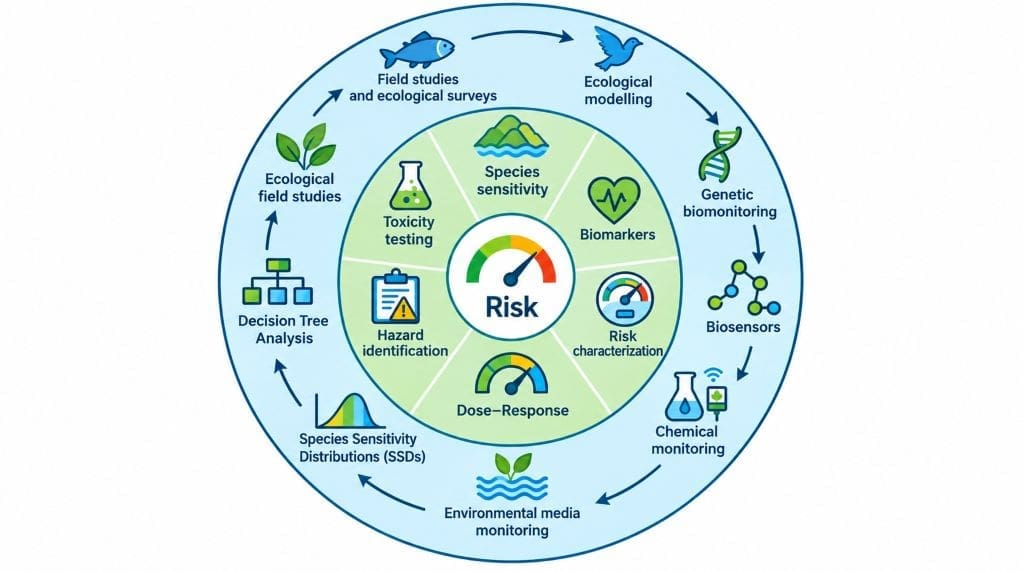
At an environmental toxicology conference, students can present their research, attend workshops and lectures by experienced toxicologists, and meet with mentors. Travel grants and fellowships generally cover part of the expenses. People interested in understanding the effects of chemicals on both humans and ecosystems can attend the conference, acquire knowledge, and take their first step on the way to a scientific career.

The straightforward answer is that it is more important than it at first seems. While a classroom deals with principles, a conference puts these into practice by using real data, encouraging debate, and allowing for direct interaction with scientists. Most important of all, it provides young people with a realistic understanding of what actual work entails. Those students who wish to gain some background knowledge can go over the basic principles of environmental toxicology before beginning the courses.

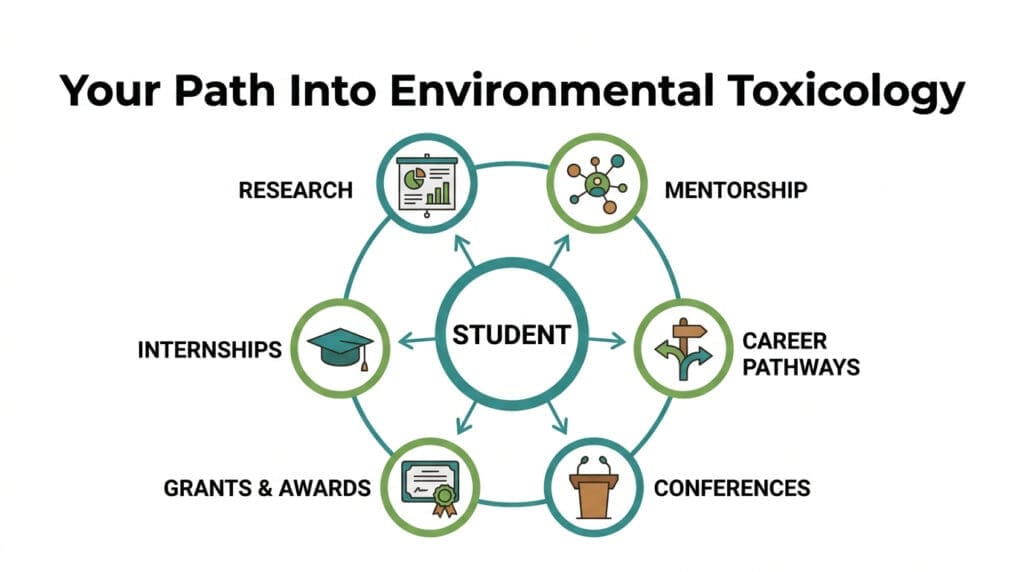
It is not only a personal benefit, since the sector has chosen to construct pipelines. At the Toxicology Education Summit organised by the Society of Toxicology, leaders agreed that toxicology needs modernised curricula, ongoing mentoring, and coordinated funding from academia, the government, and industry (Barchowsky et al., 2012). They regarded recruitment as a joint responsibility, not something to leave to individuals. Consequently, professional societies now consider outreach programmes, networks for early-career professionals, and support for student travel essential activities. Student research, mentorship and career opportunities are central to this initiative.
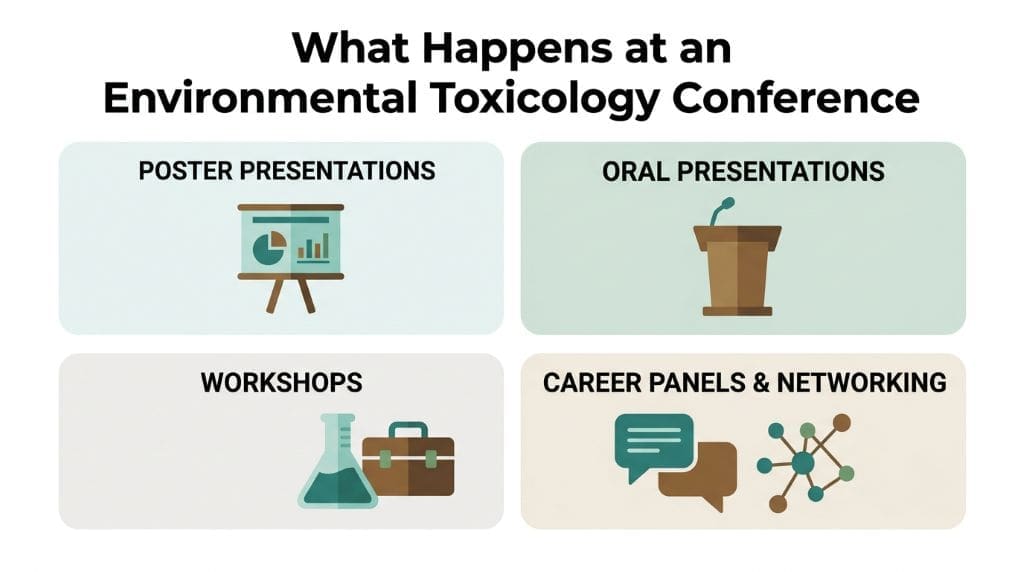
What Happens at an Environmental Toxicology Conference?
The format is more predictable than the students expect. Most of the programs run for two to four days and include both poster sessions and short oral presentations. Meanwhile workshops focuses on improving practical skills such as using software, statistics, or laboratory techniques. Career panels bring together people from universities, regulatory agencies, and companies. Networking receptions, on the other hand, leads to discussions that often lead to collaborations, internships, and mentorships.
Meetings arranged by professional societies such as SOT and SETAC are large-scale and draw thousands of delegates, with dozens of parallel sessions available. Student-oriented events, by contrast, are smaller and more accessible. For example, students organise the SETAC Young Environmental Scientists (YES) meetings. The 13th edition had 111 participants from 22 countries (Wehrli et al., 2026). A virtual, student-focused track such as the conference sessions organised by NYC STEM is smaller in scale and less expensive. Although it cannot match the scale of a meeting run by a large society, it can be an early, less stressful step; the format expands as your ambitions grow, and a first-time attendee can simply watch, ask questions, and collect names.
Real Student Research That Started at a Conference or Program Like This
It is easy to come up with statements about ‘students presenting research’ but difficult to believe them. To make this point clear, three published programs show what real student-level environmental research involves.
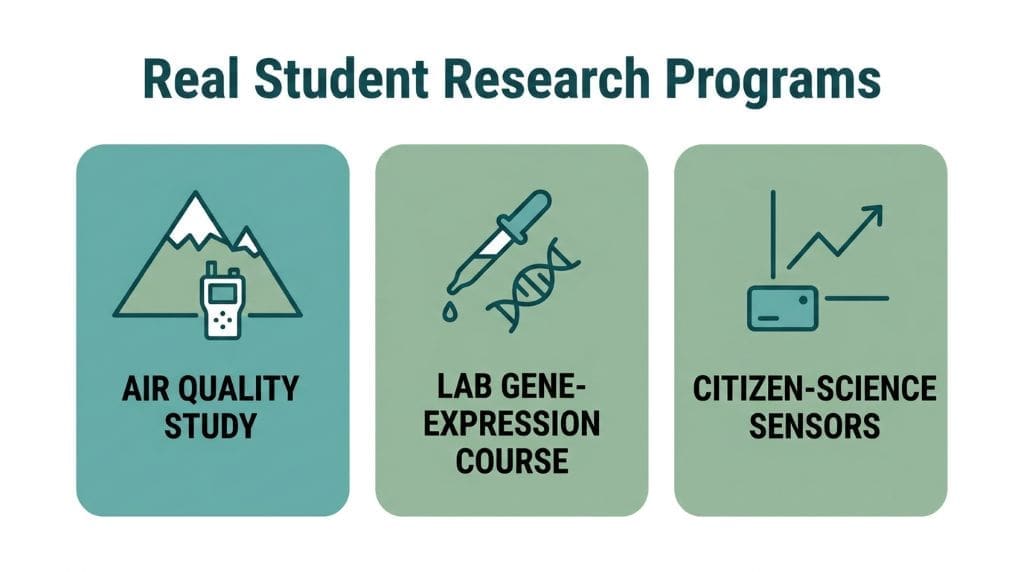
A Statewide Air-Quality Research Program: Air Toxics Under the Big Sky
In northwestern Montana, the high school students conducted their own investigations into air quality during the course of the school year. After examining particulate matter and its impact on respiratory health, they developed hypotheses, collected data at home and in their communities, and presented their work at a university symposium. A quasi-experimental study was further conducted with 379 eleventh- and twelfth-grade students found that participants scored 68.7% on the final content assessment, compared with 45.9% for the control group. Approximately twice as many of the participants formulated a valid hypothesis and research design (62% compared to 26%), while 24% stated that their interest in a science career had increased (Ward et al., 2016).
A Summer Lab Course Built on Environmental Toxicology: UC Davis’s qPCR Course
Students usually first encounter toxicology in a textbook chapter, but at UC Davis they had the opportunity to gain hands-on experience using a pipette. The Department of Environmental Toxicology ran a two-week summer course for high school students in which they made primers, extracted RNA, performed quantitative PCR, and examined gene expression associated with chemical defence in honey bees and mosquito fish exposed to pesticides and wastewater. Meanwhile, in 2022, all the students produced working primers, and in 2023, 81% did. The students also used bioinformatics databases to determine why some results failed (Spooner et al., 2024).
Turning a School Project Into Ongoing Environmental Health Data: The Ohio State Citizen-Science Project
While most school projects end when the academic term does, this project did not. Over four years, 14 students from Hilliard Davidson High School designed and used low-cost air-quality sensors that measured traffic-related pollutants. These students further led fabrication, calibration, cloud computing, and outreach activities, with support from Ohio State faculty in public health and engineering. The sensors supplied near-real-time data on a public website, and the first readings matched reasonably well with the EPA reference monitors for carbon monoxide and nitrogen oxides (Hyder & May, 2020). Several graduates also joined university research laboratories.

- Travel grants are given to students who give presentations to cover registration fees, flights, or accommodation.
- The meeting gave out awards for research and posters to the students for the excellent work they had done.
- Students are able to reduce their annual membership fees by means of subsidies.
- The government offers training help through programs run by agencies such as NIEHS and NSF.
- University’s outreach money is used to pay for equipment, reagents, and teacher stipends.
Professional Development
The Toxicology Education Summit noted that many funding programs go unused because most people don’t know they exist (Barchowsky et al., 2012). Moreover, student-run meetings such as the SETAC YES series neither charge a registration fee nor seek sponsorship to help with travel. The 13th YES meeting allocated €7,360 in travel grants (Wehrli et al., 2026). Most importantly, apply as early as possible, as several deadlines fall several months before the event.
Toxicology Conferences Calendar 2026–27
Environmental toxicology conferences run on a global calendar, with major society meetings spanning spring through fall and stretching across North America and Europe. From large in-person gatherings like the SOT Annual Meeting and SETAC’s regional conferences to flexible virtual tracks, students have multiple entry points throughout the year regardless of location or schedule. The table below outlines confirmed and tentative dates for the 2026–27 cycle to help with early planning.

| Conference | Organizing society | Format | Typical timing |
| SOT Annual Meeting and ToxExpo (65th) | Society of Toxicology (SOT) | In-person | March 22–26, 2026, San Diego, CA (the 2026 meeting ends the evening of March 25) |
| SETAC Europe 36th Annual Meeting | SETAC Europe | In-person | May 17–21, 2026, Maastricht, Netherlands |
| 14th SETAC YES Meeting | SETAC North America Student Advisory Council | In-person | August 4–7, 2026, University of South Carolina, Columbia, USA |
| SETAC North America Annual Meeting | SETAC North America | In-person | Autumn 2026 — confirm exact dates at setac.org |
| SOT Annual Meeting and ToxExpo (66th) | Society of Toxicology (SOT) | In-person | March 14–17, 2027, San Antonio, TX |
| 15th SETAC YES Meeting (European) | SETAC Europe Student Advisory Council | In-person | 2027, Prague, Czech Republic — dates to be confirmed |
| NYC STEM environmental toxicology conference track | NYC STEM | Virtual | Scheduled per intake — see nycstem.in |
Internships and Fellowships for High School Students in Environmental Toxicology
Very few formal internship programmes in toxicology are directed at teenagers;; the practical ones are more general in character since they accept school pupils. For example:
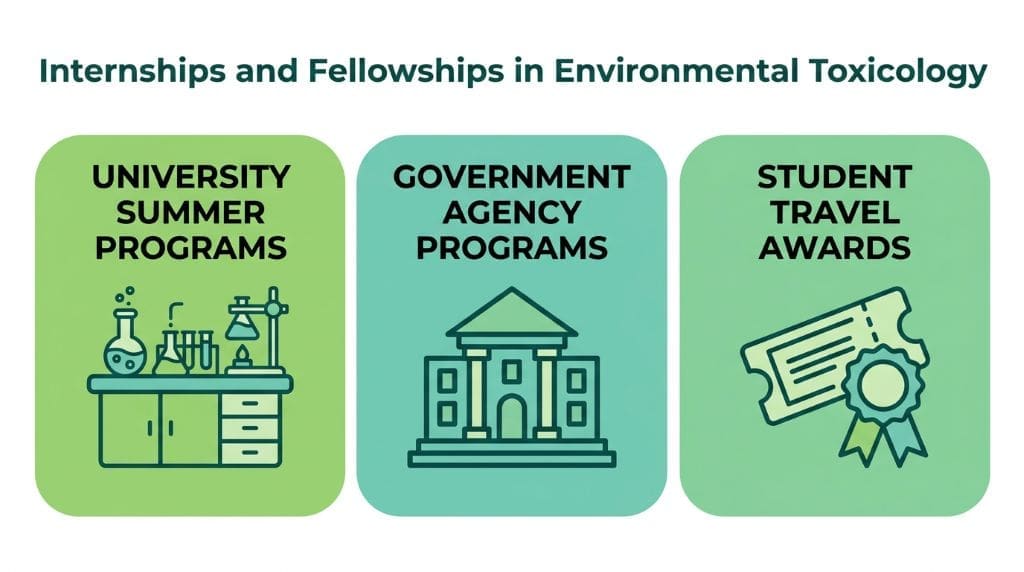
- UC Davis and the University of Montana organised summer research programs by environmental health or toxicology departments.
- The funds allow the EPA and NIEHS to run their student programmes and enable the students to have research experiences as well as carry out educational outreach via centres supported by the agencies.
- In society the student programmes, together with the SOT and SETAC travel awards and the undergraduate initiatives, act as informal fellowships and offer opportunities for networking.
- Projects involving citizen science and community monitoring help students match with academic mentors over several school years.
Job and Internship Opportunities
Most applications call for a reference from a teacher together with a short statement of interest. Research experience is usually not necessary; what is important is to keep the curiosity alive.
Mentorship and Networking: Why It Matters
Mentorship seems abstract without a clear structure, while the SETAC YES meetings clearly show what that structure entails. The 12th YES meeting, held in Landau, Germany, brought together 107 participants from 37 countries. Participants attended seven thematic sessions, four workshops, and six career talks. The organisers arranged the sessions so that participants at similar career stages could engage in open discussions. (Schmitz et al., 2024). Similarly, the 13th YES meeting in York, UK, followed the same approach by offering workshops on presenting with confidence and statistical analysis in RStudio (Wehrli et al., 2026).

At the same time, this kind of structure is not accidental. The 12th YES meeting didn’t introduce a registration fee; rather, it required active student membership together with a scientific contribution (Schmitz et al., 2024). Professional meetings also have the feature of senior mentoring. The SOT Education Summit says that mentoring is an important part of the profession, citing, for example, a teacher who encourages a student to carry out their first science project and a more experienced toxicologist who gives advice to early-career researchers (Barchowsky et al., 2012). Generally, the best mentoring relationships begin with a simple question following a talk.
Why This Matters Beyond the Conference: Students’ Exposure
The evidence indicates that this is not simply a question of career choice but one of personal concern. A study of Korean adolescents found detectable levels of environmental chemicals in their bodies. These chemicals were connected to second-hand smoke exposure (Lee et al., 2025). Meanwhile, a survey of 870 secondary school students in Iringa, Tanzania, found that only 13.5% correctly identified mercury as a heavy metal and just 43.2% were aware of its adverse health effects, even though most of the students believed that they understood the subject (Mashende et al., 2026).
The actual issue in the classroom is the gap between confidence and understanding. Unlike a purely theoretical lesson, students in a conference or research programme must put their knowledge into practice. Tanzanian students often linked exposure to heavy metals with unrelated diseases, suggesting a lack of firm conceptual understanding, rather than carelessness (Mashende et al., 2026). This same pattern appeared both near a wastewater treatment plant and near a municipal dumpsite because local environmental conditions made the effects very real.
How This Guide Was Compiled
The article is based on eight peer-reviewed, open-access sources, a full list of which is given below along with direct links. The author has omitted any sources that are not mentioned and has not included any personal anecdotes from attending conferences. Those who wish to study the conceptual background should first become familiar with the basic principles of environmental toxicology before proceeding to conference planning.
Frequently Asked Questions About Environmental Toxicology Conferences for Students
At most meetings which are aimed at students, the reply is no; but at the SETAC YES meetings it is enough for a person to be an active student member and to make a scientific contribution, and it is not uncommon for someone to give their first presentation. Likewise, large society meetings also accept individuals who do not have posters.
SETAC YES series, organised by students, does not impose a registration fee (Schmitz et al., 2024). Similarly, virtual tracks are designed for students held at the NYC STEM conference.
SETAC stands for the Society of Environmental Toxicology and Chemistry; its conferences are professional, involve peer review, and have participants from all over the world, whereas a local science fair typically has teachers and parents acting as judges.
Society-wide meetings rarely use this format, but student events and university symposia often do. For example, the Air Toxics Under the Big Sky programme concludes with a university-campus symposium where experts evaluate the participants’ work. (Ward et al., 2016).
You usually need to submit your application before the meeting and indicate the position you hold. They cover registration, travel, and accommodation. At the 13th YES meeting, Wehrli et al. (2026) noted that € 7,360 in travel grants was awarded.
People generally don’t realise how important it is to take along comfortable shoes, a notebook, a laptop with its charger, some business cards or a simple contact sheet, and two or three questions for each speaker.
Key Takeaways
- The conference turns what is learned in the classroom into actual research. It includes real scientists and establishes clear next steps.
- Funding comes from travel grants, student awards, membership subsidies, and various agency programs, but the deadlines are early.
- Students can do valuable work before college with the help of student programs. Montana’s work on air quality and the qPCR course at UC Davis are examples.
- Mentorship works best when it is structured, for example, in the case of the student-run SETAC YES meetings.
- The scientific aspect is personal in that adolescents suffer measurable chemical exposures and frequently misjudge how much they know themselves (Lee et al., 2025; Mashende et al., 2026).
- Begin on a small scale, apply for support, and gradually develop your involvement from a school project into a sustained, multi-year contribution that you can mention.
Verified Resources
- Society of Toxicology (SOT) — https://www.toxicology.org/
- Society of Environmental Toxicology and Chemistry (SETAC) — https://www.setac.org/
- National Institute of Environmental Health Sciences (NIEHS) — https://www.niehs.nih.gov/
- National Science Foundation (NSF) — https://www.nsf.gov/
- Open-access journals hosting the cited studies: Toxicological Sciences, International Journal of Science Education, Biochemistry and Molecular Biology Education, Environmental Health, Environmental Sciences Europe, Toxics, Discover Public Health.
References
Barchowsky, A., Buckley, L. A., Carlson, G. P., Fitsanakis, V. A., Ford, S. M., Genter, M. B., Germolec, D. R., Leavens, T. L., Lehman-McKeeman, L. D., Safe, S. H., Sulentic, C. E. W., & Eidemiller, B. J. (2012). The Toxicology Education Summit: Building the future of toxicology through education. Toxicological Sciences, 127(2), 331–338. https://doi.org/10.1093/toxsci/kfs111
Hyder, A., & May, A. A. (2020). Translational data analytics in exposure science and environmental health: A citizen science approach with high school students. Environmental Health, 19, 73. https://doi.org/10.1186/s12940-020-00627-5
Lee, J.-E., Jo, A.-R., Lee, S., & Lee, W. (2025). ExposureContact between a substance and an organism. More to environmental chemicals from environmental tobacco smoking in Korean adolescents. Toxics, 13(7), 546. https://doi.org/10.3390/toxics13070546
Mashende, N. G., Mwamaso, I. N., Shabani, L. N., Ntarisa, A. V., & Mpambije, C. J. (2026). Assessment of knowledge and awareness of heavy metals among secondary school students in the vicinity of Mkwawa University College of Education, Tanzania. Discover Public Health, 23(1), 364. https://doi.org/10.1186/s12982-026-01767-8
Schmitt, M., Meyer, F., Oster, S., Rocha, C. P., Green-Ojo, B., Dechent, B., Liu, H., Wehrli, M., Weighman, K., & Eriksson, A. N. M. (2024). Shaping the scientific future of environmental sciences in times of multiple crises: A summary of the 12th SETAC Young Environmental Scientists Meeting in Landau in der Pfalz 2023. Environmental Sciences Europe, 36(1), 37. https://doi.org/10.1186/s12302-024-00846-4
Spooner, Z. T., Encerrado-Manriquez, A. M., Truong, T. T., & Nicklisch, S. C. T. (2024). From primers to pipettes: An immersive course introducing high school students to qPCR for quantifying chemical defense gene expression. Biochemistry and Molecular Biology Education, 52(6), 633–647. https://doi.org/10.1002/bmb.21851
Ward, T. J., Delaloye, N., Adams, E. R., Ware, D., Vanek, D., Knuth, R., Hester, C. L., Marra, N. N., & Holian, A. (2016). Air Toxics Under the Big Sky: Examining the effectiveness of authentic scientific research on high school students’ science skills and interest. International Journal of Science Education, 38(6), 905–921. https://doi.org/10.1080/09500693.2016.1167984
Wehrli, M., Ashfield, N., Navarro Law, I., Stadelmann, B., Appelt, J.-S., Chen, F., Machado, C., Jennes, S., Bourassi, H., Dechent, B., Schmitt, M., Germing, K., Glasgow, S., Oster, S., Meyer, F., & Schmitz, M. (2026). Empowering the next generation of environmental scientists: Highlights from the 13th SETAC YES meeting in York, UK. Environmental Sciences Europe, 38(1), 41. https://doi.org/10.1186/s12302-026-01344-5
List of terms
- Exposure