At 7:00 a.m., you are woken by an alarm, smell coffee, decide to ignore the snooze button, and go to the kitchen. In less than a minute, your brain has simultaneously dealt with hearing, smell, balance, memory, and movement. The effort involved in this doesn’t seem difficult since the nervous system works in the background. So what then is neuroscience? It is the science that explains how billions of cells pass on electrical and chemical signals, how the system develops, and what occurs when it fails. The field also influences medicine, education, technology, and the daily decisions you make regarding sleep, exercise, and study habits. This guide provides clear definitions, explains how the processes work, and acknowledges the limits of current knowledge. By the end, you will understand how brain science relates to school, health, and a future career.
Key takeaways
- Neuroscience is the science that studies the nervous system and the part it plays in behavior.
- The adult human brain contains approximately 86 billion neurons, together with about the same number of supporting cells.
- Neurons pass on electrical signals and communicate with each other through chemical synapses.
- The ability of the brain’s circuits to be changed for life is known as neuroplasticity.
- The area has specialists who work in the fields of molecular, cellular, systems, cognitive, and clinical research.
- Students can choose to enter the field through biology, psychology, medicine, engineering, or data science.
Your seven-step path through this guide
- Define neuroscience and see how it differs from neurology.
- Meet the two main cell families: neurons and glia.
- Follow a signal from the dendrites through the axon to the synapse.
- See how brain regions and networks turn cell activity into behavior.
- Explore the branches, levels, and cell counts behind the field.
- Connect brain research to health, plasticity, ethics, and the tools used to study it.
- Plan a route from coursework to career.
What Is Neuroscience? A Clear, Practical Definition
So what exactly is the subject matter of brain science? Essentially, neuroscience is the study of the nervous system. This system comprises the brain, the spinal cord, and the networks of sensory and motor nerve cells that spread throughout the body. Neuroscientists investigate how these different components produce and regulate emotion, thought, behavior, and vital functions such as breathing and the heartbeat. The field is often mistaken for neurology, but the two are in fact different. Neurology is a medical specialty concerned with the treatment of patients who have disorders of the nervous system.

In contrast, neuroscience refers to research aimed at explaining how the system works from the outset. The field spans a wide range of scales, as scientists examine molecules, individual cells, networks, and entire brain structures. They look at typical development, normal functioning, and the conditions that disturb them. To sum up, neuroscience is a central field where biology, psychology, medicine, engineering, and data science converge.
What Does Neuroscience Study, in Plain Language?
A simple reading test illustrates how the system operates. As you read these words, your brain sends signals to your eye muscles to move them along the line of text. The eyes convert letters into signals, which are then transmitted along neurons to the brain. The brain interprets these signals, retrieves information from memory, and assigns a meaning to each word and to each sentence.
The whole process takes place almost instantly, which demonstrates how quickly the system functions. Neuroscientists study this system at every level, ranging from individual molecules to full behaviors. They also look at how a normal nervous system develops and functions, as well as the disorders that affect its development or function. Therefore, the brief answer to the question of what neuroscience includes is perception, learning, memory, movement, sleep, emotion, and language. All of these areas relate to one main objective: explaining how nerve cells control what we do.
How Neuroscientists Study the Brain
The questions in this area may seem simple at first but are, in fact, quite profound. For instance, how do we perceive the world around us? What enables us to learn from experience and retain knowledge for decades? And how do we plan a movement, utter a sentence, or read a friend’s mood? Scientists divide these questions into different levels of analysis, although these levels are still interconnected. At the molecular level, researchers look at channels and receptors within individual cells. Cellular scientists compare different types of neurons and their characteristics.

Systems researchers monitor the circuits responsible for vision, hearing, and movement. Cognitive and behavioral scientists investigate attention, decision-making, and social behavior. Computational scientists construct models to predict how signals travel through networks. All of these groups are working towards a single objective: a detailed biological explanation of behavior, including human behavior. New tools are continually extending the range of what each level can measure.
How Old Is Neuroscience as a Science?
Interest in the brain goes back a long way, but the structured field is younger than most people think. Around the turn of the twentieth century, Santiago Ramón y Cajal helped establish the neuron doctrine: the idea that individual cells form the nervous system and connect at specific points rather than forming one continuous web. That discovery made brain mapping a major area of research, and the work continues today using modern techniques.
Neuroscience as a separate discipline took shape later, in the decades after World War II, when scientists began to treat behavior as a biological problem to be solved. A 1989 National Research Council report looked at the field’s most important opportunities and described the endeavor as one of biology’s great frontiers. Progress has been steady, even if it has not been even across all areas of study. Yet many fundamental questions concerning development, learning, and disease are still unanswered, which is what makes the subject attractive to new entrants.
How the Nervous System Works: Cells, Signals, and Systems
Organization diagrams seldom apply to the study of biology, but the nervous system does have a clear, straightforward structure. The central nervous system consists of the brain and spinal cord, which are the body’s principal control center. The peripheral nervous system consists of the cranial and spinal nerves and connects the central nervous system to the rest of the body. Information travels in both directions: sensory nerves transmit information from the skin, eyes, ears, and other organs, while motor nerves pass on commands to the muscles and glands.
The motor portion is divided into two parts: the somatic branch controls voluntary movement, and the autonomic branch regulates involuntary functions such as heart rate and breathing. Within that second branch, the sympathetic system prepares the body for action, and the parasympathetic system then brings the body back to a calmer state. All activities carried out while awake depend on this system of activation and relaxation. Both branches continue to function constantly.
Neurons, Glia, and the Two Families of Brain Cells
The central nervous system has two main types of cells: neurons and glial cells. Neurons send and receive messages, while glial cells support and protect them. Glial cells help keep neurons in the right place, produce myelin, remove damaged cells, and control the chemicals around synapses. Myelin acts like insulation around some axons, helping nerve signals travel faster. Both neurons and glial cells are essential for the brain and nervous system to work properly.
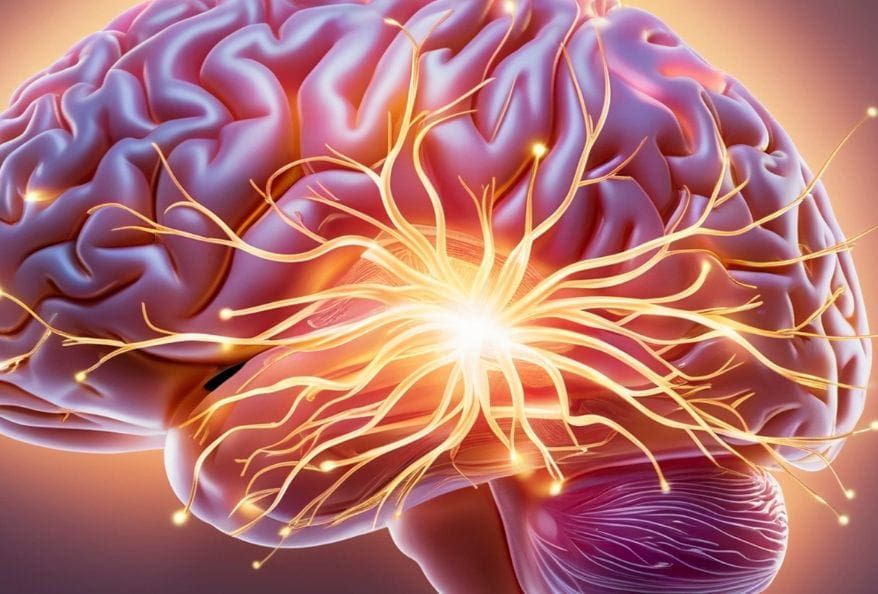
Every neuron has a cell body containing a nucleus, along with branches called dendrites and a long extension called an axon. Dendrites receive messages, while axons carry messages to other cells. Groups of axons form nerves, which allow the brain to communicate with muscles and organs throughout the body. Although glial cells provide important support, neurons are mainly responsible for sending electrical and chemical signals.
Three Main Types of Neurons
Neurons are often divided into three main types. Sensory neurons carry information from the senses to the brain, such as sounds, smells, and touches. Motor neurons send instructions from the brain and spinal cord to the muscles. Interneurons connect neurons and help manage communication inside the brain and spinal cord. There are hundreds of specialized neuron types, and most neurons last for a person’s entire life. Unlike skin or blood cells, they usually do not replace themselves. However, new neurons may develop in a few areas of the adult brain, a process called neurogenesis. Scientists are still studying how often this happens and how it affects learning, memory, and brain repair.
How Signals Travel: Action Potentials, Synapses, and Neurotransmitters
A neuron sends a message by firing an electrical pulse down its axon. At the axon’s end, the electrical signal becomes a chemical one. The cell releases messenger molecules called neurotransmitters into the synapse, a tiny gap between two neurons. Those molecules cross the gap and dock on the next cell’s dendrites, where the signal switches back to electrical form. The process repeats at every step along a pathway, which allows one cell to reach thousands of others. This pattern works like a digital code, and scientists call it an action potential. Neurons cannot make the pulse stronger or faster, so they vary its frequency instead. A gentle stimulus produces slow, steady firing, while a strong one produces rapid bursts. Fine motor control uses one rhythm, and heavy lifting uses another.

Synapses deserve great respect, as learning and memory rely on them. A single neuron contains about 1,000 to 10,000 synapses, and the human brain as a whole has around 100 trillion such junctions. It is this enormous figure that makes complex behavior possible. An extra level of control is provided by chemical messengers; for instance, dopamine affects movement, learning, attention, and emotion.
Whether it excites or suppresses a neuron depends on the type of receptors present on the receiving cell. Scientists associate problems with dopamine with schizophrenia, addiction, and impulsive behavior. A wide range of drugs—ranging from prescribed medications to opioids—work by mimicking natural messengers or by altering the way that cells release and take up these messengers. Chemistry thus has a bearing on how we think, feel, move, and act. The system can be readjusted over time as a result of repeated use, which is the reason why substance use disorders are regarded as brain conditions.
Brain Regions and Networks That Shape Behavior
The adult brain has four main sections, each with distinct responsibilities. The brainstem—which includes the midbrain, pons, and medulla—regulates survival functions such as breathing and blood pressure and helps process pain signals. The cerebellum, whose name comes from the Latin for “little brain,” coordinates movement and motor learning and may also contribute to language and attention. The diencephalon, which includes the thalamus and hypothalamus, helps regulate alertness, homeostasis, and reproduction.
The limbic system, located within this area, is involved in emotion, motivation, long-term memory and the sense of smell. The cerebrum, which is the largest portion, is in charge of voluntary behaviour as well as language, perception and consciousness. The outer layer of the cerebrum is made up of grey matter, while the white matter occupies the inside. Nothing single part functions by itself because there are dense networks that connect all the parts.
What Is Neuroscience Made Of? The Major Branches Explained
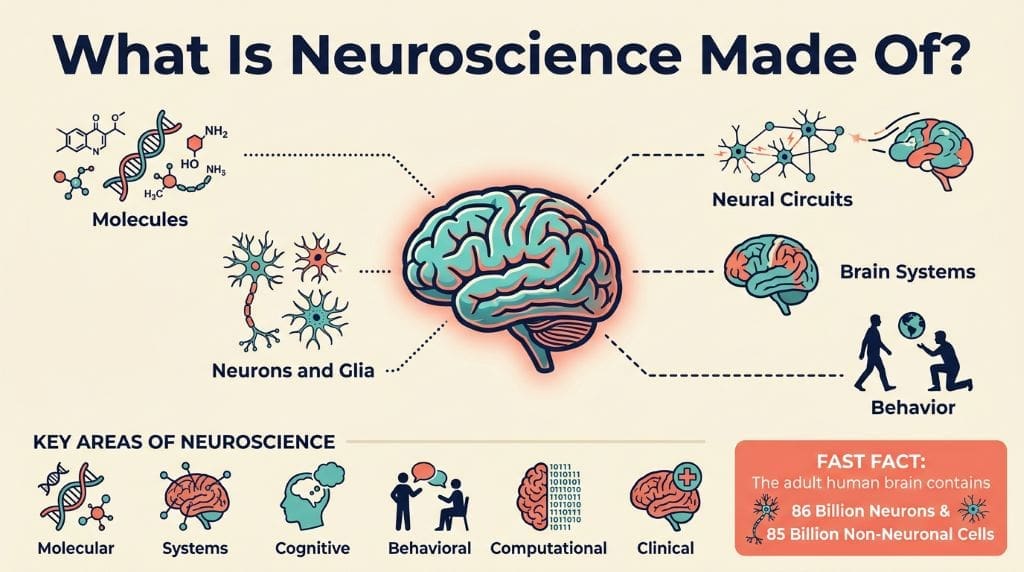
Neuroscience is not so much a single field as it is a big family. Although the specialists work alongside one another, each one has its own set of questions and methods. The molecular and cellular neuroscientists look at the smallest functional components, such as ion channels and receptor proteins. The systems neuroscientists examine the circuits responsible for vision, hearing, touch, and movement. Cognitive neuroscientists associate brain activity with thinking, attention, and decision-making.
Behavioral neuroscientists connect biology to behavior and habits, usually using animals as models. Computational neuroscientists construct models and simulations in order to predict how networks behave. Clinical and translational researchers take the discoveries and turn them into treatments for injury and disease. The common aim is what brings the different groups together, since all of these areas are concerned with providing a biological explanation of how brains cause behavior. New techniques constantly tend to blur the lines between these different areas.
From Molecules to Mind: The Levels Neuroscientists Study
Researchers usually refer to their work in terms of a series of levels, each level addressing different questions. At the lowest level, molecules like proteins and signaling chemicals carry out the chemistry of thought. Moving up one rung, single cells demonstrate how neurons fire and how glia react. At an even wider level, local circuits combine cells into small processing units which have specific functions.
Systems and whole-brain imaging then reveal how many of these units work together when a task is performed. In the end, behavior itself is used to test any theory, as an explanation has to be able to predict what people or animals actually do. Although most scientists concentrate on one or two of the rungs, teams combine their specialized knowledge to cover the entire ladder. This shared responsibility maintains steady and honest progress, since each level verifies the claims of the others. No single rung contains the whole story.
How Many Brain Cells Are There? What the Counts Say
Researchers long estimated that the brain contains 100 billion neurons, but careful counts have revised that figure. Suzana Herculano-Houzel’s team developed a method that turns brain tissue into a suspension of free nuclei, which researchers then count directly. Their findings indicate that there are about 86 billion neurons and approximately 85 billion non-neuronal cells in the brain of an adult human.
The cerebral cortex, which is the outer layer of the brain, contains about 16 billion of these neurons, equivalent to 19 per cent of the total. The size of the brain by itself tells us little about the number of neurons, since different species construct their brains according to different scaling principles. Compared with rodents, primates have a higher density of neurons. The human brain is particularly notable in that it is the largest primate brain with this cost-effective arrangement, which is also what gives it the highest total number of neurons among primates.
How Human Brains Evolved
Evolution introduces another level, and the account of humans is more unusual than that given in traditional textbooks. Although some common ideas consider the human brain to be a unique achievement of evolution, comparative studies have continually challenged that idea. There are indeed real differences between humans: larger association areas, a changed timing of development, and a different arrangement of the neural pathways involved in language. Scientists are now carrying out comparative studies among primates in order to identify which genetic changes are important and when they occur.
Many of the specific points are still not settled, and the researchers themselves are in open disagreement about how far the current models go. It is normal for a developing field to have such uncertainty when it is gathering data more quickly than it can explain it. Nevertheless, the fundamental point is clear: human brains amplify certain primate traits rather than violating the rules of biology. What appears to be special is often just an extreme form of a well-known pattern, and scientists can now measure it more accurately than ever.
Why Neuroscience Matters: Everyday Life, Health, and Ethics
Brain research is put to good use in clinics, classrooms, and homes. Doctors use it to understand conditions that cause loss of memory, movement, and speech. In Parkinson’s disease, dopamine-producing neurons in the basal ganglia are lost, leading to tremors and impaired balance. Huntington’s disease also targets that same area via a genetic mutation, and Alzheimer’s disease destroys the cells in memory areas such as the hippocampus. After a stroke or a head injury, neurons can be deprived of their supply of nutrients or scattered within minutes.
Research into treatments aims to find cures, and scientists hope that neural stem cells may one day replace cells lost to damage or disease. In the meantime, teachers apply the principles of learning science, athletes focus on recovery, and millions of people make every day decisions regarding sleep, stress, and exercise with brain health in mind. It is this practical application that accounts for the great amount of public interest in the field.
What Is Neuroscience Used For in Daily Life and Medicine?
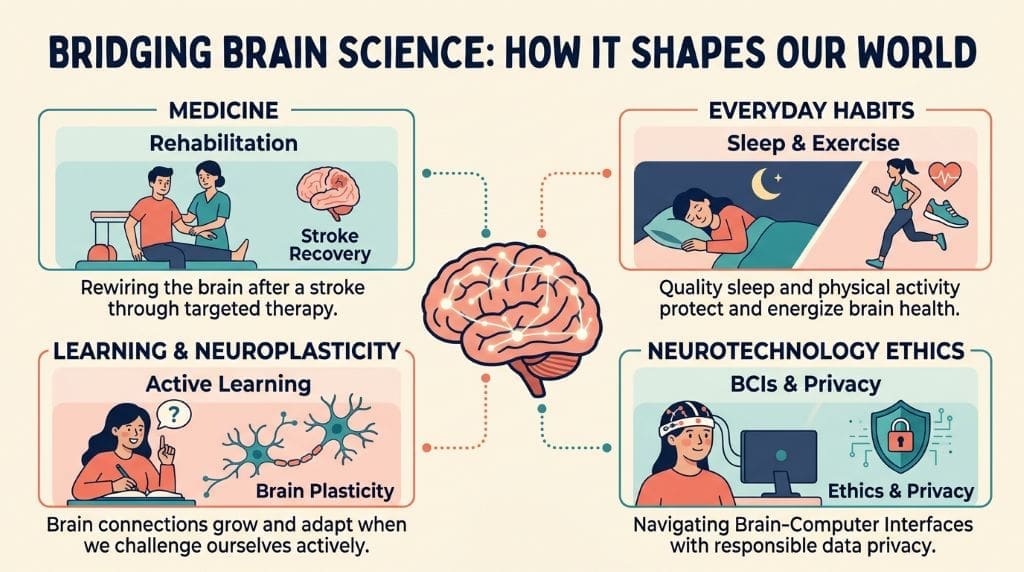
Brain imaging is now being used in hospital wards as well as in phone applications. Doctors employ it to detect tumors, strokes, and degeneration. Pharmacologists design drugs that act on specific receptors, thereby reducing side effects compared with earlier treatments. Rehabilitation specialists use the principle of plasticity to help stroke survivors relearn how to speak and move. Engineers develop brain-computer interfaces that connect brain activity to external devices, potentially enabling people who are severely paralyzed to communicate or move again.
Consumer technology has adopted similar concepts for sleep tracking and training concentration, although skeptics advise caution regarding exaggerated claims. Public health organizations examine how exercise, diet, and social connection can protect the brains of older people. All of these applications are based on the same fundamental principle: an accurate model of how neurons function and adapt. The more accurate the model, the safer and sharper the resulting tools become.
Neuroplasticity, Learning, and Recovery
The brain is constantly reorganizing itself, an ability with a serious designation: neuroplasticity. For most of the twentieth century, textbooks portrayed the adult brain as being fixed. Current evidence indicates that it reorganizes itself throughout life by creating, reinforcing, and eliminating connections. Synaptic plasticity modifies individual connections within seconds, whereas structural remodeling alters the shape of dendrites and circuits over weeks.
New cells are generated in specific areas through neurogenesis, and functional reorganization enables healthy tissue to assume functions lost to injury. This kind of change has a double effect: adaptive plasticity aids learning, memory, and recovery, but maladaptive forms lead to chronic pain, addiction, and some mental disorders. Researchers are now attempting to enhance the beneficial type while preventing the harmful one. Lifestyle factors such as sleep, exercise, and social interaction affect how effectively the system reorganizes. This objective motivates much of the current research on treatments.
Everyday studying shows plasticity at work. Imagine two groups of students learning neuron anatomy: one reviews labeled diagrams, while the other draws the structures from memory and then checks their work. Research on retrieval practice suggests the drawing group will usually remember more, because active effort, rather than passive review, strengthens connections.
Sleep matters too: students who stay up late often struggle to recall terms that felt easy the day before. Study habits are a small-scale version of what happens in labs and clinics, and understanding that link helps students work with their biology rather than against it. Learning about neuroscience, in other words, doubles as a lesson in how to learn anything.
Ethical Questions for a Neuro-Technology Era
Powerful tools lead to difficult questions, and neuroscience is currently facing several of them. When resources are limited, who should have access to costly treatments? How should companies manage the brain data produced by consumer headsets and brain implants? At what point does treating a disorder cease and enhancing a healthy brain begin? These discussions are important since technology is advancing faster than the rules can keep up with. Although researchers, doctors, and policymakers are increasingly developing ethical guidelines, reaching agreement is a slow process.
The regulators also have to consider privacy, autonomy, and fairness as they gain a better understanding of the science. Those entering the field will play a role in resolving these issues by building the tools and establishing the rules. It is not a sign of weakness but rather a professional obligation to acknowledge the questions that remain unanswered. Public confidence, in the end, rests on honest boundaries and clear consent. Each new device raises the same fundamental question: who benefits, and who bears the risk?
Neuroscience Research Methods
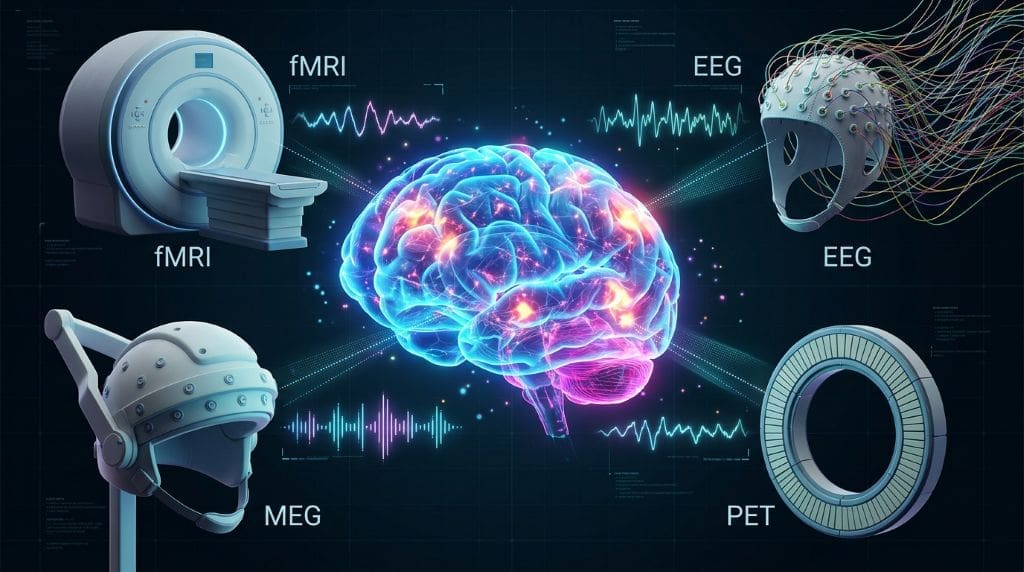
Since people cannot observe a thought directly, they use various specialized instruments for this purpose. Each technique records a different aspect of brain activity and no one method provides the full picture. Some of the tools monitor electrical signals as they happen, while others measure blood flow or energy consumption in different areas of the brain. Researchers usually combine two or more of these methods in a single study since each one makes up for the limitations of the others. For example, a psychologist investigating attention might combine rapid electrical recordings with detailed brain images. This combination shows both when and where a response takes place. The method chosen depends on the research question. A study focusing on split-second timing will use a fast tool, whereas one aiming at exact brain location will prefer a high-resolution scan. The appropriate choice always relies on what the researcher needs to observe.
fMRI, EEG, MEG, and PET: How They Work
The table below compares four widely used brain-imaging tools.
| Method | What It Measures | Spatial Resolution | Temporal Resolution | Best For |
| fMRI | Blood-oxygen changes tied to neural activity | High (millimeters) | Slow (seconds) | Locating active brain regions |
| EEG | Electrical activity at the scalp | Low (centimeters) | Very fast (milliseconds) | Response timing, sleep, epilepsy |
| MEG | Magnetic fields from neural currents | Moderate (mm-cm) | Very fast (milliseconds) | Timing plus rough location |
| PET | Metabolic activity or receptor binding via tracers | Moderate (several mm) | Very slow (minutes) | Brain chemistry, metabolism, receptors |
No technique performs better in every respect, and this compromise influences the way that researchers plan a study. fMRI gives clear images but responds slowly, the blood flow being delayed by a second or two after neural activity. EEG, on the other hand, picks up the signals within milliseconds. However, the electrodes placed on the scalp do not allow for a precise identification of the source. MEG does better in this regard since magnetic fields are not distorted. Nevertheless, the equipment is much more expensive to set up and to operate.
PET is different in that it monitors chemistry rather than just activity; this feature makes it useful for examining receptors and metabolism. It is less effective, though, at identifying exact moments in time. Clinics usually select a method according to how much it costs and how readily it is available. Laboratories, by contrast, choose tools that are suited to a particular question. The latest scanners are now capable of combining two methods in one machine. This combination reduces many of the previous trade-offs. Combined imaging might become the standard approach within ten years. Researchers would then be able to achieve both speed and precision.
Studying Neuroscience: From Classroom to Career
A plan helps, but staying curious matters more than getting off to a perfect start. High school students can begin with biology, chemistry, and psychology, then add statistics and computer science, since modern brain research relies on data. Undergraduates typically major in neuroscience, biology, or psychology, and some combine one of these with engineering or philosophy. Hands-on experience comes next: lab assistant roles, summer research programs, journal clubs, and science fairs all count, and virtual conferences now let students present projects without paying for travel. Consistency, not intensity, takes students farthest in this field.

Is Neuroscience a Good Career Path for Students?
Neuroscience careers reach well beyond the laboratory and the lecture hall. Academic researchers run experiments and teach at universities, and doctors specialize in neurology, neurosurgery, or psychiatry. Biotech and pharmaceutical teams design drugs, devices, and diagnostics, while neurotechnology startups need engineers who understand both hardware and biology.
Data scientists model brain signals for medical and consumer products, and science writers, teachers, and policy analysts make research accessible to wider audiences. Demand is rising as the population ages and more families are affected by brain disorders. Training can be long and competition intense on some paths, so early experience helps students make well-thought-out choices. A neuroscience background is also useful in law, business, and education.
How to Start Learning Neuroscience Now
Learning neuroscience costs nothing to start, since free lectures and open-access papers cover the essentials. Pick a brain anatomy course from a well-known university, such as MIT OpenCourseWare’s The Human Brain, work through it chapter by chapter, and test yourself weekly on key terms such as axon, synapse, and cortex. Keeping a student research blog gives your progress a public face, and joining a student club, an online community, or a local museum program keeps your interest alive. You won’t need a lab coat, a mentor, or a big budget to begin.
Frequently Asked Questions
Neuroscience is the study of the nervous system, including the brain, spinal cord, and nerves. It explores how these systems control thoughts, emotions, movement, learning, and basic functions such as breathing.
The human brain contains about 86 billion neurons, although the exact number varies slightly between studies. Neurons are nerve cells that send and receive information. The brain also contains many other types of cells that support neurons. Having more neurons does not automatically mean a person or animal is more intelligent. The brain’s abilities also depend on how its cells are organized and connected.
No. Neuroscience and neurology are related but different fields.
• Neuroscience is the scientific study of the nervous system.
• Neurology is a medical specialty that diagnoses and treats conditions such as epilepsy, stroke, and nerve disorders.
Yes, research suggests that new neurons can develop in certain areas of the adult brain. This process is called adult neurogenesis. Scientists are still studying how common and important this process is in humans. Research suggests that sleep, exercise, and learning may support healthy brain function. However, claims that the brain can completely “renew itself” should be treated carefully.
Depending on their specialty, they may design experiments, analyze brain scans and data, model brain activity, study treatments, teach, or write research papers. They often work with doctors, engineers, and computer scientists.
It may suit you if you enjoy biology, problem-solving, and learning how the brain works. Related careers include research, medicine, education, engineering, data science, and science communication.
How This Guide Was Compiled
This guide is based on primary sources and peer-reviewed research. References include explanations from the NIH, NICHD, and NINDS, a National Research Council report, and articles from journals such as Cell, Brain Research, and Frontiers in Human Neuroscience.
Neuron counts vary across sources, so the guide explains both the traditional estimate of 100 billion and the more recent estimate of about 86 billion. Where research remains contested, such as adult neurogenesis, the guide notes the uncertainty rather than presenting a settled conclusion. Links point to government, university, or open-access publications.
References
Gazerani, P. (2025). The neuroplastic brain: Current breakthroughs and emerging frontiers. Brain Research, 1858, 149643. https://doi.org/10.1016/j.brainres.2025.149643
Herculano-Houzel, S. (2009). The human brain in numbers: A linearly scaled-up primate brain. Frontiers in Human Neuroscience, 3, 31. https://doi.org/10.3389/neuro.09.031.2009
Massachusetts Institute of Technology. (2019). 9.13 The human brain [Course]. MIT OpenCourseWare. https://ocw.mit.edu/courses/9-13-the-human-brain-spring-2019/
National Institute of Child Health and Human Development. (2018). About neuroscience. U.S. Department of Health and Human Services. https://www.nichd.nih.gov/health/topics/neuro/conditioninfo
National Institute of Child Health and Human Development. (2018). What are the parts of the nervous system?. U.S. Department of Health and Human Services. https://www.nichd.nih.gov/health/topics/neuro/conditioninfo/parts
National Institute of Neurological Disorders and Stroke. (2025). Brain basics: The life and death of a neuron. U.S. Department of Health and Human Services. https://www.ninds.nih.gov/health-information/public-education/brain-basics/brain-basics-life-and-death-neuron
National Research Council. (1989). Opportunities in biology. National Academies Press. https://www.ncbi.nlm.nih.gov/books/NBK217813/
Sousa, A. M. M., Meyer, K. A., Santpere, G., Gulden, F. O., & Sestan, N. (2017). Evolution of the human nervous system function, structure, and development. Cell, 170(2), 226–247. https://doi.org/10.1016/j.cell.2017.06.036