A neuroscience learning roadmap turns a huge subject into small steps you can actually finish. This one is designed for high school students and uses only free resources. Picture yourself attending a study session on a Tuesday night. The chemistry notes are lying on the desk, a free brain lecture is playing softly on your laptop, and your phone is finally lying face down. Two months ago, that lecture seemed completely beyond comprehension; today, however, you know the key terms, can link them to what you studied last week, and can even predict what the speaker will go on to explain.
This improvement is due to sticking to a well-defined plan, not because of any special ability. Through gradually learning neuroscience, you transform a difficult subject into a series of small achievements. This neuroscience learning roadmap lasts nine months, beginning with the biology that you are already studying in class and finishing with an independent research project. You won’t need any laboratory equipment or prior research experience—all you need is curiosity, a notebook, and three to five hours every week (a little more in the project stage). This plan also addresses a common question: how can you learn neuroscience if your school doesn’t offer a course?
Key takeaways
- Months 1–3 build foundations: cell biology, chemistry basics, and brain anatomy vocabulary.
- Months 4–6 cover core concepts: neurons, synapses, neurotransmitters, and brain regions.
- Months 7–9 shift to research methods and a hands-on project you can finish.
- Free resources — from NINDS to MIT OpenCourseWare — cover every stage at zero cost.
- Competitions like the Brain Bee add deadlines, feedback, and a community.
- Consistent weekly hours beat occasional marathon study sessions.
Neuroscience Learning Roadmap, Months 1-3: Foundations
When you first start studying neuroscience, the main aim is to develop useful skills rather than merely reading textbooks. During your first three months, it’s important to study cell biology, basic chemistry, and brain anatomy. If you’d like a general overview before you begin, read our guide to what neuroscience is, then come back to this page for the step-by-step plan. Each week, set aside three to five hours and divide it among reading, note-taking, and short review sessions.
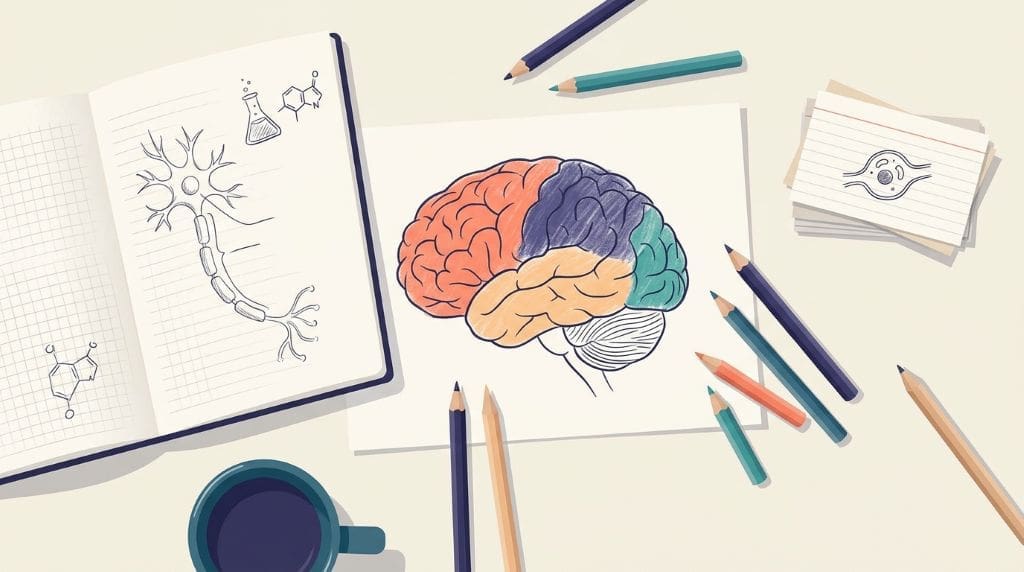
Start with beginner-friendly sources, as dealing with dense journal articles can be rather overwhelming at the beginning. Keep a record of your progress in a notebook, putting each structure, term, or process that you learn on a separate page. After three months of the neuroscience learning roadmap, you should be able to name the cerebral lobes and explain the function of a neuron. You should also be able to read an introductory chapter without pausing at every other word.
Biology & Chemistry Prerequisites
You don’t need to study chemistry at the college level if you want to get started; the chemistry taught in ninth and tenth grade is sufficient. The fundamentals needed for all subsequent topics include cell structure, protein function, and ion transport across membranes. When studying chemistry, concentrate on ions, solutions, and concentration gradients, as these three concepts underlie how neurons transmit electrical signals. If your school offers a biology course, take it and use each unit to practice neuroscience.

In addition, work on your math skills, particularly basic algebra and understanding data. Since neuroscience involves a lot of measurements, you must be at ease with units and averages if you want to do well later on. Physics is also useful because electricity and diffusion are common subjects in the study of the brain. If your school doesn’t offer a neuroscience course, ask a biology or psychology teacher whether they can help you arrange an independent study. A good many teachers are prepared to do this, and you can team up with other students to share the work.
Learn Neuroscience Basics: Start with Brain Anatomy
First learn the main sections – the forebrain, the midbrain and the hindbrain – then go on to study the four cerebral lobes and what they do. The NINDS Brain Basics fact sheet gives a detailed account of these structures and explains how the frontal, parietal, occipital and temporal lobes work together. Next, look at the internal structures: the thalamus, hypothalamus, hippocampus, and basal ganglia. Flashcards can be helpful, but drawing and labeling diagrams is more effective. Print out blank brain diagrams and fill them in from memory twice a week, putting function notes beside each label since both exams and competitions generally test function rather than just the location. In the end, you should be able to explain what takes place in the brain when you catch a ball, hear a song, or recognize a friend.
Neuroscience Learning Roadmap, Months 4-6: Core Concepts
From the fourth to the sixth month, the focus shifts from structure to function. It is only then that neuroscience ceases to resemble a simple list of vocabulary and begins to seem like a system. All sensations, thoughts, and movements pass through neurons, and once you understand this process you will see things differently from that point on. At the same time, you should keep the overall picture in mind.
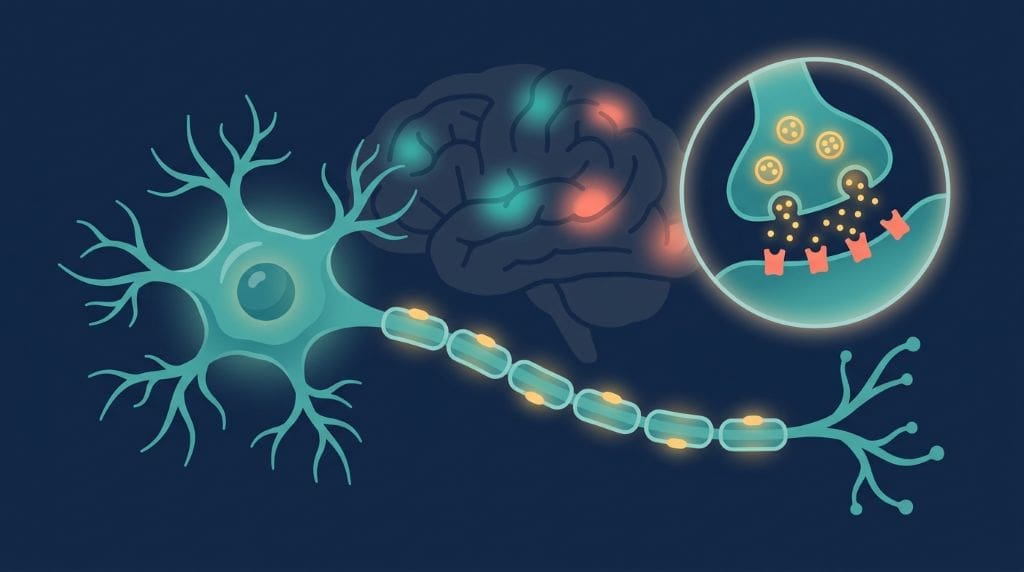
The teenage brain is still being built, and adolescent brain development continues well into the twenties, as a review in Neuropsychiatric Disease and Treatment points out. This is something that has a personal relevance since sleep, stress, and study habits all affect a brain that is still forming its connections. Arrange two study sessions each week: use the first for reading and the second for active recall. In practice, drawing the signal path from dendrite to axon terminal usually teaches more than simply rereading a chapter three times.
Neurons, Synapses & Neurotransmitters
A neuron consists of three main sections: the cell body, dendrites which receive signals, and an axon which sends out signals. Many axons are wrapped in a fatty substance called myelin, which speeds up the transmission of signals. At the point where two neurons come together, there is a small space referred to as the synapse. It is there that an electrical signal is converted into a chemical one. Neurotransmitters cross the gap, bind to receptors, and then the next cell reacts.
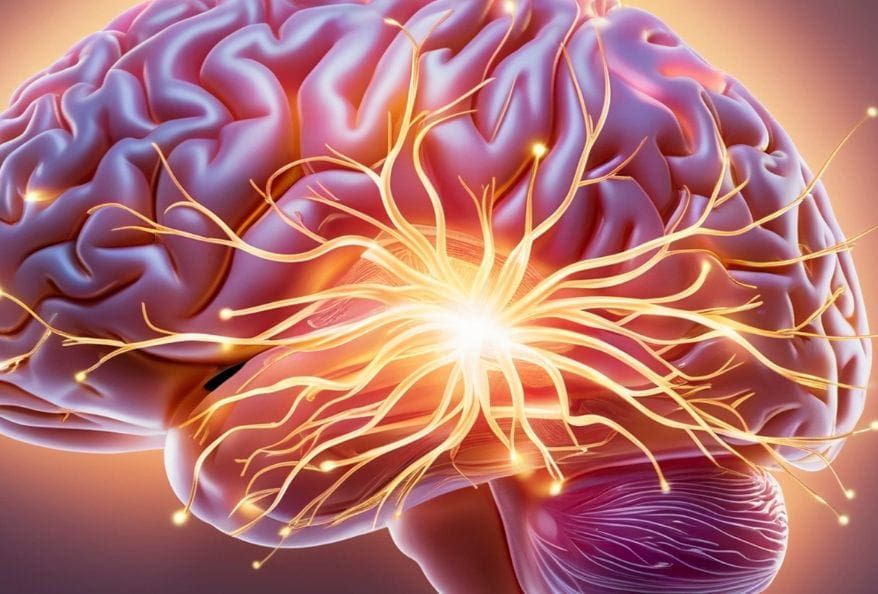
A relay race is a useful analogy. Each runner passes the baton only after touching the next person, just as vesicles release chemicals that must reach the correct receptors. If one runner holds back the baton, the chain stops, which shows how inhibitory signals work. Prepare a chart of the main neurotransmitters: acetylcholine, glutamate, GABA, serotonin, and dopamine. Note down what each one does and a disorder associated with it.
Brain Regions & Functions
When you have a good understanding of neurons, go on to connect them with various parts of the brain. The frontal lobes are involved in planning, reasoning, and self-control. The parietal lobes deal with touch, temperature and spatial awareness. The occipital lobes are responsible for processing what you see, and the temporal lobes handle sounds and assist in forming memories.
Below the cortex, the thalamus functions as a relay station, the hypothalamus regulates hunger, sleep and hormones, and the hippocampus helps form new memories. Attempt to associate each area with something you do every day; for instance, your frontal lobes help you decide to begin your homework, your temporal lobes enable you to recognize your friend’s voice on the phone, and your hippocampus helps turn last night’s review session into a lasting memory.
Also observe the way different parts of the brain work in coordination. For instance, when you read a sentence, you simultaneously engage your visual areas, language networks, and memory circuits. Why not draw a flow chart for each function rather than just for each structure? This approach will prove useful later on since current research is concerned with how networks work together rather than with individual areas.
Neuroscience Learning Roadmap, Months 7–9: Research Projects
In the last phase, you go from simply studying science to carrying out scientific research. Between months seven and nine, you will find out how researchers formulate questions, gather data, and present their results. Begin by looking at study design: consider what it means for a hypothesis to be testable, why control groups are important, and how sample size influences your conclusions. Then study some basic statistics, for instance averages, variability, and the difference between correlation and causation.
Design and Complete a Small Project
You won’t need advanced mathematics, but you should be able to read a results section without having to guess. After that, choose a topic that is small enough to complete. For example, an e-internship in behavioral neuroscience, as described in a 2017 report in F1000Research, enables high school students to analyze open gene expression databases online and produce a scientific poster. Projects of this kind allow you to go through the entire research process without a laboratory. Keep all the data sets, notes, and drafts; you can use your poster or paper to support your college applications.
Make a schedule that you can stick to; for instance, arrange two hours of reading, three hours of working with data, and one hour of writing every week (about six hours in total). You can present your findings at a science fair, during a school research night, or in a local competition. When you explain your project to other people, you’ll see what further knowledge you still need. Before you begin collecting data, get a teacher to look over your methods, and before you finish, ask a mentor to go through your final draft.
School psychologists and educational researchers often help turn research into practical study tips, as discussed in a 2021 paper in Frontiers in Psychology, and a short, polite email is an easy way to start that conversation. Keep a record of the questions you still can’t answer; this list can then serve as your summer reading plan and will help you continue to learn after you’ve completed the roadmap. By that point, you’ll know how to learn about neuroscience like a researcher, one question at a time. Doing one project will teach you more than starting five and then finishing none.
Choose Free Resources and Build a Routine
You should never let the cost prevent you from beginning. All 15 resources listed below are free to use (the Coursera and edX courses are free to audit, but certificates cost extra), and each one corresponds to a stage on this roadmap. Begin by using the reference websites to develop your vocabulary, then take a course when you want more structure, and use the open textbooks for more in-depth learning.
Rather than attempting to use all fifteen resources at the same time, save three or four of your favorites and keep them bookmarked, as having too many can be distracting. Establish a weekly routine by picking one reading source, one video source, and one practice source. Spend two weeks with each of them before proceeding to the next one. If a resource seems too difficult, go down the list; if it seems too easy, go up the list. In this way, you will continue to learn at a level that is appropriate for you, and that is the level at which you will make the most progress.
Free Neuroscience Learning Resources
- NINDS — Brain Basics: Know Your Brain — the government fact sheet used earlier; clear anatomy, neurotransmitters, and disorders.
- Neuroscience Online (UTHealth) — a free university textbook with chapters, figures, and self-checks.
- MIT OpenCourseWare 9.13, The Human Brain — a full semester course with lectures and assignments.
- MIT OpenCourseWare 9.01, Introduction to Neuroscience — foundational lectures on cells, circuits, and systems.
- OpenStax Anatomy and Physiology 2e — free textbook with strong chapters on nerve tissue and the senses.
- OpenStax Psychology 2e — connects brain biology to behavior and cognition.
- Khan Academy — Neurons and the nervous system — short videos and practice questions for beginners.
- Neuroscience for Kids (University of Washington) — simple explanations, experiments, and brain facts.
- Learn. Genetics (University of Utah) — interactive modules on genetics, the brain, and addiction.
- The Brain from Top to Bottom (McGill University) — layered explanations from beginner to advanced.
- NCBI Bookshelf — Neuroscience (Purves et al.) — a free full-text textbook for deeper reading.
- BrainFacts.org — articles, images, and researcher interviews from the Society for Neuroscience.
- Allen Brain Map — real datasets and atlas tools for project-stage students.
- Medical Neuroscience (Duke University, Coursera) — a university course, free to audit.
- Fundamentals of Neuroscience (Harvard University, edX) — a rigorous lecture series, free to audit.
Neuroscience Competitions & Olympiads for Students
Competitions provide a clear path and a sense of excitement, since they include deadlines, feedback, and a community of students who have an interest in the same subjects. The Brain Bee is the best example of such a contest, as it is a global event focused on neuroanatomy, brain facts, and clinical situations. A study of students in West Virginia showed that those who took part in the Brain Bee reported a greater interest in pursuing careers in neuroscience and had more confidence in their knowledge.
In that study, 96.8 percent of the participants stated that they would recommend the experience, a finding that is recorded in a systematic review of K–12 neuroscience programs published in Frontiers in Medicine. Regional rounds are usually held in the winter or spring, though dates vary. Preparing for the competition fits well within months four to six of the plan. To find out about the nearest chapter, it is necessary to inquire at a local university or medical school since the host institutions vary from year to year. Programs of this type are helping to increase access to neuroscience for high school students.
Explore Other Competitions and Prepare
There are also other competitions which concentrate on the same abilities. For example, the events in the Science Olympiad, such as Anatomy and Physiology, assess how quickly and accurately you can recall information. In contrast, the USA Biolympiad recognizes thorough knowledge of biology. Both the Regeneron ISEF and local science fairs feature independent research projects, offering you the opportunity to present your work. Even minor events, such as a school science night or a lecture at a library, can help you improve your presentation skills.
It’s a good idea to ask older students which competitions were most helpful to them before you decide which ones to enter. Two habits cause good competitors to stand out: firstly, you should practice with past questions while working under time pressure since speed is important in the actual rounds; secondly, you should explain your answers out loud to a friend because the act of teaching makes you more precise. If there are no competitions close by, then start a quiz club at your school and ask a teacher to act as judge for the monthly rounds.
Common Mistakes When Studying Neuroscience (and How to Avoid Them)
People often commit the same errors, but all of them can be corrected. The most frequent error is accepting popular statements about the brain without verifying them. A survey of 242 teachers found that, on average, they endorsed about half (49%) of the statements reflecting common neuromyths, as reported in a 2012 study published in Frontiers in Psychology. An example of this is the belief that students learn more effectively in their preferred learning style.
If trained teachers can fall for these myths, students can too. You should always think critically and check whether a claim is backed by peer-reviewed research. Other typical mistakes relate to study habits, not just to factual knowledge or the pace of study. If your notes aren’t proving helpful, try proven cognitive science study techniques before changing your entire timetable. Although you can expect a period of slow progress in the second month, remember that it will eventually pass.
- Skipping prerequisites — jumping into journal articles before cell biology and chemistry basics.
- Passive reading — highlighting chapters instead of answering questions from memory.
- Ignoring sleep — losing sleep to study can weaken the consolidation that stores new material.
- Collecting resources — saving thirty bookmarks and finishing none.
- Studying alone — no feedback means no correction of early misunderstandings.
- Quitting early — month two feels slow; consistency carries you through it.
Start Your Neuroscience Learning Roadmap Today
A neuroscience learning roadmap works because it replaces guesswork with a clear sequence: foundations first, core concepts second, and a real project last. You don’t need a lab, a mentor, or a big budget to begin. Pick one resource from the list, schedule your first three to five hours this week, and take the first step on your neuroscience learning roadmap.
Frequently Asked Questions
Grades 8 and 9 suit the foundations stage, because biology and chemistry courses run in parallel. Students in grades 10 to 12 can either follow the full nine-month plan or condense it to six months by adding weekly hours. The sequence matters more than the starting age.
No. Most beginner work happens on a laptop. Gene-expression databases, open datasets, and free analysis tools support real projects. If you want hands-on experiments, ask your school or a nearby community college whether they can loan basic supplies or host a weekend session.
Three to five hours fits most schedules during months one through six. Expect six to eight hours during the project stage, especially in the weeks leading up to a presentation. Spacing the hours across three days beats one long weekend block.
Yes. Understanding how the developing brain responds to stress and substances supports mental health literacy in practical ways, as a 2024 paper in Behavioral Sciences describes. Many students find that brain development lessons make health class material easier to apply.
No. Algebra, percentages, and graph reading carry you through most introductory work. Statistics helps during the research stage, and a free summer course can fill any gaps.
How This Guide Was Compiled
This beginner’s neuroscience guide is based on peer-reviewed, publicly available research and educational sources. The month-by-month plan builds skills step by step, similar to how K–12 programs organize topics. The study tips reflect widely used educational psychology practices such as retrieval practice and spacing. The points on adolescent brain development and school mental health literacy are supported by research published in Neuropsychiatric Disease and Treatment and Behavioral Sciences.
All citations come from open-access journals, government agencies, or universities, and every resource mentioned is free to use or audit. Before publishing, we checked all sources for accuracy. The main goal is to help you learn neuroscience using free, reliable sources and a steady weekly routine. This guide is for education only; if you have health questions, talk to a qualified professional.
References
Arain, M., Haque, M., Johal, L., Mathur, P., Nel, W., Rais, A., Sandhu, R., & Sharma, S. (2013). Maturation of the adolescent brain. Neuropsychiatric Disease and Treatment, 9, 449–461. https://doi.org/10.2147/NDT.S39776
Crusio, W. E., Rubino, C., & Delprato, A. (2017). Engaging high school students in neuroscience research through an e-internship program. F1000Research, 6, 20. https://doi.org/10.12688/f1000research.10570.2
Dekker, S., Lee, N. C., Howard-Jones, P., & Jolles, J. (2012). Neuromyths in education: Prevalence and predictors of misconceptions among teachers. Frontiers in Psychology, 3, 429. https://doi.org/10.3389/fpsyg.2012.00429
Minen, M. T., Lebowitz, N., Ekhtman, J., Oza, K., Yusaf, I., Katara, A., Aymon, R., & Plovnick, C. (2023). A critical systematic review of K-12 neurology/neuroscience pipeline programs. Frontiers in Medicine, 10, 1281578. https://doi.org/10.3389/fmed.2023.1281578
National Institute of Neurological Disorders and Stroke. (2025). Brain basics: Know your brain. National Institutes of Health. https://www.ninds.nih.gov/health-information/public-education/brain-basics/brain-basics-know-your-brain
Vento, P. J., Harrod, S. B., Patterson, B., Figas, K., Chandler, T., Chehoski, B., & Weist, M. D. (2024). Amplifying school mental health literacy through neuroscience education. Behavioral Sciences, 14(11), 996. https://doi.org/10.3390/bs14110996
Wilcox, G., Morett, L. M., Hawes, Z., & Dommett, E. J. (2021). Why educational neuroscience needs educational and school psychology to effectively translate neuroscience to educational practice. Frontiers in Psychology, 11, 618449. https://doi.org/10.3389/fpsyg.2020.618449