
Augmented reality is no longer science fiction—it’s already woven into student life. From Snapchat filters and Instagram effects to interactive learning apps and mobile games, augmented reality blends digital content with the real world in ways that feel natural and engaging. As a result, what once seemed futuristic has quietly become part of everyday routines.
At the same time, as AR technology continues to improve, a bigger question is emerging: Will augmented reality eventually replace smartphones altogether? While phones are not disappearing overnight, the way students interact with technology is clearly changing. Because of this shift, understanding AR now is especially important for those preparing for future careers in a tech-driven world.
What Is Augmented Reality?
Augmented reality (AR) is a technology that overlays digital elements—such as images, animations, text, or sound—onto the real world in real time. Unlike virtual reality, which places users inside a fully digital environment, AR keeps users grounded in reality while enhancing what they see.
For example, when you use a face filter on social media, digital effects are layered over your real face. Similarly, when a learning app places a 3D heart on your desk, the physical world stays real but gains an extra digital layer. Because of this balance, AR feels intuitive rather than overwhelming.
How Augmented Reality Works
Cameras: Seeing the World
The smartphone camera acts as the “eye” of AR technology. Not only does it capture live video, but it also measures depth, lighting, and distance. Consequently, digital objects appear correctly sized, well-lit, and realistically placed.
Sensors: Tracking Movement
However, cameras alone are not enough. Sensors such as gyroscopes and accelerometers track movement and orientation. As a result, when you tilt or rotate your device, the digital object remains anchored in place. This stability is essential for a convincing experience.
Software and SLAM Technology
Behind everything is powerful software. Most AR apps rely on SLAM (Simultaneous Localization and Mapping) to map the environment instantly. In other words, the system understands walls, floors, and surfaces in milliseconds, making interactions feel smooth and natural.
Why Augmented Reality Matters for Students
Today’s students are growing up in a world where digital skills are essential. Importantly, AR is not just entertainment—it is becoming a serious tool for learning, creativity, and career development.
Making Learning More Engaging
Traditionally, education has relied on textbooks and static images. In contrast, AR transforms lessons into interactive experiences. For instance, history students can explore ancient cities in 3D, while biology students examine organs from every angle. Because concepts become visual, understanding improves significantly.
Learning by Doing
Moreover, AR encourages active learning. Instead of reading about an idea, students interact with it directly. As a result, this hands-on approach supports different learning styles and makes education more inclusive.
Augmented Reality in Education
History That Feels Alive
Rather than memorizing dates, students can experience history. AR apps place pyramids, Roman temples, or medieval castles directly into classrooms. Consequently, learners understand scale, architecture, and culture more deeply.
Science Without Risk
Science labs can be expensive and dangerous. Fortunately, AR allows students to perform virtual experiments. Chemical reactions and molecular bonding happen digitally, making learning both safer and more affordable.
Reading Support
For students who struggle with reading, AR-enhanced books add animations, sound, and interaction. As a result, reluctant readers become more engaged and comprehension improves.
Language Learning Through AR
Learning new languages is often challenging because vocabulary feels disconnected from real life. However, AR solves this by labeling the world around students.
For example, when a learner looks at everyday objects through an app, the names appear in another language. Because context strengthens memory, language acquisition becomes faster and more natural. Ultimately, the real world replaces flashcards.
Gaming and Fitness: Learning Without Realizing It
Augmented reality has transformed gaming by moving it outside. Games like Pokémon GO proved that people enjoy walking, exploring, and socializing while playing.
For students, AR games combine:
- Physical activity
- Problem-solving
- Social interaction
As a result, fitness becomes fun rather than forced. Players focus on the mission, not the effort.
Social Interaction in Augmented Reality
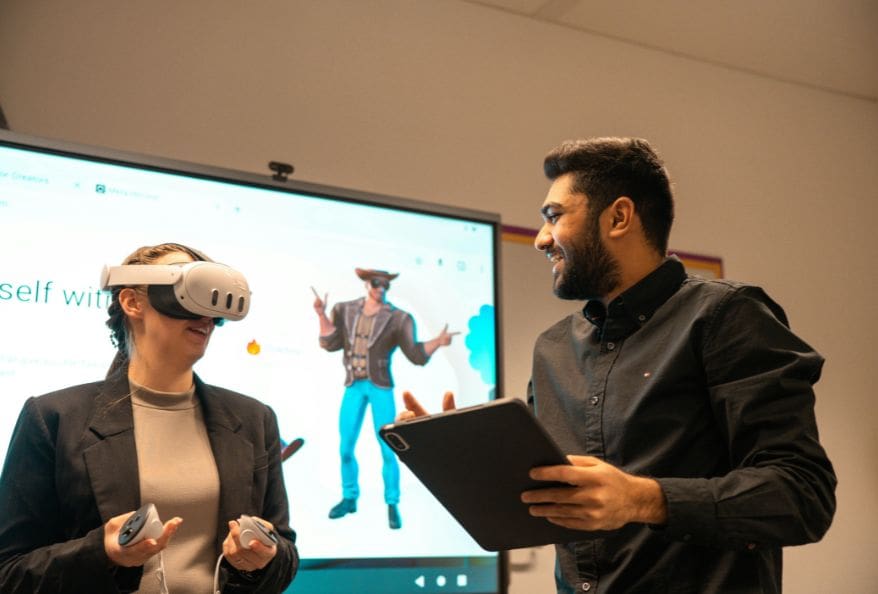
Unlike traditional screen-based gaming, AR promotes face-to-face interaction. Friends meet in parks or campuses and share the same digital experience in physical space. Consequently, this blend of real and digital interaction can strengthen social bonds and reduce isolation.
Shopping and Daily Life with Augmented Reality
Try Before You Buy
AR lets users try clothes, glasses, or shoes virtually. Furniture apps allow students to place sofas or desks into rooms at accurate scale. Therefore, purchasing decisions become smarter and returns decrease.
Navigation and Travel Assistance
Additionally, AR navigation overlays directions, reviews, and historical information onto real streets. Museums also use AR to animate artifacts, making visits more engaging and educational.
Augmented Reality in Healthcare and Training
Medical Education
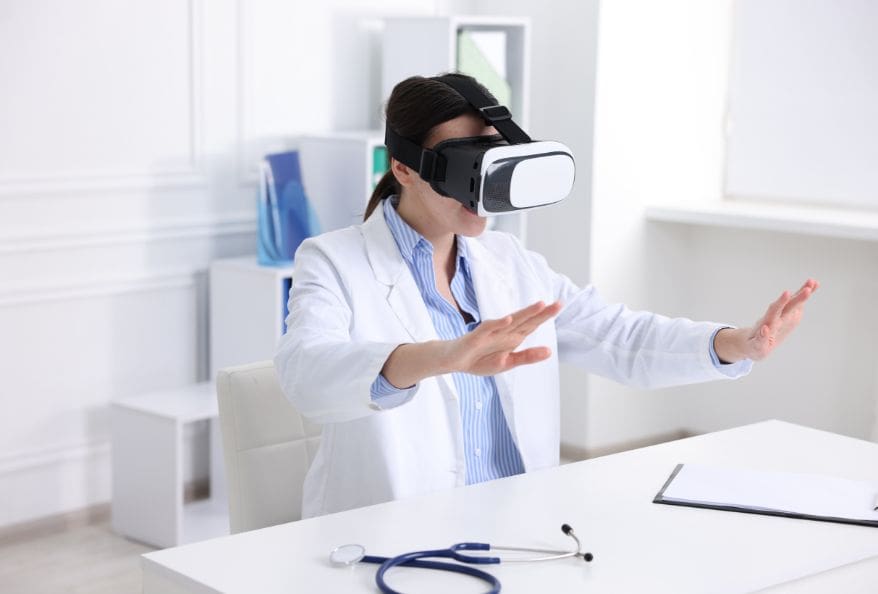
Medical students practice procedures on holographic bodies, where mistakes cause no harm. As a result, confidence and skill improve before real-world application.
Real-Time Expert Support
Furthermore, AR enables remote experts to guide professionals visually. Distance no longer limits access to specialized knowledge.
Industry, Careers, and the Future of Work
Augmented reality is already transforming industries such as manufacturing, engineering, and design. Workers use AR glasses for hands-free instructions, real-time error detection, and faster training.
Because of this shift, students with AR skills will have a strong advantage. Designers prototype instantly, engineers collaborate globally, and manuals become interactive.
Challenges and Risks of Augmented Reality
Privacy Concerns
Since AR devices constantly scan environments, data privacy is a serious concern. Strong regulations are necessary to protect users.
Physical Safety
At the same time, using AR while walking or crossing roads can be dangerous. Therefore, awareness and responsible use are essential.
Digital Dependence
Finally, as immersive tech grows, balancing digital experiences with real-world awareness becomes increasingly important.
Will Augmented Reality Replace Smartphones?
Smartphones are unlikely to disappear soon. However, they may evolve. As AR glasses and wearables improve, screens could become less central. Instead of looking down at phones, users may interact with digital information directly in their surroundings.
For students, this means adapting to more natural and immersive ways of using technology.
Conclusion: Why Augmented Reality Is the Future for Students
Augmented reality is not just another trend—it is a foundational technology reshaping education, work, and daily life. For students, understanding AR today means being prepared for tomorrow.
Although smartphones may change, reality itself is getting an upgrade. Students who understand this transformation will be ready not just to use the future—but to lead it.
References:
- Li, G., Luo, H., Chen, D., Wang, P., Yin, X., & Zhang, J. (2025). Augmented reality in higher education: A systematic review and meta-analysis of the literature from 2000 to 2023. Education Sciences, 15(6), 678. https://doi.org/10.3390/educsci15060678
- Mirza, T., Dutta, R., Tuli, N., et al. (2025). Leveraging augmented reality in education involving new pedagogies with emerging societal relevance. Discover Sustainability, 6, 77. https://doi.org/10.1007/s43621-025-00877-8
- Di Fuccio, R., Kic-Drgas, J., & Woźniak, J. (2024). Co-created augmented reality app and its impact on the effectiveness of learning a foreign language and on cultural knowledge. Smart Learning Environments, 11, 21. https://doi.org/10.1186/s40561-024-00304-x
- Asoodar, M., Janesarvatan, F., Yu, H., & de Jong, N. (2024). Theoretical foundations and implications of augmented reality, virtual reality, and mixed reality for immersive learning in health professions education. Advances in Simulation, 9, 36. https://doi.org/10.1186/s41077-024-00311-5