
Editor's noteEdited for clarity and structure. Note: The article includes external links to third-party services; readers should independently evaluate any referenced platforms before engaging.
Estimated reading time: 3 minutes
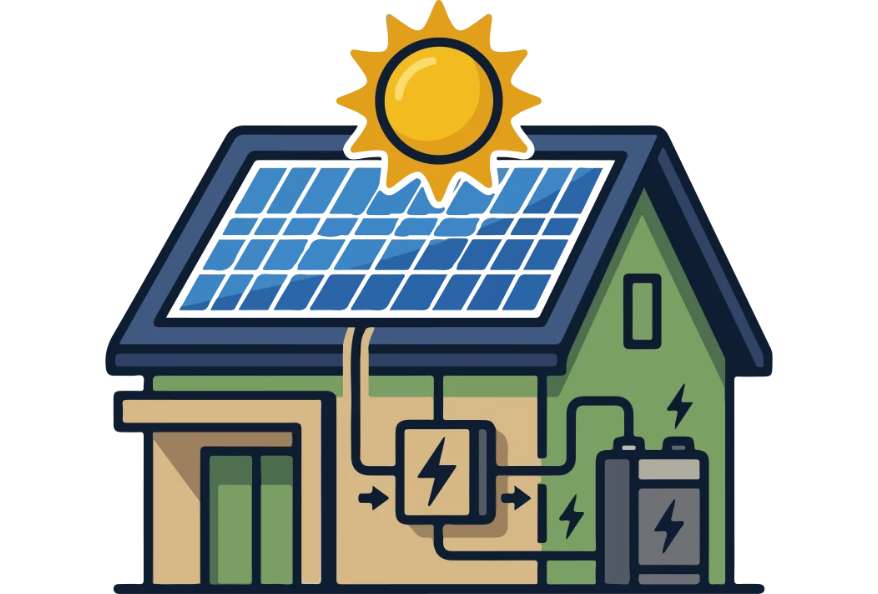
For a homeowner considering essential-load backup, equipment decisions must follow the required service and the conditions of the actual site. A residential solar installation converts rooftop sunlight into electricity for household use, with optional storage and backup functions. The FusionSolar residential portfolio includes smart energy controllers, module controllers, LUNA2000 energy storage and Smart Guard equipment for compatible home configurations. In this context, residential solar brings together specific components and controls rather than a single isolated device.
Backup planning starts by identifying essential loads and the duration they must operate during a grid outage. Equipment ratings, control policies and the responsibilities of the operating team should therefore be aligned before commissioning. A design assumption should be documented when it cannot yet be confirmed by measurements.
Conversion and module control
PV modules produce DC electricity, and a smart energy controller converts it to AC power compatible with the house. The inverter also participates in voltage, frequency and protection functions required by the local grid connection standard.
The residential product portfolio includes SUN2000 smart energy controllers and module-level controllers for selected configurations. Module-level functions can improve visibility or manage module operating conditions, but their benefit depends on array design and compatibility.
Home energy coordination
A compatible smart string battery can store part of the daytime surplus for later use. Charging and discharge behavior should follow battery power limits, reserve settings and the homeowner’s electricity priorities.

An integrated monitoring app can display generation, consumption and storage flows when appropriate meters are installed. Reliable energy-balance information requires correct meter orientation and communication setup.
Safety and resilience
A solar installation needs DC isolation, suitable overcurrent and surge protection, secure roof mounting and safe access for maintenance. Electrical requirements differ by jurisdiction and should be checked against approved installation practices.
Battery safety requires suitable location, ventilation and protective clearances along with the product’s internal electrical and thermal safeguards. Monitoring does not eliminate the need for accessible isolation and emergency procedures.
Performance over the system life
The expected yield should come from site irradiance, roof geometry, shading and documented system losses. Weather variation and module temperature affect delivered energy, so a fixed monthly savings promise is not a sound design basis.
A homeowner considering future EV charging, heat pumps or batteries should plan switchboard and control interfaces early. Capacity upgrades need to respect the grid connection, inverter capabilities and local approval process.

These considerations show why residential solar should be specified by its architecture, operating limits and interfaces. Residential solar is a coordinated system of generation, conversion, optional storage and safe household distribution. A good design connects the selected components to measured home demand rather than relying on a panel rating alone. The final selection still depends on applicable standards, actual site conditions and model-specific documentation.