

Climate change case studies show how plants live and grow. In this case, scientists studied Smilax glabra. They used maps and models to track its future. With this in mind, the study shows how climate shapes plant life. In short, results show clear shifts in habitat areas. To put it differently, plants move when climate conditions change. This case links science lessons with real use. Students can see how biology and data connect. In essence, this study builds curiosity and strong STEM interest
Key Takeaways on Climate Change Case Studies
- Climate change shifts plant habitats over time
- Rainfall controls plant growth strongly
- Models help predict future plant locations
- Human activity limits plant survival
- STEM skills help solve real problems
What are Climate Change Case Studies?
A Climate Change Case Studies approach is a close study of a real place or event. In this way, it shows how environmental changes affect both people and nature. These studies help explain risks like rising sea levels and extreme heat in simple terms. In addition, leaders use Climate Change Case Studies before making big decisions. They read these reports to understand problems and plan better solutions. In the long run, these studies make it easier to see risks clearly and take smart action.

In this way, Climate Change Case Studies act like simple logs for the Earth. They record changes in the oceans and the air, so we can see what is happening over time. In addition, these studies clearly show that human activity affects the global climate. All things considered, Climate Change Case Studies are strong tools for modern environmental science. In the long run, they help us understand problems better and guide smart action for the future.
“Climate Change Case Studies reveal practical lessons from real-world impacts”
Climate Change Case Study 1: The Sundarbans — Coastal Erosion and Rising Seas in South Asia

The Sundarbans is the world’s largest mangrove ecosystem, spanning roughly 10,000 square kilometers across India and Bangladesh. It is home to the Bengal tiger, several endangered species, and millions of people who depend on it for food, fishing, and protection from storms.
Over the past five decades, sea levels in this delta have risen at nearly twice the global average — about 3–8mm per year — largely due to both climate change and land subsidence. Cyclone frequency and intensity have increased, and saline water intrusion is now poisoning agricultural land.
Problem Statement:
Rapid sea-level rise and coastal erosion are causing island loss and displacement of coastal communities.
Causes:
- Natural: Land subsidence, cyclones, tidal erosion
- Human: Greenhouse gas emissions, reduced sediment flow, mangrove deforestation
Impacts:
- Environmental: Mangrove loss, shrinking Bengal tiger habitat
- Social: Climate migration, vulnerable coastal populations
- Economic: Agricultural losses due to salinity, declining fisheries
Response Strategies:
- Mangrove restoration and coastal protection
- Cyclone-resistant housing and early warning systems
- Salt-tolerant crops and adaptation programs
Climate Change Case Study 2: The Kenyan Rift Valley — Drought, Food Security, and Resilience
Northern Kenya’s Rift Valley is a semi-arid zone where rainfall is already scarce and variable. The region has experienced a dramatic shift in climate patterns over the past 30 years. Annual rainfall has decreased by 10–20% in many areas, while temperature has risen by approximately 1.0°C since 1970. Drought frequency has increased — where severe droughts once occurred every decade, they now occur every three to four years.
Problem Statement:
Frequent droughts are driving water scarcity and food insecurity among pastoral communities.
Causes:
- Natural: Rainfall variability, El Niño / La Niña effects
- Human: Climate change, deforestation, overgrazing, weak water infrastructure
Impacts:
- Environmental: Desertification, reduced vegetation and water sources
- Social: Hunger, school dropouts, conflicts over resources
- Economic: Livestock losses, reduced GDP during drought years
Response Strategies:
- Cash transfer programs (e.g., Hunger Safety Net Programme)
- Solar-powered water systems and boreholes
- Drought-resistant crops and livestock insurance
How Scientists Predicted the Future
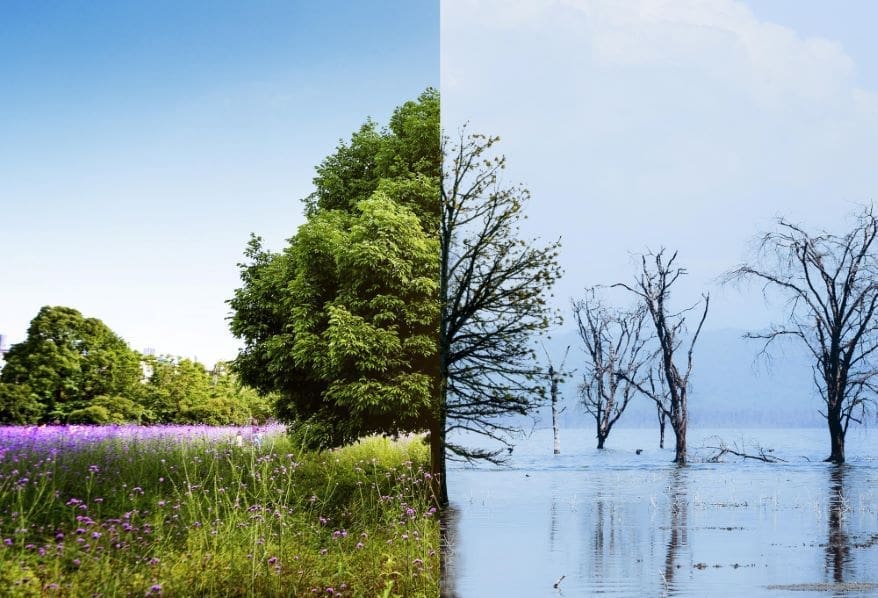
Climate change case studies use models and data to study plant growth. In this case, scientists used the MaxEnt model. This tool links plant locations with climate factors. To explain, it uses past data and shows future trends.
Prior to modeling, researchers collected plant location points. They cleaned and filtered the data with care. After that, they added climate factors like rainfall and temperature. These factors guide plant survival. In short, the model gave clear and reliable results.
Why MaxEnt Matters
Climate change case studies show how MaxEnt works with limited data. It compares known habitats with unknown areas. To illustrate, it predicts where plants may grow next. In short, this method helps scientists study climate effects faster. With this in mind, students can explore species distribution models. It shows how math and biology work together.
What Controls Plant Growth the Most
Climate change case studies show rainfall as the main factor and driver. In detail, rain in May, June, and November mattered most. With this in mind, plants need water during flowering stages. Less rain lowers growth success. More rain supports strong survival. In short, temperature also affects plant health.
Key Environmental Factors
- Rainfall during growth months
- Daily temperature changes
- Soil clay content
- Seasonal climate patterns
Climate change case studies show soil as a key factor in plant growth. In this case, soil stores water and nutrients. Clay-rich soil helps plants grow better. With this in mind, climate lessons become clear through real examples. In short, plant growth depends on many linked factors. Climate and soil work together. In the same way, small changes can create large effects.
Three Big Changes Observed
1. Habitat Expansion
Climate change case studies show the plant’s suitable area increased in future predictions. With this in mind, climate warming opened new regions.
2. Southward Movement
Climate change case studies show the habitat centre shifted toward southern areas. With this in mind, this shift shows clear climate pressure.
3. Mixed Suitability
Climate change case studies show some areas became less suitable later. With this in mind, high emissions reduced ideal habitats. In either case, emission levels affect outcomes. Lower emissions give better results. Higher emissions reduce good habitats. In short, climate change brings both gains and losses. Plants adapt, yet limits still exist.
Why Real Habitats Differ from Predictions
Climate change case studies show models give potential habitats, not real ones. With this in mind, human activity changes outcomes. Forest loss reduces plant space. Farming and cities replace natural land.
In short, overharvesting also harms plant populations. Even good climates cannot fix habitat loss. Fragmented land blocks, plant spread.
Human Impacts on Plants
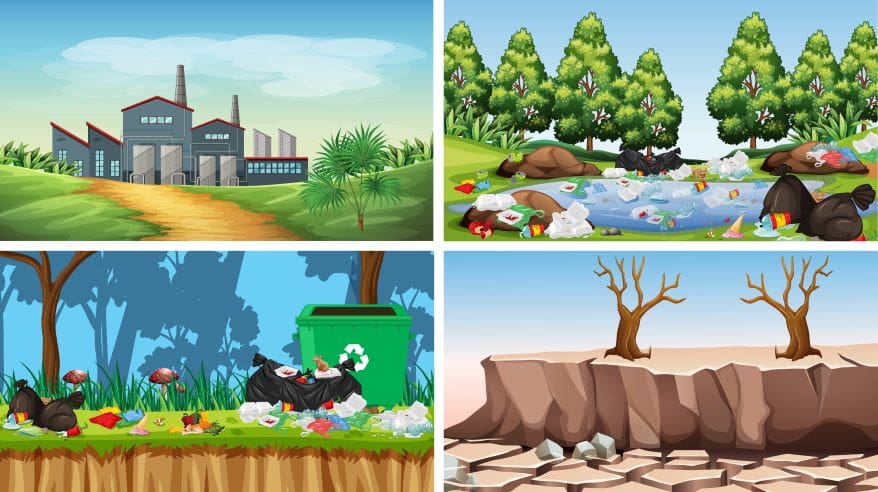
Climate change case studies show how human impact shapes plant habitats. With this in mind, deforestation reduces habitats. Farming changes soil. Cities block plant movement. Overharvesting reduces populations. In short, human impact is very strong. Models assume ideal conditions only. This creates gaps between prediction and reality.
Challenges and Limitations
- Limited funding: In this way, many studies do not get enough money, so research stays incomplete.
- Long data collection time: In addition, climate data takes years to gather, which slows results.
- Lack of technology: Some regions do not have proper sensors or tools, so accurate data is missing.
- Data gaps in developing areas: Because of fewer resources, many places have little or no records.
- Political barriers: In some cases, rules can stop data sharing or delay research work.
- Local bias: Studies often focus on one area, so results may not apply everywhere.
- Changing climate patterns: In the long run, fast changes make it hard to predict future trends.
- High research cost: Advanced tools and fieldwork can be expensive.
- Access issues: Remote or unsafe areas are difficult for scientists to study.
- Dependence on models: Many studies rely on models, which may not always be fully accurate.
Future Scope and Student Opportunities
The future of environmental STEM is incredibly bright. Emerging trends include Direct Air Capture and bio-engineered corals. For the most part, automation and robotics will help clean our oceans. These fields offer high-paying careers for curious students.
Student Project Ideas
Micro-plastic Filters: Design a low-cost tool for local rivers.
Urban Heat Maps: Use satellite data to find hot spots in your city.
Solar Apps: Create a software tool that tracks home energy savings.
Frequently Asked Questions on Climate Change Case Studies
Climate change case studies examine real-world examples of how climate change affects environments, communities, and economies. They analyze causes, impacts, responses, and lessons learned to show practical outcomes and inform future action.
They make climate change easier to understand by connecting big scientific ideas to specific events or places. They also help compare what works, what fails, and what can be improved in different settings
A strong case study usually has a clear location or sector, explains the climate impact, shows evidence or data, and describes the response or lesson learned. It should also connect local experience to wider climate trends.
Reference
Sun, X., Guan, J., Meng, L., Wang, C., Chen, N., Wei, T., & Xing, S. (2026). Predicting future habitat suitability of Smilax glabra under climate change scenarios. Scientific Reports. https://doi.org/10.1038/s41598-026-36064-6