
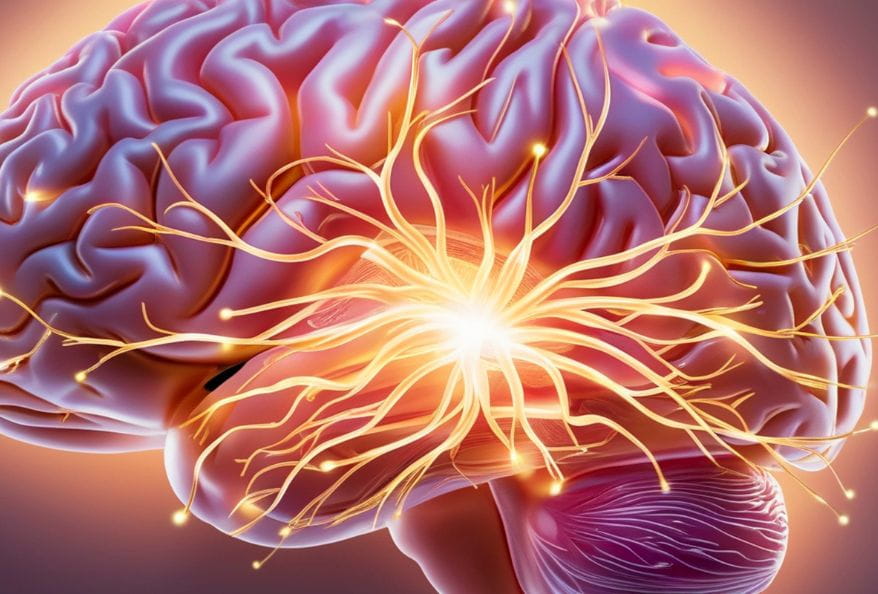
Understanding the human brain remains one of the most complex challenges in science. Brain mapping student research is helping scientists uncover how different parts of the brain control thoughts, behavior, and emotions.
Students in neuroscience programs are actively contributing to studies that explore neural activity, brain connectivity, and cognitive function. Through modern technologies such as brain imaging and neural data analysis, student researchers help expand our understanding of the brain.
Brain mapping refers to the process of identifying and visualizing different regions of the brain and how they interact. By mapping neural pathways, researchers can better understand how brain cells communicate and process information.
These discoveries are important not only for science but also for medicine. Brain mapping research can lead to better treatments for neurological disorders, mental health conditions, and brain injuries.
Brain Mapping Student Research and Modern Neuroscience Tools
Modern technology plays a critical role in brain mapping student research. Researchers rely on advanced imaging techniques to observe brain activity in real time.
Some of the most widely used brain imaging tools include:
Functional Magnetic Resonance Imaging (fMRI)
This technology measures changes in blood flow in the brain to identify active regions during cognitive tasks.
Electroencephalography (EEG)
EEG records electrical activity in the brain using sensors placed on the scalp.
Magnetoencephalography (MEG)
MEG detects magnetic signals generated by neural activity.
These technologies allow students and researchers to analyze how the brain processes information during learning, memory formation, and decision-making.
Brain Imaging Techniques in Brain Mapping Student Research
Brain imaging techniques provide valuable insights into neural activity. For example, when individuals perform tasks such as reading or solving problems, specific brain regions become more active.By studying these patterns, researchers can better understand cognitive functions and neural networks.
Brain Mapping Student Research in Cognitive Science
Cognitive science is a major area of focus in brain mapping student research. Researchers study how the brain processes language, memory, perception, and emotions.Students often participate in experiments designed to observe brain activity during specific tasks. For example, researchers may ask participants to solve puzzles or recall memories while their brain activity is monitored.This data helps scientists understand how the brain organizes and processes information.
Memory and Learning in Brain Mapping Student Research
Memory formation is closely linked to specific brain structures such as the hippocampus.Brain mapping studies have shown that learning new skills can strengthen neural connections. These discoveries are important for education research because they help explain how students learn most effectively.
Brain Mapping Student Research and Neurological Disorders

Another important focus of brain mapping student research is understanding neurological disorders.Brain mapping technologies allow researchers to identify abnormal brain activity linked to certain conditions. This research helps scientists develop better treatments and therapies.
Some neurological conditions studied through brain mapping include:
- Alzheimer’s disease
- Parkinson’s disease
- Epilepsy
- Depression
- Traumatic brain injuries
By analyzing brain activity patterns, researchers can identify early warning signs of these disorders.
Medical Applications of Brain Mapping Student Research
Brain mapping research also assists doctors in planning surgical procedures. Neurosurgeons use brain maps to avoid damaging critical brain regions during surgery.
For example, surgeons treating epilepsy may use brain mapping to identify the exact location of abnormal neural activity.This approach increases surgical precision and improves patient outcomes.
Brain Mapping Student Research and Artificial Intelligence
Artificial intelligence is becoming an important partner in brain mapping student research. AI algorithms help analyze large volumes of neural data collected from brain imaging technologies.
Machine learning systems can detect patterns in brain activity that may not be visible to human researchers.For example, AI tools can analyze thousands of brain scans to identify patterns associated with neurological diseases.
AI and Neural Data in Brain Mapping Student Research
AI-powered analysis improves the speed and accuracy of neuroscience research.Students involved in computational neuroscience often use programming languages and data analysis tools to study neural networks.These interdisciplinary approaches combine neuroscience, computer science, and data science.
Brain Mapping Student Research in Education and Learning
Education researchers are increasingly interested in brain mapping student research because it helps explain how people learn.
By studying brain activity during learning tasks, researchers can identify strategies that improve memory retention and cognitive performance.For instance, studies suggest that active learning techniques stimulate multiple brain regions, improving long-term understanding.
Learning Strategies in Brain Mapping Student Research
Brain mapping studies highlight several effective learning strategies:
- Repetition and practice strengthen neural connections.
- Visual learning activates multiple brain regions.
- Sleep improves memory consolidation.
- Active engagement enhances cognitive processing.
These insights can help educators design more effective teaching methods.
Ethical Considerations in Brain Mapping Student Research
While brain mapping student research offers significant benefits, it also raises ethical questions.
Brain data is highly sensitive because it reflects cognitive processes and mental health conditions. Researchers must ensure that participant privacy and consent are carefully protected.
Ethical guidelines also regulate how brain imaging data is collected, stored, and used in scientific research.
Responsible Research in Brain Mapping Student Research
Responsible neuroscience research requires transparency and ethical oversight.Universities and research institutions follow strict protocols to protect participants and maintain scientific integrity.These ethical frameworks ensure that brain mapping research benefits society while protecting individual rights.
The Future of Brain Mapping Student Research
The future of brain mapping student research looks promising as technology continues to advance.
New imaging technologies are improving the resolution and accuracy of brain scans. Scientists are also developing techniques to map entire neural networks more efficiently.
Large-scale projects such as the Human Brain Project aim to create detailed maps of brain structures and connections.These initiatives involve collaboration between scientists, engineers, and student researchers worldwide.
Emerging Technologies in Brain Mapping Student Research
Emerging technologies may further transform neuroscience research. Innovations include:
- High-resolution brain imaging systems
- Neural interface technologies
- AI-driven brain analysis tools
- Brain-computer interfaces
These technologies may eventually lead to breakthroughs in understanding consciousness, intelligence, and mental health.
Conclusion
Brain mapping student research is playing a critical role in advancing neuroscience and understanding the human brain. By studying neural activity and brain connectivity, student researchers contribute to discoveries that improve medicine, education, and technology.
Through advanced imaging tools, artificial intelligence, and interdisciplinary collaboration, brain mapping research continues to expand our knowledge of how the brain functions.
As scientific techniques evolve, brain mapping student research will remain essential in uncovering the mysteries of cognition, neurological disorders, and human intelligence.
References
- Amunts, K., Knoll, A., Lippert, T., & Zilles, K. (2019). The Human Brain Project: Creating a European research infrastructure to decode the human brain. Neuron, 92(3), 574–581. https://doi.org/10.1016/j.neuron.2016.10.046
- Staton, S., Coles, L., Normore, G., Casey, C., Searle, B., Houen, S., Potia, A., Crompton, R., Long, D., Hogan, M., & Thorpe, K. (2024). The brain in context: A scoping review and concept definition of neuro-informed policy and practice. Brain Sciences, 14(12), 1243. https://doi.org/10.3390/brainsci14121243