

Artificial intelligence is everywhere now, from unlocking your phone to recommending shows on Netflix and assisting doctors in diagnosing diseases faster. Despite its prevalence, many people remain confused about AI’s real-world applications. If you’re looking for AI applications suitable for beginners, you’re not alone. Some wonder if AI is just hype or something worth learning. The reality is somewhere in between. AI broadly refers to creating machines that mimic human intelligence, while Machine Learning (ML) is a specific area focused on algorithms that recognize patterns in data. These technologies are integrated into many everyday apps you already use.
Meanwhile, Machine Learning is closely linked to Supervised Learning, Unsupervised Learning, Neural Networks, and Training Data, which form the foundation of what you will read ahead. Understanding how machine learning differs from deep learning helps clarify these foundational ideas right from the start. This guide strips away the jargon. It shows you what matters today. It explains how AI touches your work and life right now. Even better, AI opens career paths for everyone — no coding background required.
Key Takeaway
- AI is not one thing — it spans simple automation to advanced deep learning systems.
- Most beginner-friendly tools require no coding knowledge at all.
- Real-world applications already exist in healthcare, education, and creative fields.
- Starting with practical tools builds confidence faster than studying theory first.
- The job market rewards people who combine AI literacy with domain expertise.
How Does AI Actually Work for Beginner-Level Learners?
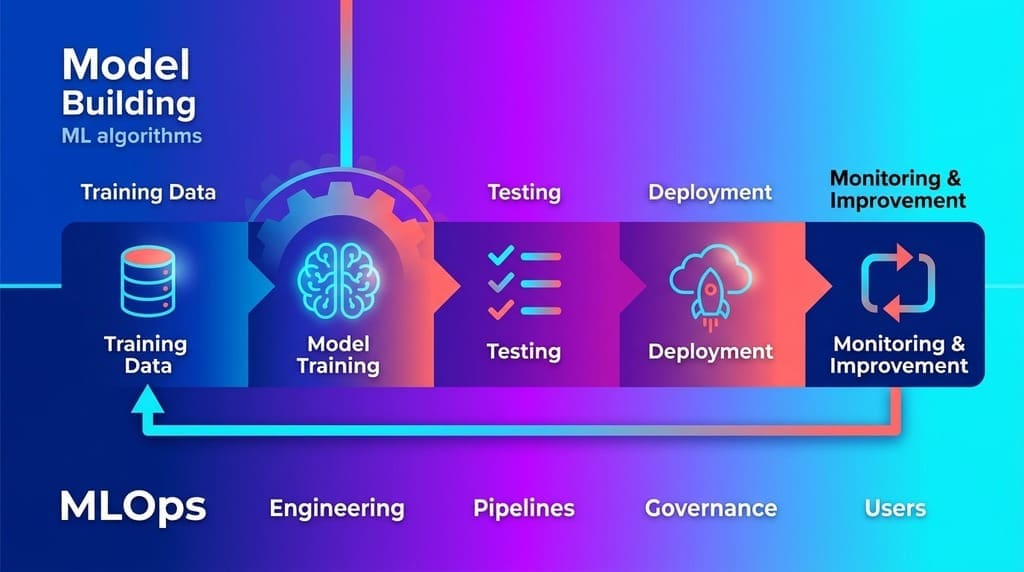
Many people think AI requires a PhD in mathematics. That idea is outdated. Modern tools hide the complexity behind simple interfaces. At its core, AI learns from examples. You feed it data. It finds patterns. Then it makes predictions or generates new content. This process mirrors how a child learns to identify animals after seeing many pictures. Altogether, these AI Applications For Beginners demystify what once seemed impossible for non-experts to approach. These practical AI Applications For Beginners make it easier for anyone to start exploring artificial intelligence.
Understanding AI, Machine Learning, and Deep Learning
AI
AI is the broadest term. In general, any machine that mimics human intelligence qualifies as artificial intelligence. For example, this includes rule-based systems, such as chess engines developed decades ago. Therefore, AI covers a wide range of technologies, from simple automated programs to advanced modern systems.
Machine Learning
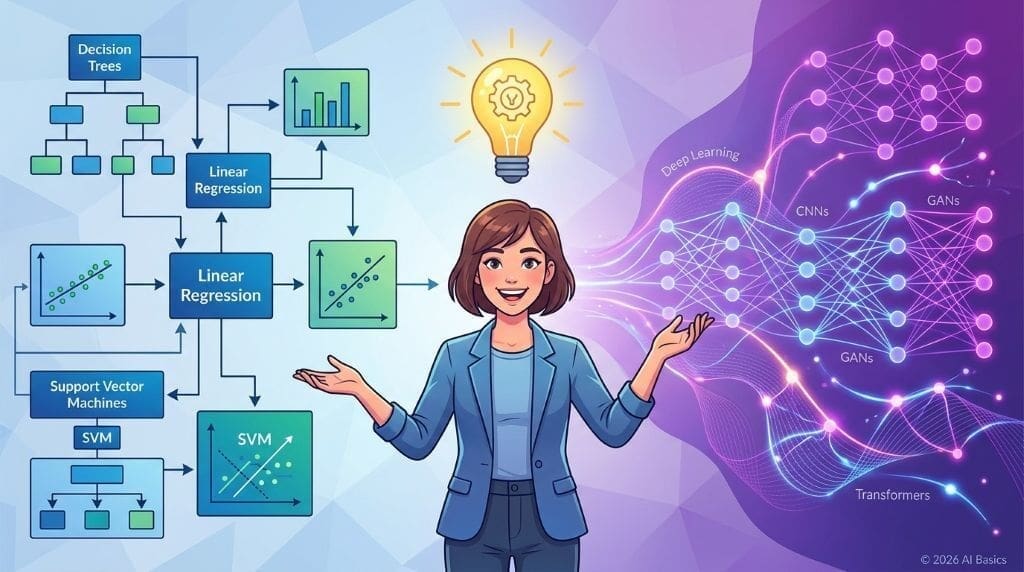
Machine learning is a subset of AI in which systems improve through experience without explicit programming. Instead, the algorithm adjusts itself by analyzing training data. As a result, the system can identify patterns and make predictions more accurately over time.
Deep Learning
Deep learning is a subset of machine learning that uses neural networks with many layers (hence “deep”) to analyze various factors of data. Unlike traditional machine learning, deep learning can automatically discover the representations needed for feature detection or classification from raw data. This makes it exceptionally powerful for complex tasks like image recognition, natural language processing, and autonomous driving.
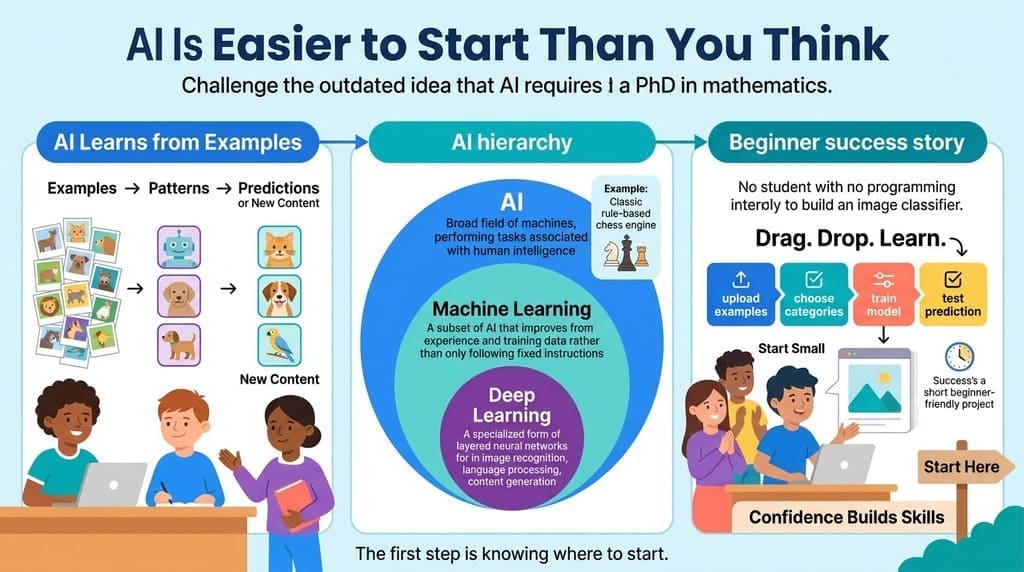
In my classroom, I watched a student with zero programming background build a functional image classifier in under twenty minutes. She used a drag-and-drop platform that handles the neural network training automatically. That moment made me realize that the real obstacle today isn’t technical skill. Instead, it is simply knowing where to start. Alongside this, having the confidence to try new things transforms hesitation into genuine progress. For reference, many accessible tools now remove complexity from AI Applications For Beginners, making experimentation the best teacher.
Which AI Applications Can Beginners Start Using Today?
Writing and Content Creation Tools
Creating good content takes time. AI writing assistants speed up the process dramatically. Tools like ChatGPT and Claude help you draft emails and blog posts. They summarize long documents into key points. They even rewrite complex text for younger audiences. As a matter of fact, many professional writers now use AI as a brainstorming partner. These tools understand context remarkably well. You describe what you need. The model generates relevant text. You then edit and refine the output. Think of it as a junior writing assistant that works at lightning speed. At the same time, you must review everything it produces. In addition, you should add your own voice to the final result for authenticity.
Beginner-Friendly AI Applications for Image and Design Generation
You no longer need artistic training to create visuals. AI image generators convert text prompts into polished images. Platforms like DALL-E and Midjourney lead this space. For instance, you type “a watercolor cat sitting on a stack of vintage books.” The tool produces that image in seconds. Small business owners use these for logos and social media graphics. Design tools now integrate AI for layout suggestions and color palette generation. Canva’s AI features help beginners design professional-looking presentations without any graphic design background. In short, these introductory AI applications lower the creative floor while raising the ceiling for everyone.
AI Learning Applications for Beginners: Education and Study Support
AI transforms how students learn new subjects. Personalized tutoring systems adapt to your pace. They identify your weak areas automatically. Then they generate practice problems targeting those exact gaps. Tools like Khan Academy’s Khanmigo provide one-on-one tutoring at scale. Language learning apps use speech recognition to correct pronunciation in real time. They analyze your accent and suggest specific improvements. Students who once struggled with math now receive step-by-step guidance. In modern classrooms, AI in education inspires students to build the future through hands-on projects and collaborative problem-solving. In this case, the AI tutor never gets impatient or tired. Consequently, learners build confidence at their own speed without fear of judgment.

Data Analysis Without Coding
Spreadsheets used to be the only option for beginners. AI now handles data analysis through natural language interfaces. You ask questions in plain English. The system generates charts and automatically detects trends. For example, tools like Julius AI let you upload a CSV file. You ask, “What were our top-selling products last quarter?” This capability matters deeply for small business owners. They can now make data-driven decisions without hiring analysts. The software handles statistical calculations and visualization in the background. Meanwhile, machine learning for molecular and materials science shows how even complex scientific fields benefit from these same pattern-recognition capabilities. Meanwhile, you focus on interpreting results and taking action on the insights generated.
Everyday Productivity Boosters
Your email inbox and calendar now benefit from AI automation. For example, smart replies suggest quick responses to routine messages. In addition, meeting schedulers instantly find optimal times across multiple people’s calendars. Similarly, voice assistants handle reminders and fact-checking on command. As a result, these AI Applications For Beginners save hours each week. Moreover, they eliminate busywork that drains mental energy. Ultimately, adopting AI Applications For Beginners transforms overwhelming daily workflows into manageable, efficient routines.
- Smart email filters now categorize messages by priority and sender importance.
- AI note-takers join meetings and produce accurate summaries with action items.
Over time, these small efficiency gains compound into significant productivity improvements. To put it another way, the tools work quietly in the background. You simply enjoy a cleaner inbox and fewer scattered reminders.
Where Are AI Applications Making Real-World Impact?
Healthcare and Medical Diagnosis
Medical AI now spots diseases earlier than human specialists in some cases. Deep learning models analyze X-rays and MRI scans for signs of cancer. They flag suspicious areas for radiologists to review more carefully. According to research published in Nature, deep learning systems matched or exceeded human performance on several medical imaging tasks. This does not replace doctors. Instead, it gives them a powerful second opinion that never gets tired. Drug discovery also benefits enormously from AI acceleration. Traditional methods take years to identify promising compounds. Machine learning models now screen millions of molecular combinations in days. Consequently, treatments reach patients faster than ever before in modern medical history.

Agriculture and Food Production
Farmers use AI to monitor crop health through drone imagery. Computer vision systems identify pest damage before it spreads across entire fields. Soil sensors combined with ML algorithms automatically optimize irrigation schedules. This precision agriculture reduces water waste and increases yield per acre. Automated sorting machines grade fruits and vegetables by size and quality. They work faster than human workers and maintain consistent standards throughout harvest season. Small farms now access these technologies through affordable smartphone apps. Similarly, these apps connect to cloud-based AI services that process data instantly.
Environmental Monitoring
Climate scientists use AI to track deforestation by analyzing satellite imagery. In addition, models predict wildfire spread patterns based on wind and terrain data. Similarly, ocean researchers use ML to detect concentrations of plastic pollution in drone footage. Consequently, these beginner AI applications help conservation teams allocate limited resources more effectively. Furthermore, air quality monitoring networks now combine sensor data with AI forecasting. For instance, cities receive early warnings about pollution spikes days in advance. As a result, residents with respiratory conditions then adjust their outdoor plans accordingly. Ultimately, they stay safer during high-risk periods without constant worry. For reference, these practical examples demonstrate how AI Applications For Beginners empower everyday decision-making with actionable environmental insights.
What Is the Best Way for Beginners to Begin Learning AI Applications?
Pick One Tool and Use It Daily
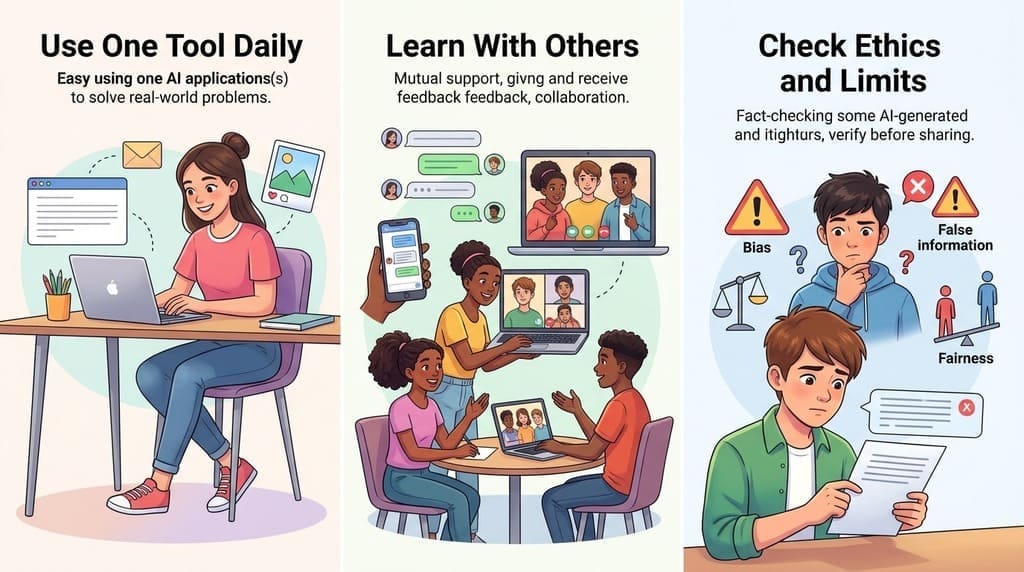
Start with a single application that solves a real problem you face. Maybe you write many emails and need a drafting assistant. You want to create social media content and need help with image generation. The key is building a daily habit with one tool first. After that, you can gradually expand your toolkit. Your goal during the first week is simple familiarity. Learn where the buttons are. Understand what the tool does well and where it struggles. Every AI tool has strengths and blind spots that reveal themselves through regular hands-on practice. To put it differently, consistent daily use teaches more than any tutorial ever could.
Join Communities of Fellow Learners
Learning alone proves harder than learning with peers. Online communities offer support and troubleshooting help daily—Reddit forums like r/learnmachinelearning welcome complete beginners with specific questions. Discord servers dedicated to AI tools provide real-time feedback on your projects and experiments. Local meetup groups now organize AI workshops for novices in most major cities. These events let you watch demonstrations and ask questions face-to-face. In addition, many groups maintain resource lists of free tutorials and open-access courses for continued self-study. Altogether, the social element keeps motivation high when the initial excitement fades.
Understand Ethics and Limitations
AI systems inherit biases present in their training data. They can produce unfair or harmful outputs without warning. Facial recognition systems perform worse on darker skin tones due to imbalanced training datasets. Text generators sometimes fabricate facts that sound convincing but are completely false. Research on the dangers of stochastic parrots highlights how language models can produce misleading outputs despite their fluency. These limitations matter enormously for beginners and experts alike. Always verify AI outputs before sharing them publicly. Likewise, never base important decisions solely on AI-generated information. Responsible use means understanding what the technology cannot do. In essence, knowing the boundaries makes you a smarter and safer user of any AI tool.
What Career Opportunities Exist for AI-Literate Beginners?
The job market now values AI literacy across nearly every industry. Companies need people who bridge the gap between technical AI systems and real business problems. These roles often require domain expertise more than deep programming knowledge. They also pay competitive salaries for the right candidates. Prompt engineering has emerged as a legitimate career path that requires no coding background. These specialists design effective inputs for large language models. They understand how different phrasings produce dramatically different results from the same underlying AI system.

To enumerate a few roles accessible to beginners:
- AI product manager — translating customer needs into technical requirements
- AI content strategist — designing workflows that combine human creativity with AI generation
- AI ethics reviewer — evaluating systems for bias and fairness before deployment
- AI implementation specialist — helping businesses adopt and integrate existing AI tools
To that end, developing entry-level AI skills today opens doors that did not exist five years ago.
How This Guide Was Compiled
This article draws on the statistical foundation and methodology of the 2026 AI Index Report published by Stanford HAI, which tracks global trends in AI adoption, investment, and workforce demand. All claims about medical applications reference peer-reviewed research from Nature and Science. Educational insights draw on both the published literature and direct classroom observations from teaching introductory AI workshops to undergraduate students over the past three academic years.
Verified Resources
- Stanford HAI 2026 AI Index Report — hai.stanford.edu
- Nature: “Deep learning” (LeCun, Bengio & Hinton, 2015) — doi.org/10.1038/nature14539
- ACM: “On the Dangers of Stochastic Parrots” (Bender et al., 2021) — doi.org/10.1145/3490442
- Science: “Machine learning for molecular and materials science” (Butler et al., 2018) — doi.org/10.1126/science.aax2342
- MIT OpenCourseWare: Artificial Intelligence — ocw.mit.edu
Frequently Asked Questions
References
Bender, E. M., Gebru, T., McMillan-Major, A., & Shmitchell, S. (2021). On the dangers of stochastic parrots: Can language models be too big? Proceedings of the 2021 ACM Conference on Fairness, Accountability, and Transparency, 610–623. https://doi.org/10.1145/3490442
Butler, K. T., Davies, D. W., Cartwright, H., Isayev, O., & Walsh, A. (2018). Machine learning for molecular and materials science. Nature, 559(7715), 547–555. https://doi.org/10.1126/science.aax2342
LeCun, Y., Bengio, Y., & Hinton, G. (2015). Deep learning. Nature, 521(7553), 436–444. https://doi.org/10.1038/nature14539
Stanford Institute for Human-Centered Artificial Intelligence. (2026). AI Index Report 2026. Stanford University. https://hai.stanford.edu
