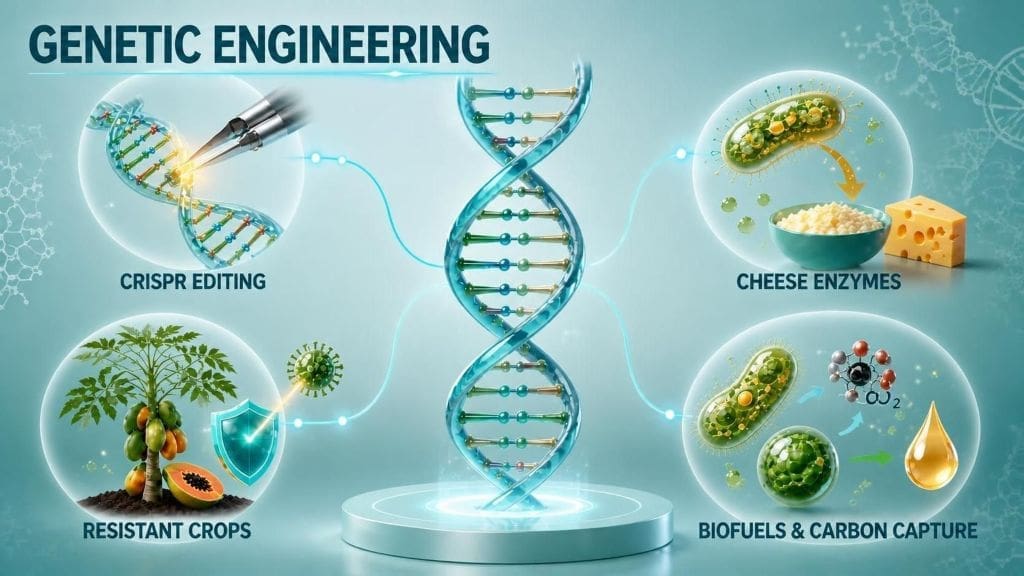
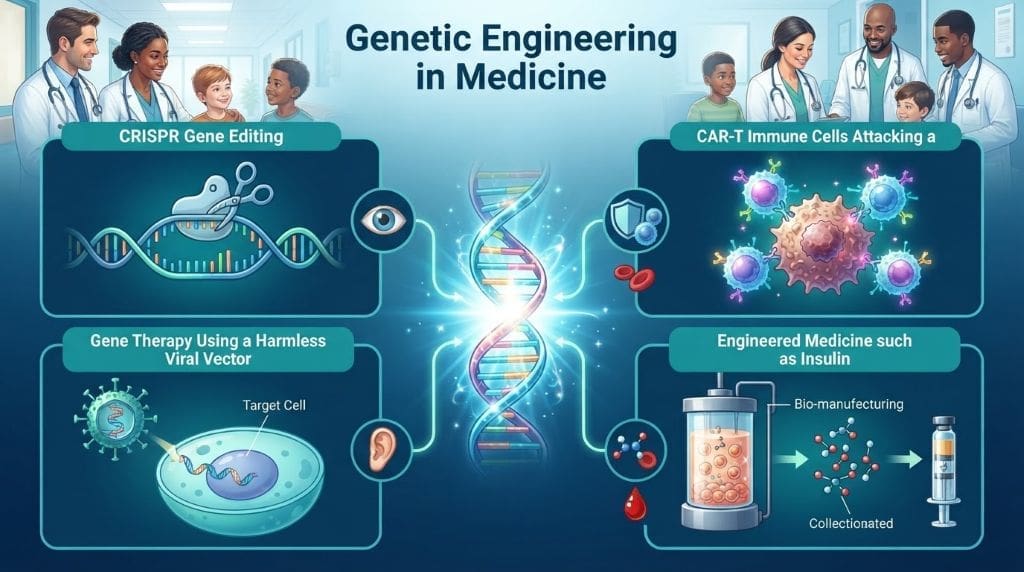
What if there was a treatment that could alter the instructions within your cells and thus help halt a serious dis ease? That scenario is no longer purely fiction. These advancements show how genetic engineering in medicine is helping doctors use gene therapy and gene editing to treat diseases that previously had only a very limited number of treatment options.
From Experiment to Treatment
Before taking part in a clinical trial, a woman who was 33 years old and had sickle cell disease experienced about seven serious pain crises every year. Such crises occur when abnormally shaped red blood cells block blood vessels, leading to intense pain and in many cases necessitating hospital treatment. The doctors removed her blood-forming stem cells, altered a genetic switch within them in a laboratory, and then put the modified cells back into her body. Over the 16.6 months following the treatment, she did not have any pain crises and only needed her last blood transfusion 19 days after the treatment.

She was one of the first two individuals to receive a treatment known as CTX001, which was later approved as Casgevy. After receiving conditional approval in the United Kingdom in November 2023, US and European regulators soon granted approvals, making Casgevy the first CRISPR-based gene-editing medicine cleared for use in humans. By July 2026, moreover, regulators had widened that approval to children as young as two, extending what began as an experimental therapy to thousands more families. Casgevy is one of the most important advancements in genetic engineering to reach clinical use.
Genetic engineering is moving out of research laboratories and into hospitals, where doctors are using or testing these treatments for inherited blindness and deafness, cancer, blood disorders, and other diseases. Some genetically engineered medicines, such as insulin, are already part of routine medical treatment.
A Quick Reminder: Advancements in Genetic Engineering for Medicine

The basic idea is straightforward. Doctors treat diseases by using genes. These approaches form the foundation of genetic engineering in medicine, because they allow doctors to replace, repair, or redirect genetic instructions inside cells. If you are not familiar with this area, begin with our beginner’s introduction to genetic engineering, in which the fundamentals of DNA and the CRISPR ‘molecular scissors’ idea, the basis of this article, are explained. Afterward, come back to this section for the clinical view that follows.
Genetic Engineering in Medicine: Gene Therapy at the Source
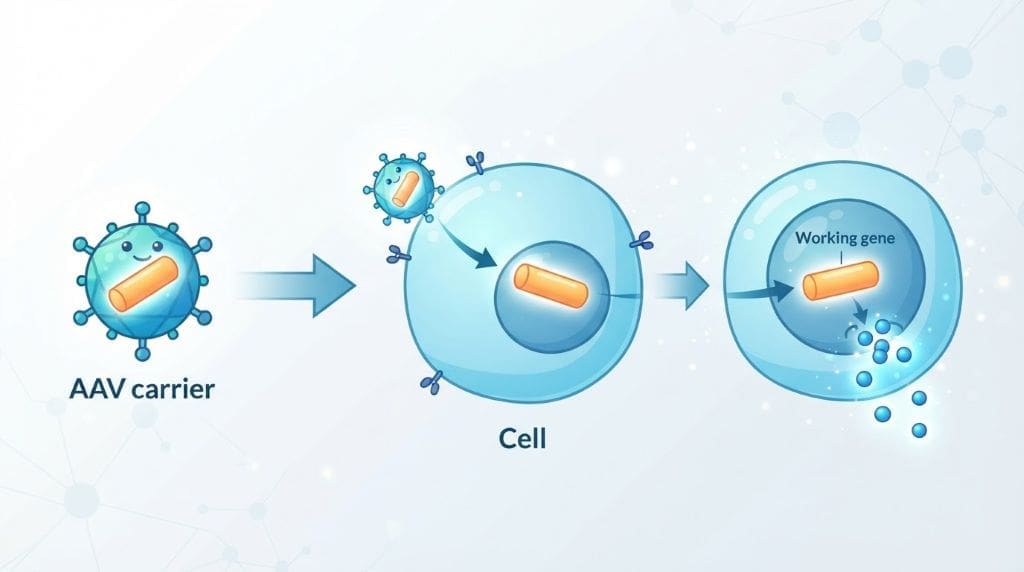
The idea behind gene therapy is simple: what if doctors could give cells the missing gene? To achieve this, a harmless virus, called an adeno-associated virus (AAV), is used to deliver the normal gene directly into the right cells. Since gene therapy targets the underlying cause of the disease, most treatments need to be given only once, eliminating the need for continuous medication. For a full explanation of how these viruses deliver the genes, see our complete guide.
Inherited Blindness: A Working Gene for the Eye
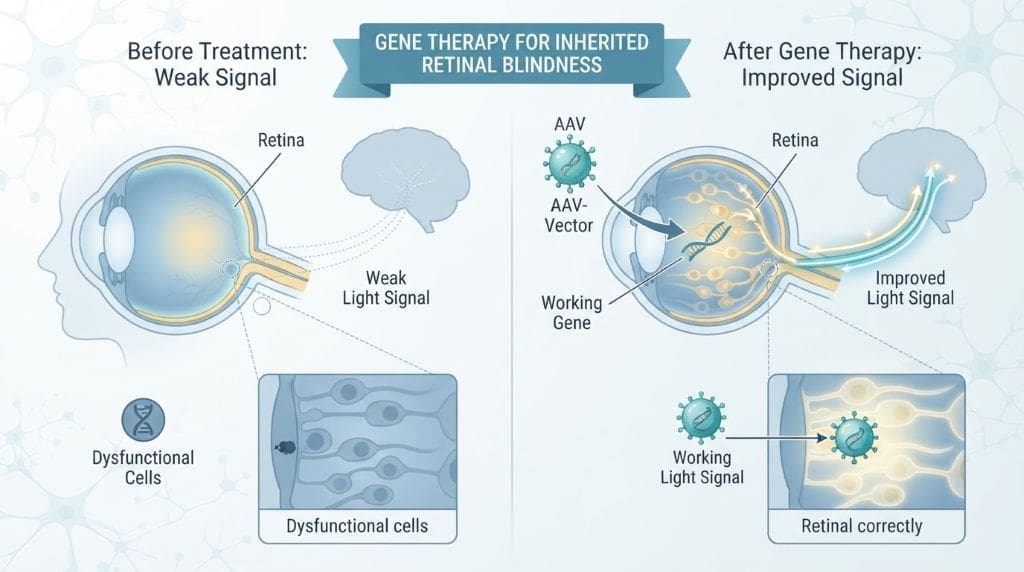
A missing gene can lead to certain forms of inherited blindness. For instance, individuals with mutations in both copies of the RPE65 gene may develop a disorder that gradually deteriorates the retina, resulting in vision loss, typically appearing in childhood. Luxturna (voretigene neparvovec) supplies a functional version of the RPE65 gene to the light-detecting cells in the retina using a modified, non-harmful AAV vector. In a study involving 31 people, the treatment led to a significant improvement in vision, and these advantages lasted for three to four years, with no serious side effects recorded after the first year. Luxturna is administered once via a surgical injection into the eye, and it was the first gene therapy for an inherited eye disease approved in the United States.
A Lifeline for Babies with Spinal Muscular Atrophy
Spinal muscular atrophy (SMA) is a serious genetic disorder that affects children. In the most severe cases, babies are born without a functional SMN gene. Without this gene, motor neurons fail to receive an essential protein. Over time, they can lose the ability to move, swallow, and breathe. Zolgensma(onasemnogene abeparvovec) provides a functional copy of the SMN gene. It is administered once via an intravenous infusion, thereby delivering the treatment directly into the bloodstream. The treatment enables children to retain the motor skills that SMA would otherwise strip away. For many families, a diagnosis of SMA now means that the child’s condition will not worsen rapidly.
Clotting Without the Infusions: Hemophilia B
Gene therapy is also useful for diseases that affect both adults and children. Individuals with hemophilia B do not produce enough of a clotting protein called factor IX. As a result, even a minor injury can lead to dangerous bleeding. They generally have to receive regular infusions of factor IX for the rest of their lives. HEMGENIX (etranacogene dezaparvovec) provides liver cells with the instructions they need to produce factor IX, potentially reducing the need for lifelong infusions after a single treatment.
The Newest Frontier: Hearing
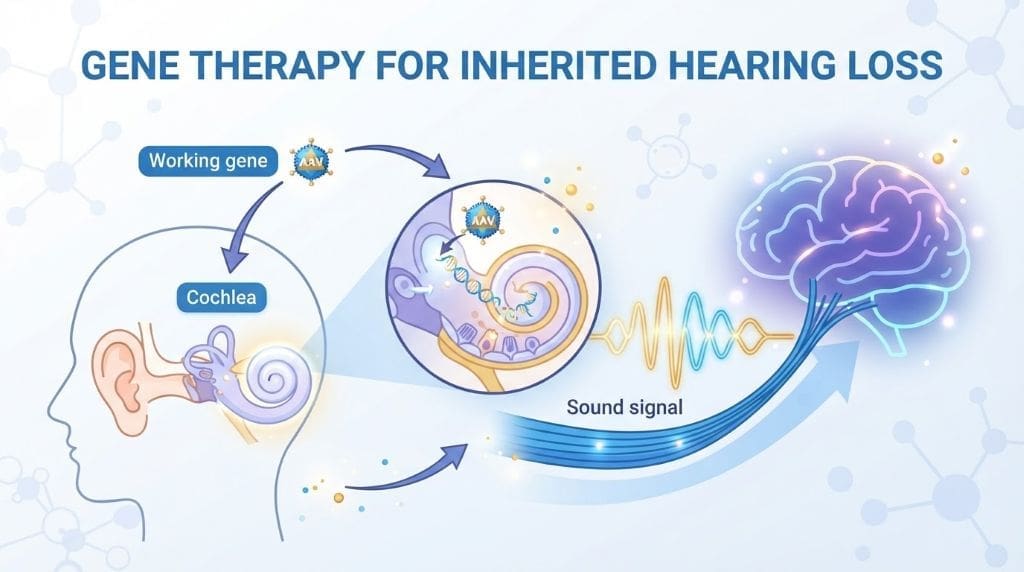
In 2024, researchers publishing in The Lancet described a case involving six children aged 1 to 6 with severe inherited deafness caused by mutations in the OTOF gene. The doctors used a harmless AAV virus to deliver a functional copy of the gene directly into the cochlea, the part of the inner ear responsible for hearing. Five of the children began to hear and showed improved speech understanding, and none experienced serious side effects. Although this was initially early evidence from a small study, it demonstrated how rapidly gene therapy was progressing. On April 23, 2026, the FDA approved Otarmeni (lunsotogene parvec-cwha), marking it the first treatment approved for OTOF-related hearing loss and the first dual-AAV gene therapy. Together, these treatments show how genetic engineering in medicine is expanding beyond blood and muscle disorders to include inherited conditions affecting the senses.
| Therapy | Condition | First Approved | How It Works |
| Luxturna | Inherited retinal blindness (RPE65) | 2017 | AAV delivers a working RPE65 gene to retinal cells |
| Kymriah / Yescarta | B-cell leukemia/lymphoma | 2017 | CAR-T: engineered T cells hunt a cancer marker |
| Zolgensma | Spinal muscular atrophy | 2019 | AAV delivers a working SMN gene to motor neurons |
| Hemgenix | Haemophilia B | 2022 | AAV gives liver cells a factor IX gene |
| Abecma / Carvykti | Multiple myeloma | 2021–2022 | CAR-T targeting the BCMA marker |
| Casgevy | Sickle cell disease, beta-thalassemia | 2023 | CRISPR edits a switch that reactivates fetal hemoglobin |
| Lyfgenia | Sickle cell disease | 2023 | Adds a working hemoglobin gene to stem cells |
| Otarmeni | OTOF-related genetic hearing loss | 2026 | Dual-AAV delivers a working OTOF gene to inner-ear cells |
How CAR-T Therapy Uses Genetic Engineering in Healthcare
A Living Drug Made from the Patient’s Own Cells
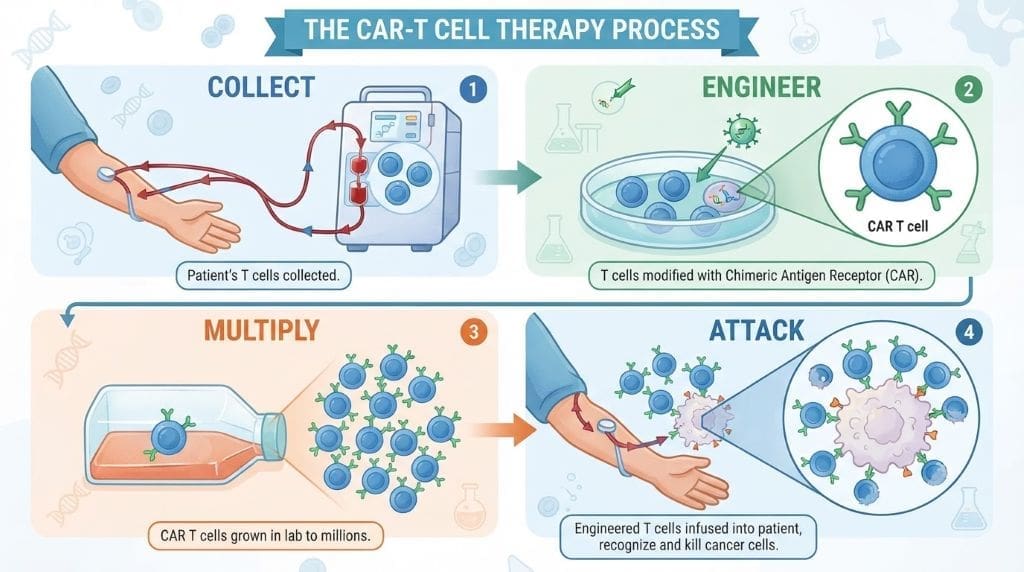
CAR-T therapy is another important application of genetic engineering in medicine. Cancer develops whenever the immune system fails to recognize it as a threat. CAR-T therapy addresses this issue by reprogramming the patient’s own immune cells to fight cancer. To do this, doctors take T cells—immune cells that destroy harmful cells—from the patient’s blood. In the laboratory, they introduce a gene that equips the T cells with a special sensor known as a chimeric antigen receptor (CAR). This sensor enables the T cells to locate specific markers on cancer cells. The altered cells are then expanded to millions and given back to the patient, where they multiply and attack the cancer. Since these cells continue to work within the body, CAR-T therapy is sometimes referred to as a living medicine.
The First Approvals and What They Achieved
The first two CAR-T treatments were approved in 2017. Kymriah was approved for some children with B-cell acute lymphoblastic leukemia, while Yescarta was approved for certain adults with large B-cell lymphoma. These treatments helped many patients, including those whose cancer had returned after other treatments failed. Some patients achieved long-lasting remission.
Managing Side Effects
The first two CAR-T treatments were approved in 2017. Kymriah was approved for some children with B-cell acute lymphoblastic leukemia, while Yescarta was approved for certain adults with large B-cell lymphoma. These treatments helped many patients, including those whose cancer had returned after other treatments failed. Some patients achieved long-lasting remission.
Beyond Blood Cancers
CAR-T treatments are also approved for multiple myeloma, using cells that target the BCMA marker. Researchers are testing CAR-T therapy for solid tumors, including cancers of the brain and pancreas. These cancers are harder to treat, so scientists are still working to improve the success of CAR-T therapy.
CRISPR Gene Therapy in Modern Genetic Medicine
Personalized CRISPR Medicine for Rare Diseases
The treatment known as Casgevy targets a genetic switch associated with the BCL11A gene rather than correcting the primary defective gene; this causes the body to produce fetal hemoglobin, which in turn helps prevent the red blood cells from becoming stiff and sickle-shaped. To do this, doctors remove the patient’s stem cells, which give rise to blood cells, modify them in a laboratory, and then return them to the patient’s body. In the studies carried out, most of the patients remained free from any serious pain crises for at least one year, and many people with beta-thalassemia went a whole year without having to receive a blood transfusion.
A Second Strategy: Lyfgenia
Lyfgenia uses a different approach; rather than modifying the patient’s genes, it inserts a functional hemoglobin gene into the patient’s stem cells. Like Casgevy, Lyfgenia aims to get the body to produce healthy red blood cells without the need for frequent treatments.
Editing Genes Inside the Body
The cells are edited outside the body in a laboratory, but researchers have also conducted tests of CRISPR inside the body. In a 2024 study, 10 individuals with hereditary angioedema received a single dose of a CRISPR treatment. The treatment modified the KLKB1 gene in liver cells, thereby lowering the amount of a protein that causes painful swelling attacks. The protein level remained reduced for at least 24 weeks, and the patients experienced fewer attacks.
The First Personalized CRISPR Medicine
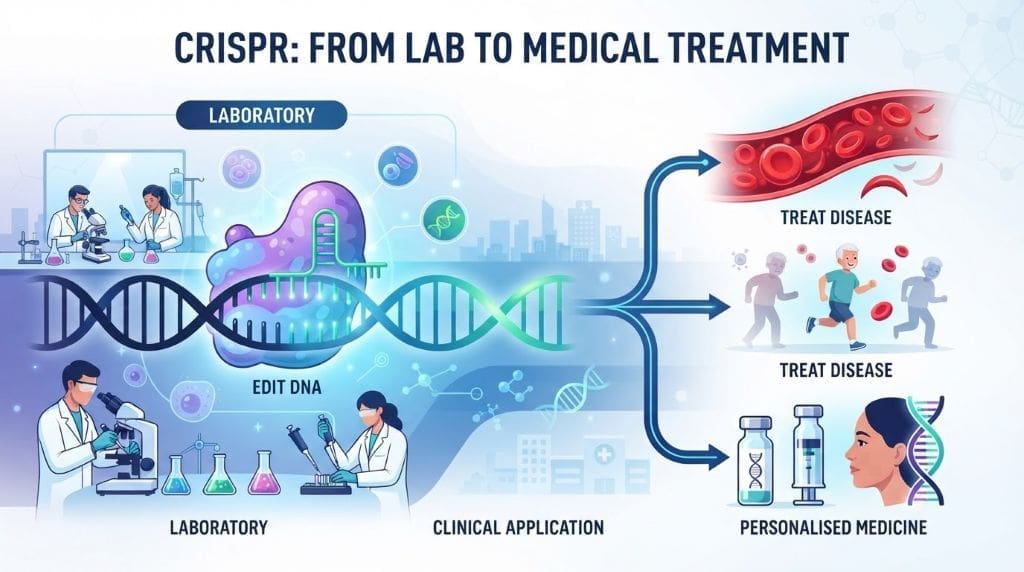
CRISPR has become one of the most influential tools in genetic engineering in medicine. In May 2025, researchers from the Children’s Hospital of Philadelphia and Penn Medicine, in cooperation with the National Institutes of Health, developed a CRISPR therapy for a single baby with a rare and serious genetic condition known as CPS1 deficiency. The treatment was tailored to correct the baby’s specific mutation and was developed in just six months. After three doses, the child was able to eat more protein, required less medication, and continued to grow without any serious side effects.
CRISPR has already progressed from laboratory research to approved medical treatments, and doctors now use it to treat patient groups. In some cases, researchers can even tailor it to a single individual. For a detailed account of the mechanical process involved, namely how CRISPR locates and cuts a particular DNA sequence, our complete guide to genetic engineering covers it in depth.
Everyday Medicine You Might Not Realize Is Genetically Engineered
Insulin is one of the most commonly produced drugs through genetic engineering. Before the 1980s, scientists extracted most insulin from the pancreases of pigs and cows. Scientists then inserted the human insulin gene into bacteria and yeast, enabling them to manufacture human insulin. Today, the majority of insulin is produced by these genetically engineered organisms.
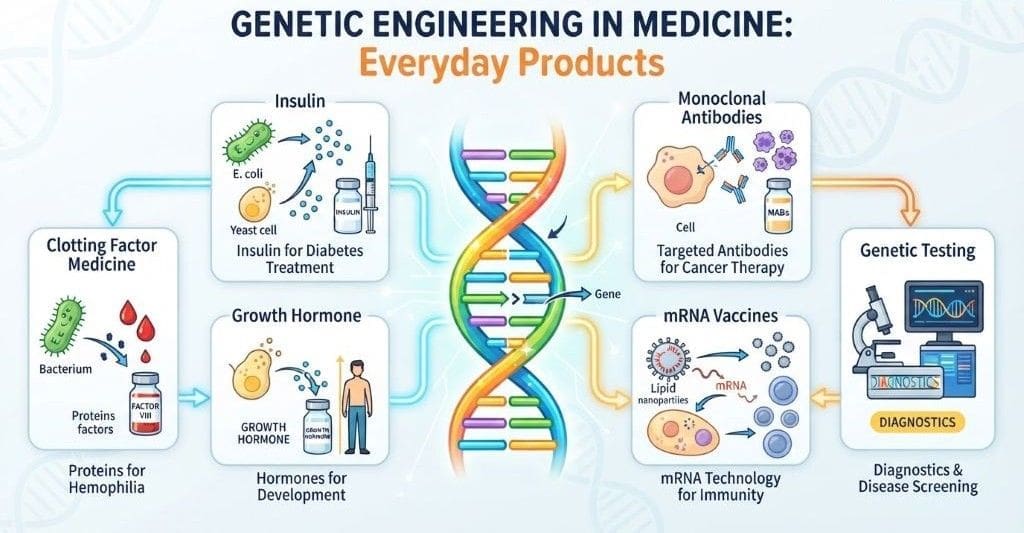
Genetic engineering is used to produce a number of medicines, such as growth hormone, anticoagulant treatments that prevent blood clots, and certain drugs used to treat cancer and inflammation. It enables doctors to test for infections and to select cancer treatments based on a patient’s genes. mRNA vaccines use genetic instructions to teach the immune system to recognize a virus.
What This Means for Patients and Public Health
Some treatments are shifting from requiring lifelong care to needing only a single treatment. For instance, therapies for sickle cell disease, spinal muscular atrophy, hemophilia, and certain forms of blindness might reduce the need for regular medication or blood transfusions. This could significantly improve patients’ lives.
They are costly and require specialized hospitals, equipment, and doctors with proper training. As a result, it is difficult to offer them in poorer countries. Therefore, public health experts have to find ways to make these treatments affordable and available to all who need them.
A Note on What’s Still Being Worked Out
Gene therapy has shown promising results, but it is not effective for all diseases. In June 2024, Pfizer announced that its gene therapy for Duchenne muscular dystrophy had shown no improvement in motor function one year after treatment compared with the placebo. As a result, the company halted its development of the therapy. In other trials as well, research has been stopped following serious side effects, such as liver problems and deaths. These cases demonstrate that researchers must carefully test treatments for both safety and effectiveness.
The possible risks are still being investigated by scientists, including unintended DNA alterations, immune responses, and side effects that might appear many years later. Although genetic engineering can greatly benefit many patients, it is not yet perfect. The researchers have to continue testing these treatments and gather long-term safety data.
Frequently Asked Questions
It’s approved. Casgevy (exagamglogene autotemcel), the first CRISPR-based medicine, received its first conditional authorization in the UK in November 2023, followed by US and EU approvals, for sickle cell disease and transfusion-dependent beta-thalassemia.
Gene therapy usually adds a working copy of a gene (Luxturna, Zolgensma, HEMGENIX). Gene editing changes existing DNA. Casgevy, for example, doesn’t fix the sickle cell mutation; it disables the switch that silences fetal hemoglobin so the body makes it again.
Early results are dramatic. Most Casgevy patients went 12+ months free of pain crises or transfusions, and Luxturna’s benefits held for years. However, regulators and doctors still describe long-term data as being collected, so the most accurate term is durable responses with ongoing monitoring.
Three major barriers remain: cost (list prices can reach millions of dollars), infrastructure (specialized centers, cell manufacturing, and pre-transplant chemotherapy), and access—more than 75% of people with sickle cell disease are born in Africa, yet the exa-cel trials involved no African countries.
Yes. Virtually all modern insulin is genetically engineered. Since the landmark 1979 demonstration that E. coli could produce human insulin chains, engineered bacteria and yeast have almost entirely replaced animal-derived insulin.
References
eBioMedicine. (2024). Realising gene therapy: a biomedical challenge. EBioMedicine, 106, 105299. https://doi.org/10.1016/j.ebiom.2024.105299
Feuerstein, A. (2024, December 27). In historic decision, FDA approves a CRISPR-based medicine for treatment of sickle cell disease. STAT. https://www.statnews.com/2023/12/08/fda-approves-casgevy-crispr-based-medicine-for-treatment-of-sickle-cell-disease/
Frangoul, H., Altshuler, D., Cappellini, M. D., Chen, Y., Domm, J., Eustace, B. K., Foell, J., De La Fuente, J., Grupp, S., Handgretinger, R., Ho, T. W., Kattamis, A., Kernytsky, A., Lekstrom-Himes, J., Li, A. M., Locatelli, F., Mapara, M. Y., De Montalembert, M., Rondelli, D., Corbacioglu, S. (2020). CRISPR-CAS9 gene editing for sickle cell disease and Β-Thalassemia. New England Journal of Medicine, 384(3), 252–260. https://doi.org/10.1056/nejmoa2031054
Human genome editing: a framework for governance. (2021b, July 12). https://www.who.int/publications/i/item/9789240030060
June, C. H., & Sadelain, M. (2018). Chimeric antigen receptor therapy. New England Journal of Medicine, 379(1), 64–73. https://doi.org/10.1056/nejmra1706169
Liu, F., Li, R., Zhu, Z., Yang, Y., & Lu, F. (2024). Current developments of gene therapy in human diseases. MedComm, 5(9), e645. https://doi.org/10.1002/mco2.645
Lv, J., Wang, H., Cheng, X., Chen, Y., Wang, D., Zhang, L., Cao, Q., Tang, H., Hu, S., Gao, K., Xun, M., Wang, J., Wang, Z., Zhu, B., Cui, C., Gao, Z., Guo, L., Yu, S., Jiang, L., . . . Shu, Y. (2024). AAV1-hOTOF gene therapy for autosomal recessive deafness 9: a single-arm trial. The Lancet, 403(10441), 2317–2325. https://doi.org/10.1016/s0140-6736(23)02874-x
Research, C. F. B. E. A. (2026, August 18). Approved cellular and gene therapy products. U.S. Food And Drug Administration. https://www.fda.gov/vaccines-blood-biologics/cellular-gene-therapy-products/approved-cellular-and-gene-therapy-products