
You encounter the law of reflection physics whenever you see your face in a mirror.
| Definition of the Law of Reflection |
|---|
| The angle of reflection equals the angle of incidence. |
| When light strikes a surface, the reflection of light follows this rule. This means the path light takes as it bounces off a surface matches the incoming angle. |
Key Takeaways
- The law of reflection states that the angle of incidence equals the angle of reflection. This means light bounces off surfaces at the same angle it hits them.
- You can observe the law of reflection in everyday life. Try shining a flashlight at different surfaces to see how light reflects differently on smooth versus rough surfaces.
- Reflection is not just for light. Sound waves also follow the law of reflection, which is why you hear echoes when you shout in a large room.
Law of Reflection Physics Basics
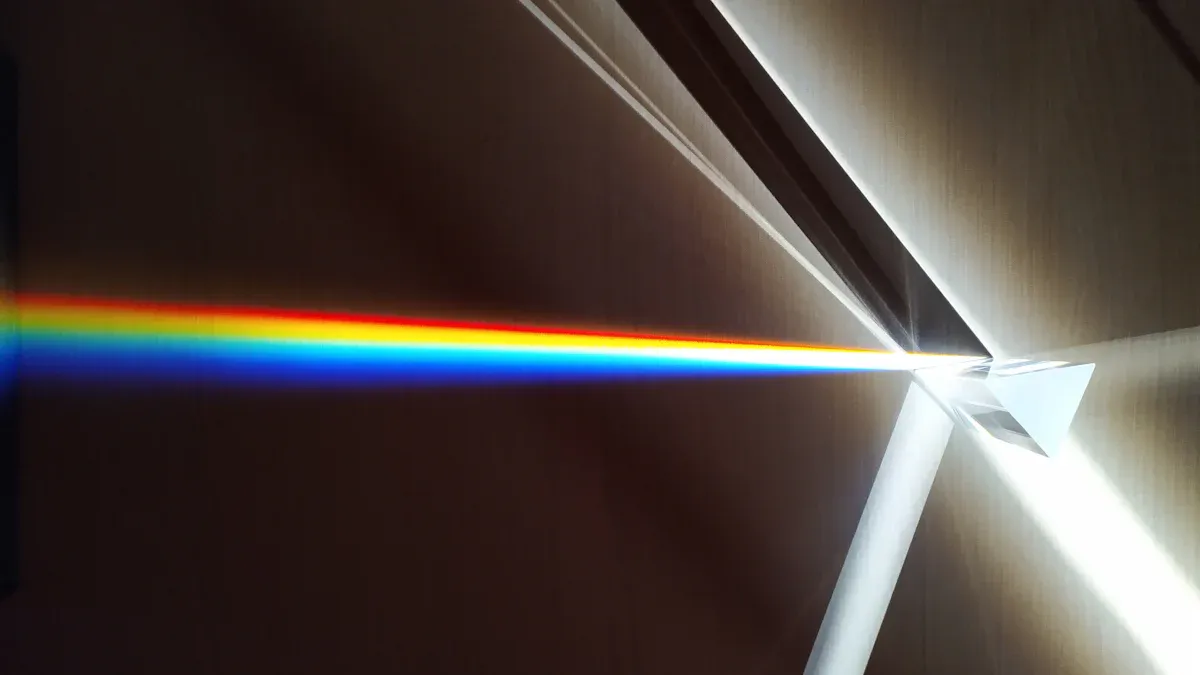
Law of Reflection Explained
You see the law of reflection physics every time you look into a mirror or notice your shadow on the wall. This law tells you that when light hits a surface, the angle at which it arrives matches the angle at which it leaves. You call the incoming path the angle of incidence and the outgoing path the angle of reflection. The law of reflection physics makes it easy to predict how light will bounce off any surface.
The law of reflection states: The angle of incidence equals the angle of reflection.
You can use this rule for both light and sound waves. Huygens’s principle shows that every point on a wave front acts as a source of new wavelets. This principle helps you understand why the law of reflection physics works for visible light and sound. When you shout at a wall, you hear an echo because sound waves reflect just like light waves do.
Physicists use the law of reflection physics to design mirrors, telescopes, and even soundproof rooms. You can see how this law helps create images in mirrors and lets scientists predict where light will go. The principle of reversibility of light means that light reflection follows the same path forward and backward. If you shine a flashlight at a mirror, the beam reflects back along the same line.
Here is a simple table that shows the mathematical relationship:
| Angle of Incidence (θi) | Angle of Reflection (θr) |
|---|---|
| θi | θr |
| θr = θi |
Angle of Incidence and Reflection
You measure both the angle of incidence and the angle of reflection from a special line called the normal line. The normal line is an imaginary line drawn straight up from the surface at the point where light strikes. You use this line to measure how light reflection works.
- The angle of incidence is the angle between the incoming ray and the normal line.
- The angle of reflection is the angle between the outgoing ray and the normal line.
- The angle of incidence always equals the angle of reflection.
- If the angle of reflection is 47 degrees, the angle of incidence is also 47 degrees.
You can see this in action with visible light. When you shine a laser pointer at a mirror, the beam bounces off at the same angle as it arrived. You can also notice this with light reflection from glass or polished metal. The law of reflection physics helps you understand why you see your face in a mirror and why images appear where they do.
You can use ray diagrams to predict where images will form in spherical concave mirrors. This skill helps you in experimental optics and lets you explore how reflection of light creates images of distant stars in telescopes.
Tip: Try shining a flashlight at different surfaces and watch how the light reflection changes. You will see the law of reflection physics in action.
You can use feedback from your classmates or teachers to improve your understanding of the law of reflection physics. Reflecting on your learning helps you spot mistakes and learn better ways to study light and sound.
Visible light, sound waves, and even water waves all follow the law of reflection. You can see this law in everyday life, from the reflection of light in a mirror to the echo of your voice in a hallway.
Reflection of Light in Action

How Light Reflects Off Surfaces
When you shine a ray of light onto a surface, you notice two main types of reflection and mirrors: specular reflection and diffuse reflection. Specular reflection happens when the surface is smooth, like a mirror or polished metal. The ray bounces off at the same angle as it arrived, so you see a clear image. Diffuse reflection occurs when the surface is rough, such as paper or wood. The ray scatters in many directions, and you cannot see a distinct image.
You can find specular reflection in materials like ordinary metallic mirrors, glass, and even magnesium oxide coatings. These surfaces reflect most of the light, making them perfect for reflection and mirrors. The table below shows how different materials compare:
| Material | Reflectivity Percentage |
|---|---|
| Titanium white paint | ~90% |
| Ordinary metallic mirrors | 90-95% |
| Magnesium oxide coating | 98-99% |
| High Reflectivity (HR) mirrors | >99% |
When you use a mirror, the ray of light follows the law of reflection. The angle of incidence equals the angle of reflection, so you can predict where the ray will go. This principle helps you understand reflection and mirrors in daily life.
Also Read: End-to-End Encryption: Exploring Its Importance for Secure Communications
Image Inversion and Everyday Examples
You see reflection and mirrors every day. When you look into a mirror, the ray of light reflects off the surface and creates an image. The image appears behind the mirror, at the same distance as you stand in front of it. This is called a virtual image, and it is an optical illusion caused by the way the ray diverges after reflection.
One interesting effect is lateral inversion. The image in a mirror flips horizontally, so your right hand looks like your left hand in the reflection. You notice this when you read text in a mirror—it appears reversed. This happens because the ray of light bounces off the mirror and switches sides.
Try a simple experiment at home to see reflection and mirrors in action. Shine a flashlight into a mirror and watch how the ray reflects. Adjust the angle and see how the reflection changes. You can also use a CD or DVD and shine a laser over it. The ray will reflect in different directions, showing both specular reflection and diffuse reflection depending on the surface condition.
Reflection and mirrors help you locate images and understand how light travels. You use these principles in fiber optics, telescopes, and even road safety devices. The law of reflection and the locating of images lets you predict where the ray will go and how the reflection of light will appear.
Common Questions About Reflection
Misconceptions About Reflection
You might wonder why you do not see your face in every surface. Many people think that all surfaces reflect light in the same way, but this is not true. When you shine light on a rough surface, you notice that the reflection does not create a clear image. The reason for this is surface roughness. Tiny bumps and irregularities scatter light in many directions. This process disrupts the uniform reflection you see in mirrors.
- Surface roughness causes elastic scattering of light because the bumps change the direction of incoming rays.
- The random arrangement of these bumps means the probability of light reflecting in one direction drops, so you lose a coherent reflection.
- Lambertian scattering happens when microscopic irregularities scatter light evenly, making the surface look equally bright from different angles.
You see this effect when you look at paper, wood, or cloth. These materials scatter light, so you do not see a sharp reflection. Only smooth surfaces like mirrors or polished metal give you a clear reflection of light.
Tip: If you want to observe the difference, shine a flashlight on a mirror and then on a wall. You will see a clear reflection from the mirror, but only scattered light from the wall.
Reflection Beyond Light
You use the law of reflection in more than just light. Sound waves also follow this law. When you shout in a large empty room, you hear an echo because sound waves bounce off the walls. You find many examples of reflection in sound engineering.
- Architectural acoustics uses reflection to design concert halls and studios for better sound quality.
- Noise control relies on reflection and absorption to reduce unwanted sound in offices and homes.
- Sonar systems use reflection to detect objects underwater.
- Medical ultrasound imaging depends on sound wave reflection to create pictures of your body.
- Acoustic levitation uses reflection to move small objects without touching them.
- Radar and sonar technologies send out signals that reflect off objects, helping measure distances.
You see that reflection is not just about light. You use the same principles for sound and even water waves. The law of reflection helps you understand how waves behave in many situations.
You learned that the law of reflection helps you understand how light behaves on shiny surfaces and why you see images in mirrors.
- Engineers use this principle to design periscopes and telescopes for clear image formation.
- Only 36% of students can state the law correctly after a basic physics course.
Next time you look in a mirror, notice how reflection lets you see yourself and objects around you.
FAQs
What is the difference between specular and diffuse reflection?
Specular reflection gives you a clear image from smooth surfaces. Diffuse reflection scatters light, so you see no image on rough surfaces.
Why do you see your face in a mirror but not on a wall?
A mirror has a smooth surface that reflects light evenly. A wall scatters light in many directions, so you cannot see your face.
Can you observe reflection with sound waves?
Yes, you can hear echoes when sound waves bounce off surfaces. This shows that reflection works with both light and sound.