
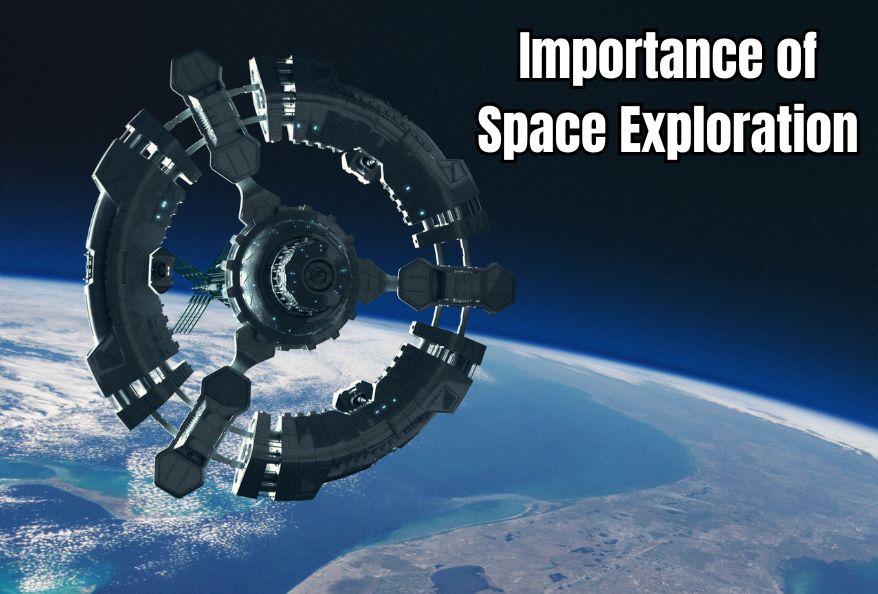
The importance of space exploration grows every year as humanity increasingly seeks innovative solutions to global challenges while expanding scientific knowledge beyond Earth. As a result, space exploration now plays a vital role in technological advancement, international cooperation, climate protection, and economic growth. Moreover, the emergence of a New Space Age, driven by both governments and private companies, has accelerated investment, public interest, and real-world benefits that directly impact daily life. Consequently, space exploration has become an essential pillar of modern progress.
Key Statistics on Space Investment
- Global space economy: $630 billion in 2023 → $1.79 trillion by 2035
- Private capital invested since 2015: $47+ billion
- Active space programs worldwide: 70 countries
- Civil space budgets exceeding $100 million: 20+ countries
Together, these figures clearly demonstrate that the importance of space exploration is increasing while confidence in its long-term value continues to grow.
Importance of Space Exploration for Global Cooperation
Space exploration unites nations through shared goals and collaborative missions. For example, countries regularly exchange data, technology, and expertise to improve mission success and reduce costs. As a result, space has become a platform for diplomacy and peaceful cooperation.
The International Space Station (ISS) is a powerful example of this collaboration, bringing together NASA, Roscosmos, ESA, JAXA, and CSA. Through joint research and coordinated operations, these agencies strengthen trust while advancing humanity’s presence in orbit.
Key Collaboration Goals
- Secure collective interests by strengthening shared space capabilities
- Enable interoperability through open data and communication systems
- Integrate mission design and operations with international partners
Importance of Space Exploration in Inspiring the Next Generation
Another major reason the importance of space exploration grows every year is its ability to inspire students. In particular, space missions ignite curiosity and motivate young people to pursue science, technology, engineering, and mathematics careers.
Notable educational programs include:
- Amateur Radio on the ISS (ARISS), allowing students to communicate with astronauts
- Genes in Space, which enables student-designed DNA experiments in microgravity
- NASA CubeSat Launch Initiative, offering hands-on satellite development
- Club for the Future and STEM challenges that provide mentorship and competitions
As studies show, students involved in these initiatives demonstrate higher engagement and a greater likelihood of entering STEM fields.
Economic Importance of Space Exploration
The importance of space exploration is also closely tied to economic growth. Specifically, investments in space create new industries, generate high-skill jobs, and stimulate innovation across multiple sectors.
Key Growth Areas
- Reusable and affordable launch systems that reduce access costs
- Small satellites and mega-constellations that improve global connectivity
- On-orbit servicing and robotics that extend satellite lifespans
- Space data platforms and AI transforming agriculture and logistics
- Deep-space technologies supporting Moon and Mars missions
- Space tourism and commercial habitats opening new markets
As a result, the global space economy has expanded rapidly from roughly $200 billion in the early 2000s to $630 billion in 2023 and continues to rise.
Everyday Benefits of Space Exploration
Space research delivers technologies that improve everyday life on Earth. For instance, innovations originally developed for astronauts are now widely used by the public.
Examples include:
- Memory foam and water purification systems
- Camera phones and wireless headsets
- Scratch-resistant lenses and freeze-dried food
- GPS navigation and video conferencing
Additionally, modern satellites enhance communication, navigation, and real-time data access worldwide.

Importance of Space Exploration for Earth Protection
Protecting our planet is another critical reason the importance of space exploration continues to rise. Satellites provide a unique global perspective that supports environmental monitoring and disaster management.
Key Applications
- Climate monitoring of greenhouse gases, glaciers, and sea-level rise
- Earth observation for deforestation and land-use change
- Emergency response using satellite and AI-based data analysis
Consequently, programs such as the Copernicus Earth Observation system help governments and organizations make informed, life-saving decisions.
Advancing Sustainability Through Space Exploration
Space missions also drive sustainable practices that benefit Earth. For example, closed-loop life-support systems, water recycling, and efficient energy use developed for space habitats are now influencing sustainable technologies on the ground.
Key sustainability practices include:
- In-situ resource utilization on the Moon and Mars
- Expanded planetary protection measures
- Incentives for responsible and sustainable missions
Importance of Space Exploration in Scientific Advancement
Scientific discovery lies at the heart of space exploration. Research conducted in microgravity enables breakthroughs that are difficult or impossible to achieve on Earth.
Major advances include:
- Medical research on Alzheimer’s, Parkinson’s, and cancer
- Combustion studies improving clean-energy solutions
- 3D printing technologies for space and Earth manufacturing
- Astrophysics missions revealing the age and structure of the universe
- Robotic exploration expanding knowledge of planetary formation
Addressing Global Challenges Through Space Exploration
Space exploration helps humanity confront pressing global challenges.
Climate Monitoring
Satellites track temperature changes, emissions, and extreme weather. Consequently, AI-enhanced models improve climate predictions and adaptation strategies.
Planetary Defense
Space-based cameras, radar systems, and missions like NASA’s DART detect and mitigate potential asteroid threats.
Resource Creation
Exploration missions identify water, oxygen, and valuable metals on the Moon, Mars, and asteroids. Over time, these resources may support sustainable space operations and future settlements.
Importance of Space Exploration for Humanity’s Future
Looking ahead, the importance of space exploration becomes even more evident. Preparing for long-term human survival requires expanding beyond Earth while developing technologies that also improve life at home.
Mars exploration, habitat testing, and life-support research provide insights into sustaining human life in extreme environments. At the same time, these efforts inspire future generations to push the boundaries of knowledge.
Importance of Space Exploration: Conclusion
The importance of space exploration grows every year as it unites nations, inspires students, strengthens economies, protects Earth, and advances science. Furthermore, continued investment in space ensures innovation, sustainability, and resilience for humanity’s future. By supporting space exploration today, society lays the foundation for a safer, smarter, and more connected world tomorrow.
FAQs: Importance of Space Exploration
Why is the importance of space exploration increasing every year?
The importance of space exploration increases each year because it supports innovation, climate monitoring, global cooperation, and economic growth. As technology continues to advance, space missions become more efficient and impactful. At the same time, rising global challenges make space data more valuable than ever.
What are the main benefits of space exploration?
Overall, space exploration improves communication, navigation, medicine, and environmental protection. In addition, it creates jobs, inspires students, and strengthens international partnerships. As a result, societies benefit both technologically and economically.
How does space exploration help protect Earth?
Most importantly, satellites monitor climate change, track natural disasters, and measure pollution. Because of this, governments can respond more effectively to emergencies and manage natural resources efficiently. Furthermore, this data supports long-term environmental planning.
Why do countries cooperate in space exploration?
To begin with, countries cooperate to share costs, technology, and expertise. By working together, missions become more successful and efficient. Moreover, cooperation promotes the peaceful use of outer space.
What everyday technologies come from space research?
Interestingly, many everyday technologies come from space research. For example, these include memory foam, GPS navigation, water filtration systems, camera phones, and satellite-based communication. Over time, these innovations have become part of daily life.
How does space exploration inspire students?
Above all, space missions spark curiosity among students. Through hands-on programs, experiments, and interaction with astronauts, students are encouraged to pursue STEM careers. Consequently, space exploration helps shape future scientists and engineers.
References:
- Del Canto Viterale, F. (2023). Transitioning to a new space age in the 21st century: A systemic-level approach. Systems, 11(5), Article 232. https://doi.org/10.3390/systems11050232
- Smith, H. (2023). Near, far, wherever we are: Space exploration urgently needs an ethics-informed planning revolution. Advances in Astronautics Science and Technology, 6(1), 47–55.https://doi.org/10.1007/s42423-023-00135-x
- National Aeronautics and Space Administration. (n.d.). Benefits of space exploration. NASA. https://www.nasa.gov
- European Space Agency. (n.d.). Why space matters. European Space Agency. https://www.esa.int