
Estimated reading time: 3 minutes
Liposuction technology has changed a great deal since it first became popular in the 1980s. Modern techniques use fluids, sound waves, heat and vibration to make fat removal more precise and recovery easier. Understanding the basic technology helps patients ask better questions and avoid paying for marketing names rather than real benefits.
Liposuction Technology: The basic principle
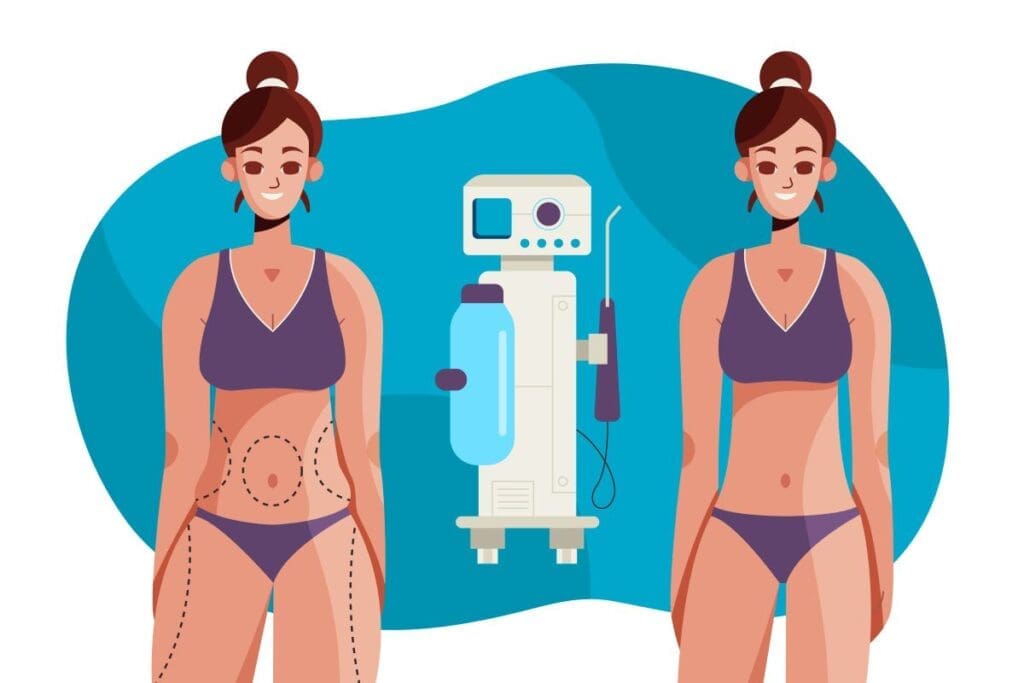
All liposuction methods follow the same idea: a thin tube called a cannula is inserted through small incisions, moved through the fatty layer under the skin, and connected to suction that removes fat cells. The differences between techniques lie in how the fat is loosened before it is removed and how much energy is applied to the tissue.
Tumescent liposuction
In the tumescent technique, the area is first filled with a large volume of saline containing a local anaesthetic and adrenaline. The fluid swells and firms the tissue, numbs it and narrows the blood vessels, which reduces bleeding and bruising. This approach is the foundation of almost all modern liposuction and is often used on its own.
Ultrasound-assisted liposuction
Ultrasound devices, sometimes known by brand names such as VASER, send high-frequency sound waves through a probe. The energy breaks apart fat cells while sparing most surrounding structures. It is useful for dense, fibrous areas such as the back, the male chest or revision cases. Because ultrasound produces heat, the surgeon must keep the probe moving to protect the skin.
Laser-assisted liposuction
Laser methods deliver light energy through a fibre that melts fat and heats the deeper skin layers. The heat may encourage modest skin tightening, which can help in small areas such as the neck or arms. The effect on loose skin is limited, so laser liposuction is not a substitute for a skin-tightening operation.
Power-assisted liposuction
Here the cannula vibrates rapidly, which helps the surgeon work through tissue with less effort and more control. It is common for larger volumes and for treating several areas in one session.

Also Read: What Is Neuroscience? The Ultimate Guide to Your Amazing Brain
What technology cannot change
- It does not replace weight loss; it reshapes specific areas.
- It cannot remove deep visceral fat around internal organs.
- It does not tighten significantly loose skin.
- The skill of the surgeon matters more than the device.
Recovery basics
Patients wear a compression garment for four to six weeks. Most return to desk work within a few days and to full exercise after about a month. Swelling settles gradually, and the final contour appears after three to six months.
Also Read: How Quantum Theory Explains the Hidden Behavior of Matter and Energy
Choosing a clinic
Ask which method will be used, why it suits your body and what volume of fat is planned. Clinics that explain their methods and publish prices openly, such as City Medical Centre, make comparison easier and help you focus on results rather than device names.