
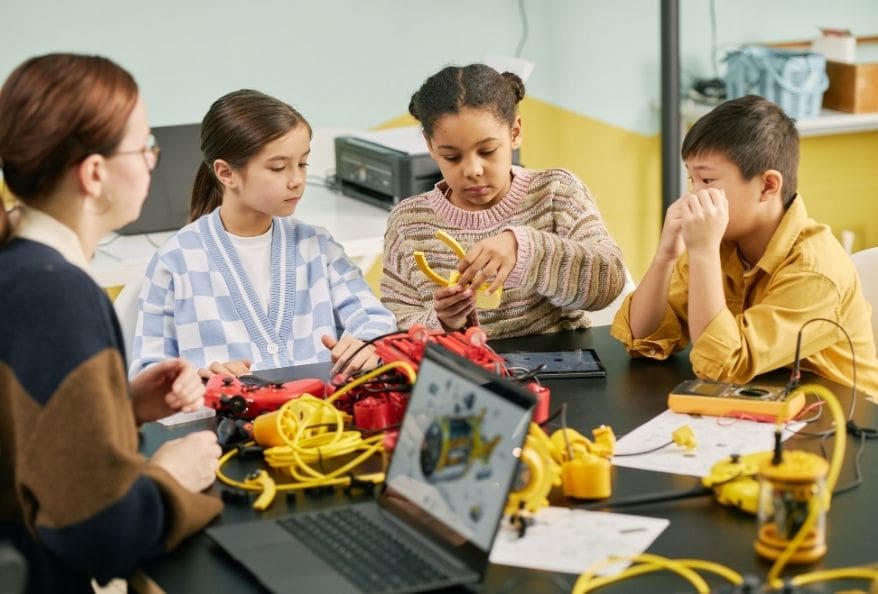
Free STEM education resources are transforming how children learn science, technology, engineering, and mathematics in today’s digital world. Early exposure to STEM subjects plays a vital role in developing analytical thinking, creativity, and problem-solving skills among students. With the availability of high-quality, free tools and platforms, learning is no longer limited by cost or location.
From interactive lessons and science kits to coding activities and engineering projects, free STEM education resources provide engaging ways for young learners to explore complex ideas and build essential skills for the future.

Why Free STEM Education Resources Matter
Access to education should be equal for all learners. Free STEM education resources help bridge educational gaps by offering accessible and flexible learning opportunities.
These resources help students:
- Build strong foundational knowledge in science and math
- Develop critical thinking and problem-solving skills
- Explore real-world applications of STEM concepts
- Learn at their own pace using interactive tools
- Stay motivated through engaging and fun activities
For educators, these resources offer innovative ways to design lessons that are both effective and engaging.
Top Platforms Offering Free STEM Education Resources
Several trusted platforms provide high-quality, free STEM learning materials for students and educators:
- Khan Academy – Offers structured courses in math, science, and computing for all age groups
- NASA – Provides real-world science content, videos, and downloadable lesson materials
- National Geographic – Delivers engaging science-based content and classroom resources
- Coursera – Offers free access to university-level STEM courses
- edX – Connects learners with global institutions for advanced STEM learning
These platforms enable students to learn independently while gaining valuable knowledge and practical skills.
Experiential Learning with Free STEM Education Resources
Experiential learning is one of the most effective approaches in STEM education. It focuses on learning through doing, helping students better understand complex concepts.
Benefits of Experiential Learning
- Improves retention and understanding
- Encourages curiosity and exploration
- Builds confidence through hands-on activities
- Develops real-world problem-solving skills
Using free STEM education resources such as simulations, digital labs, and project-based activities allows students to actively engage with the subject matter.
Inclusive and Adaptive Learning Tools
Modern free STEM education resources are designed to support different learning styles and needs.
- Visual learners: Learn through videos and animations
- Auditory learners: Benefit from lectures and discussions
- Kinesthetic learners: Engage through hands-on experiments
Adaptive learning platforms personalize content based on student performance, ensuring a more effective and inclusive learning experience.
Role of Technology in Free STEM Education Resources
Technology has significantly enhanced the effectiveness of STEM education by making learning interactive and immersive.
Key Innovations
- Augmented reality for visualizing scientific concepts
- Virtual labs for safe and accessible experiments
- AI-powered tools for personalized learning
- Interactive simulations and digital content
These technologies help students connect theoretical knowledge with practical applications.
Science Kits as Free STEM Education Resources
Science kits provide a hands-on approach to learning, making them an essential part of STEM education.
Types of Science Kits by Age
- Preschool: Sensory-based exploration kits
- Elementary: Basic experiments in physics and chemistry
- Middle School: Coding and applied science kits
- High School: Robotics and advanced engineering kits
Safety Considerations
- Follow instructions carefully
- Ensure adult supervision when needed
- Use proper safety equipment
Hands-on experimentation encourages curiosity and improves long-term understanding.
Technology Activities Using Free STEM Education Resources
Technology-based activities make learning more engaging and relevant to modern careers.
Popular Activities
- Coding and programming exercises
- Virtual science simulations
- Educational video tutorials
- Gamified learning applications
These activities promote creativity, collaboration, and critical thinking among students.
Creative Engineering Projects for Students
Engineering projects help students apply their knowledge to real-world challenges.
Simple Project Ideas
- Building solar ovens
- Creating water filtration systems
- Designing mini-gardens using recycled materials
- Constructing simple machines
Learning Benefits
- Encourages innovation and creativity
- Develops logical thinking skills
- Promotes teamwork and collaboration
These projects bridge the gap between theory and practical application.
Fun Math Games for Better Learning
Math games are an effective way to make learning enjoyable while reinforcing concepts.
Benefits of Math Games
- Improves understanding and retention
- Reduces math anxiety
- Encourages active participation
- Enhances problem-solving abilities
Game-based learning keeps students motivated and engaged.
Online Courses Using Free STEM Education Resources
Online courses provide structured and flexible learning opportunities for students.
Advantages
- Learn anytime and anywhere
- Access high-quality content
- Explore advanced STEM topics
- Gain certifications for career growth
Platforms like Coursera and edX offer courses from top universities and institutions.
Using Interactive Free STEM Education Resources Effectively
Interactive tools enhance learning by encouraging active participation.
Examples
- Virtual labs and simulations
- Interactive quizzes
- Video-based lessons
- Collaborative projects
Educators can integrate these tools into lesson plans to create engaging and dynamic classrooms.
Finding Quality Lesson Plans with Free STEM Education Resources
High-quality lesson plans are essential for effective teaching.
Where to Find Lesson Plans
- Teachers Pay Teachers
- Share My Lesson
- Open educational resource platforms
Best Practices
- Align lesson plans with curriculum standards
- Adapt materials to student needs
- Include interactive elements
- Collaborate with other educators
Well-designed lesson plans improve both teaching effectiveness and student engagement.
How to Choose the Right Free STEM Education Resources
Selecting the right resources depends on:
- Student age and skill level
- Learning objectives
- Available tools and technology
- Level of interactivity required
Combining multiple resources ensures a comprehensive and effective learning experience.
Future of Free STEM Education Resources
The future of STEM education is driven by innovation and accessibility.
Emerging Trends
- AI-powered personalized learning
- Virtual reality classrooms
- Global collaboration platforms
- Increased access to open educational resources
These advancements will continue to enhance learning experiences and expand opportunities.
Conclusion
Free STEM education resources are empowering students and educators by making high-quality learning accessible to everyone. From online platforms and science kits to coding activities and engineering projects, these resources support diverse learning styles and inspire curiosity.
By integrating interactive tools, hands-on experiences, and digital platforms, learners can develop critical skills needed for the future. Ultimately, free STEM education resources foster creativity, innovation, and a lifelong passion for learning.
Frequently Asked Questions
1. What are free STEM education resources?
They are tools, platforms, and materials available at no cost to support STEM learning.
2. Which platforms offer free STEM courses?
Platforms like Khan Academy, Coursera, and edX provide free courses.
3. How do these resources help students?
They improve critical thinking, creativity, and problem-solving skills while making learning engaging.
4. Are science kits useful for STEM learning?
Yes, they provide hands-on experiences that improve understanding and retention.
References
- National Aeronautics and Space Administration (NASA). (2026). STEM engagement resources. Retrieved from https://www.nasa.gov/stem
- NASA Science. (2025). Learn science with NASA resources. Retrieved from https://science.nasa.gov/learn/resources