
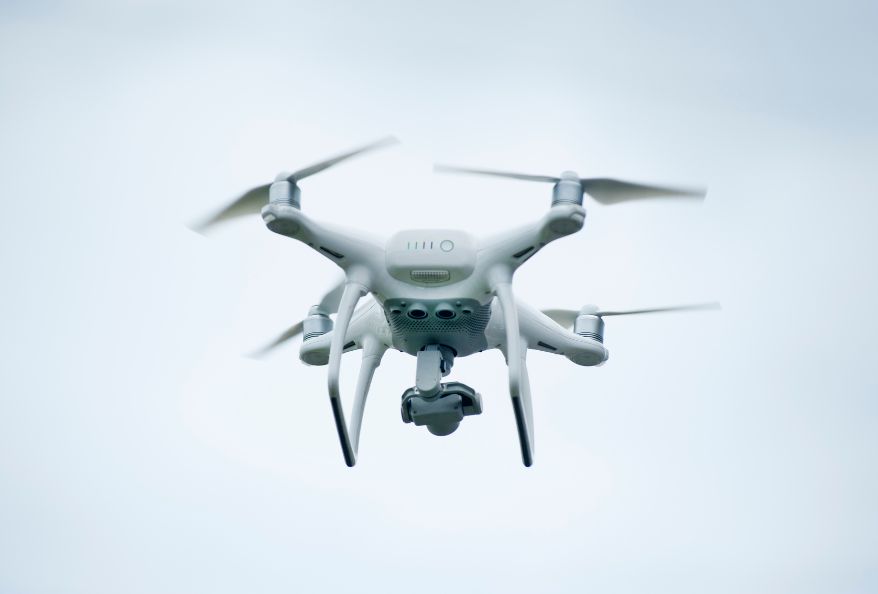
Unmanned aerial vehicles (UAVs) are evolving rapidly. Drone technology advancements are transforming how drones operate across industries such as logistics, agriculture, surveillance, and environmental monitoring.
Improved artificial intelligence now enhances navigation systems and obstacle detection. As a result, drones can operate more safely in complex environments. Modern drones also feature longer battery life, with some models achieving flight endurance of more than 30 minutes, allowing extended missions.
Furthermore, the integration of 5G connectivity enables drones to transmit real-time data to operators. This capability improves monitoring, decision-making, and operational efficiency in many industries.
Drone Technology Advancements in Today’s Commercial Market
Recent drone technology advancements have accelerated growth in the global UAV industry. Industry analysts estimate that the commercial drone market could reach $43 billion within the next decade.
Several sectors are driving this growth.
Logistics companies are using delivery drones to transport packages faster and reduce delivery times. Agricultural drones help farmers monitor crop health and apply pesticides more efficiently.
In addition, surveillance and security sectors rely on drones for high-resolution aerial imaging and monitoring operations.
Industry Applications of Drone Technology Advancements
Different industries benefit from drone technology advancements in unique ways.
Logistics
Autonomous drones can transport packages quickly while reducing transportation costs. They also help companies deliver goods to remote locations that are difficult to access by road.
Agriculture
Agricultural drones analyze crop health, detect plant diseases, and optimize pesticide or fertilizer application. These technologies help farmers improve yields while reducing chemical usage.

Surveillance
Security organizations use drones equipped with advanced imaging systems to monitor large areas efficiently. Drones provide real-time aerial surveillance that enhances security and safety operations.
These applications demonstrate how drones improve productivity and operational efficiency across multiple sectors.
AI Navigation and Drone Technology Advancements
Artificial intelligence plays a central role in modern drone technology advancements. AI-powered systems allow drones to process environmental data in real time and respond quickly to obstacles or changing conditions.
Research suggests that real-time AI navigation can reduce flight errors by up to 30 percent.
AI-powered drones can identify obstacles such as trees, buildings, or power lines. This capability significantly improves safety during delivery missions, search-and-rescue operations, and infrastructure inspections.
Machine Learning in Drone Technology Advancements
Machine learning algorithms enable drones to analyze large datasets collected during flight.
For example, agricultural drones can analyze crop data to detect early signs of plant disease, irrigation issues, or nutrient deficiencies. These insights help farmers make better decisions and improve overall agricultural productivity.
Obstacle Avoidance in Drone Technology Advancements
Obstacle avoidance systems are a critical component of modern drone technology advancements. Modern drones use advanced sensors and cameras to detect potential hazards during flight.
These systems help drones navigate safely through complex environments such as cities, forests, and industrial facilities.
Sensor Technology in Drone Technology Advancements
Advanced sensors allow drones to detect objects and obstacles in real time. Technologies commonly used in drones include:
- LiDAR sensors for accurate distance measurement
- Ultrasonic sensors for detecting nearby obstacles
- Computer vision systems for visual navigation and object recognition
Together, these technologies enable safe and reliable autonomous drone operations.
Flight Endurance and Battery Drone Technology Advancements
Battery innovation is another major factor driving drone technology advancements. Improved battery materials now allow drones to achieve longer flight times and increased payload capacity.
Some modern drones provide up to 50 percent more battery capacity compared with older models.
Longer flight endurance allows drones to cover larger areas during missions, improving efficiency in sectors such as agriculture, mapping, and environmental monitoring.
Battery Improvements in Drone Technology Advancements
Advanced battery systems improve mission planning and operational efficiency. For example, disaster response drones can travel farther and reach remote areas quickly during emergency operations.
Similarly, agricultural drones can monitor larger farmland areas without needing frequent battery replacements.
5G Connectivity and Drone Technology Advancements
The integration of 5G communication networks is accelerating drone technology advancements. 5G technology enables faster and more reliable communication between drones and control systems.
5G networks can deliver data transfer speeds of up to 10 gigabits per second while maintaining extremely low latency.
Real-Time Data in Drone Technology Advancements
With 5G connectivity, drones can transmit live video streams and sensor data instantly to operators.
This capability benefits industries such as:
- Emergency response and disaster management
- Precision agriculture
- Logistics and delivery services
Operators can monitor drone operations in real time and quickly respond to changing conditions.
Autonomous Delivery and Drone Technology Advancements
Autonomous delivery systems represent one of the most exciting drone technology advancements. Logistics companies are increasingly using drones to transport goods quickly and efficiently.
AI navigation systems allow drones to avoid obstacles while reaching their destinations safely. At the same time, improved battery systems extend operational range for delivery missions.
Future of Drone Delivery Systems
Autonomous drones are particularly useful in urban areas where traffic congestion delays traditional deliveries.
Governments and aviation authorities are currently developing regulatory frameworks to ensure the safe integration of drones into national airspace systems.
These regulations will support the growth of drone delivery networks in the future.
Aerial Imaging and Drone Technology Advancements
High-resolution aerial imaging is another important outcome of drone technology advancements. Modern drones are equipped with advanced cameras and stabilization systems that capture extremely detailed images and videos.
Applications of Imaging Drone Technology Advancements
Industries that benefit from drone-based aerial imaging include:
- Precision agriculture
- Real estate marketing
- Land surveying
- Wildlife monitoring
High-resolution imagery allows professionals to collect detailed visual data for analysis and planning.
Environmental Monitoring and Drone Technology Advancements
Environmental research has benefited significantly from drone technology advancements. UAVs can monitor air quality, vegetation health, and temperature variations across large areas.
Thermal imaging sensors allow scientists to study ecosystems with greater precision.
Drone imagery often provides higher resolution than traditional satellite images. This helps researchers analyze environmental changes more effectively.
These technologies assist scientists in studying deforestation, wildlife habitats, and climate change impacts.
Conclusion on Drone Technology Advancements
Drone technology advancements are transforming industries worldwide. Improvements in artificial intelligence, battery systems, sensors, and 5G connectivity are expanding the capabilities of unmanned aerial vehicles.
From logistics and agriculture to environmental monitoring and emergency response, drones are becoming essential tools in modern operations.
As technology continues to evolve, drones will likely play an even greater role in improving efficiency, safety, and productivity across many industries.
Reference
- Colomina, I., & Molina, P. (2014). Unmanned aerial systems for photogrammetry and remote sensing: A review. ISPRS Journal of Photogrammetry and Remote Sensing, 92, 79–97. https://doi.org/10.3390/drones3010001