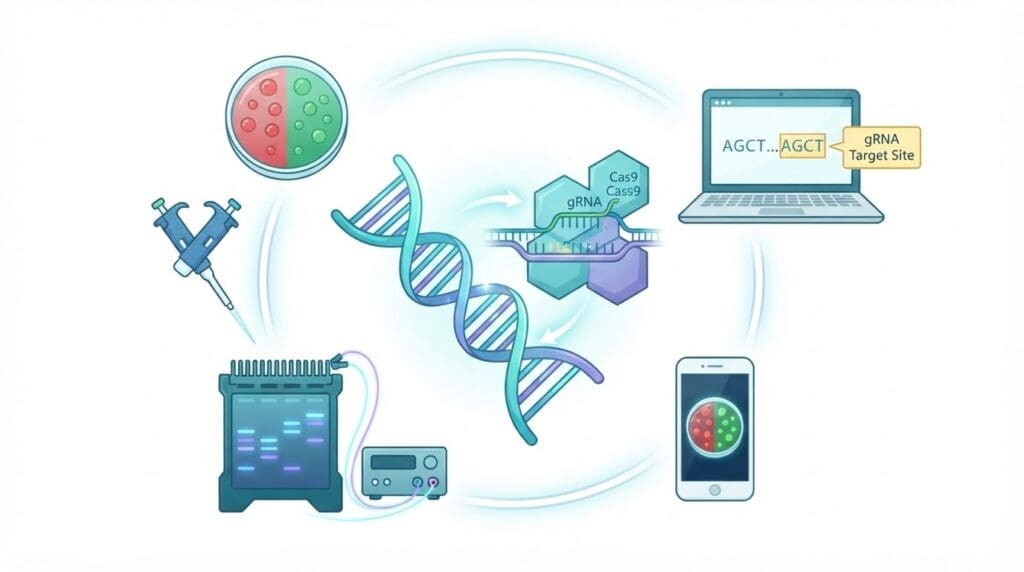
CRISPR experiments are becoming practical classroom activities, not just university research projects. With proper teacher supervision, high school students can use educational kits to genetically modify laboratory bacteria and observe visible results in real time. Some experiments change bacterial colonies from glowing red to green, while others edit the lacZ gene and produce blue-to-white colonies. Students can also measure gene activity using smartphone photographs. These projects mainly require careful planning, an appropriate budget, suitable equipment, and responsible supervision.
If you are completely new to the subject, start with our beginner’s guide, Introduction to Genetic Engineering, Explained. It explains the basic concepts in simple terms before you choose a project. If you already understand what CRISPR does, this guide skips the introduction. It lists the kits, vendors, and free tools you can buy or download today. For each project, it spells out exactly what you need. It also separates ordinary classroom activities from AP, club, and competition work.

Let me clear one thing up first. Every option below assumes that a teacher, mentor, or program supervisor takes part. You cannot do any of them alone at a kitchen table. The kit makers designed them that way on purpose. Having that established, here is an example of what a genuine student-led CRISPR experiment looks like nowadays.
What Makes CRISPR Experiments Student-Safe?
The teaching kits in this guide almost all work at Biosafety Level 1 (BSL-1). The CDC and NIH jointly publish Biosafety in Microbiological and Biomedical Laboratories (BMBL, 6th edition). It defines BSL-1 as the basic containment level. BSL-1 covers well-defined, well-characterized strains that do not consistently cause disease in healthy adults. The BMBL considers undergraduate and secondary school teaching laboratories a good fit for this level. It asks only for simple precautions: a door and a handwashing sink. It also wants non-porous benchtops that are easy to clean and decontaminate.
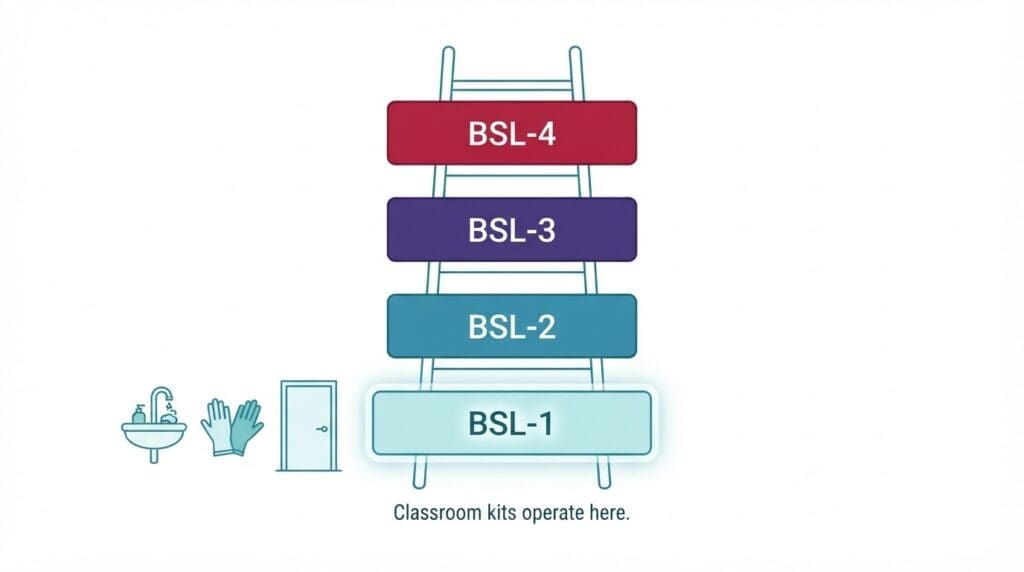
In reality, BSL-1 is quite ordinary. To comply with the requirements, you must follow standard procedures. Wash your hands, do not eat or drink at the bench, and use mechanical pipettes instead of mouth pipettes. Wear gloves and handle sharps with care. BSL-1 needs no special containment measures.
Why the Strain Matters
What is most important in this case are the organisms. Almost all classroom CRISPR projects use laboratory strains of E. coli. Under the NIH Guidelines, the BMBL specifically lists K-12 derived strains as “exempt organisms”. Those guidelines generally treat such organisms as posing no significant risk to health or the environment. Bacillus subtilis, another classroom favourite, appears in BMBL’s own list of BSL-1 examples for the same reason.
However, a safe strain does not mean you can use any E. coli. Strains that produce Shiga toxin need stricter BSL-2 precautions, so classroom kits leave them out for a very good reason. That is why every kit below supplies its own strain instead of a wild-type culture. This last point matters for another reason: a good kit comes with tested reagents and a written protocol. By contrast, an unsupervised “kitchen counter” experiment you can order online does not.
Researchers who study CRISPR in education recorded a real case of an at-home kit failing for one student group. Notably, those same students had earlier succeeded in a CRISPR lab where a teacher supported and guided them. Ultimately, the takeaway is not that CRISPR is unsafe. These are real laboratory procedures, and they work best with proper supervision.
Project 1: Start Here — The Power of CRISPR (Innovative Genomics Institute)
If you’re only going to do one of the projects on this list then choose this one. The Innovative Genomics Institute (IGI) developed this kit with Jennifer Doudna’s team. Unlike the AP-level knockout kits later on this page, it suits any high school biology class. The kit focuses on a genuine medical application: the treatment of sickle cell disease. The students work with bacteria that already carry a CRISPR system, which cuts the gene for a red fluorescent protein. A donor sequence for the green fluorescent protein then repairs the cut. When the students add the correct chemical trigger, the CRISPR machinery switches on. Colonies with a successful edit change from glowing red to glowing green, a striking and clear result.
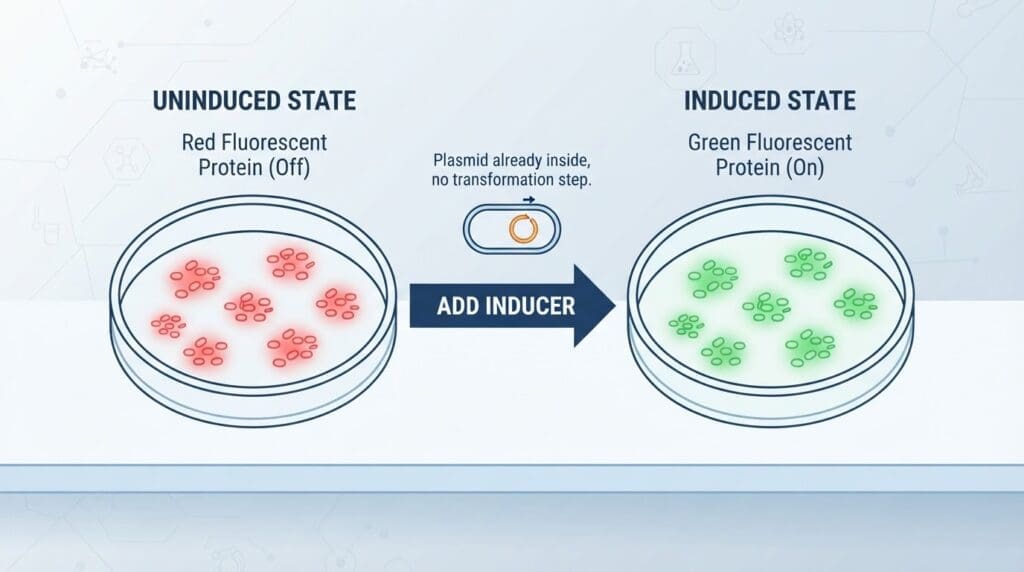
The bacteria already have the plasmid they need, so students skip the separate transformation stage. That stage is usually the hardest part of a CRISPR classroom project. This simplification raises success rates. It also makes the procedure accessible to students with no laboratory experience.
What you’ll need:
- The kit itself (includes reagents and modeling materials for six 50-minute lessons)
- Room-temperature incubation only, no expensive equipment required
- A supervising teacher; refill kits cost less than the first purchase for repeat use
Suitable for: high school biology courses and instructors who want a full, ready-to-teach unit. The last lesson includes an ethics discussion.
Project 2: No Cultures, No Incubator — The Cell-Free CRISPR Experiment
If your school has no incubator, autoclave, or appetite for growing bacteria, a cell-free kit still delivers real CRISPR chemistry. Published classroom guidance calls miniPCR’s Chopped kit the simplest, least expensive way for students to cut DNA with CRISPR. Students use two guide RNAs to cut plasmid DNA at two locations. They then separate the fragments by gel electrophoresis to confirm the cut’s accuracy and precision. The cleavage happens in a cell-free system, so you need no culturing or transformation. You can run the entire procedure within a two-hour class period.
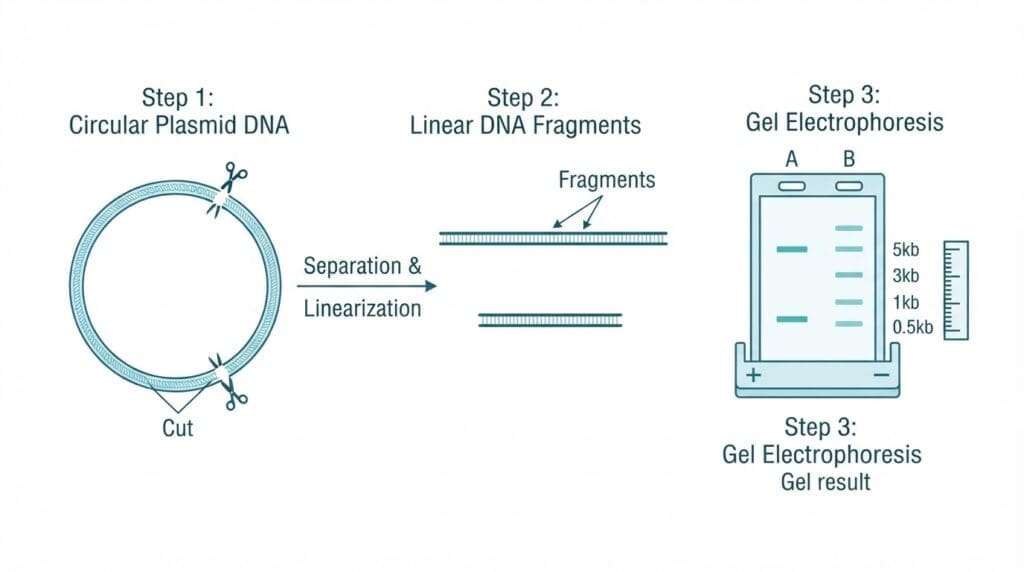
What you’ll need:
- The Chopped CRISPR/Cas9 lab kit from miniPCR, plus its inexpensive gel electrophoresis companion kit
- Micropipettes, a gel rig, and a power supply
- One class period, including time to pour and run gels
If electrophoresis is still out of reach, use a dry lab, and say so honestly. The HHMI BioInteractive paper model of CRISPR-Cas9 lets students cut out Cas9, guide RNA, and target DNA. They can then simulate targeting, cutting, and repair with no equipment at all. MiniOne Systems’ Crafting Genetics kit pairs a similar paper model with predigested DNA fragments for electrophoresis practice. The NSTA-hosted case study Cut It Out! adds a reading-and-discussion route for classes with no budget at all. These options teach the logic of the experiment well. None of them is real editing, though, and no one should present them as such.
Project 3: The $2 Experiment — A Frugal, Peer-Reviewed CRISPRkit
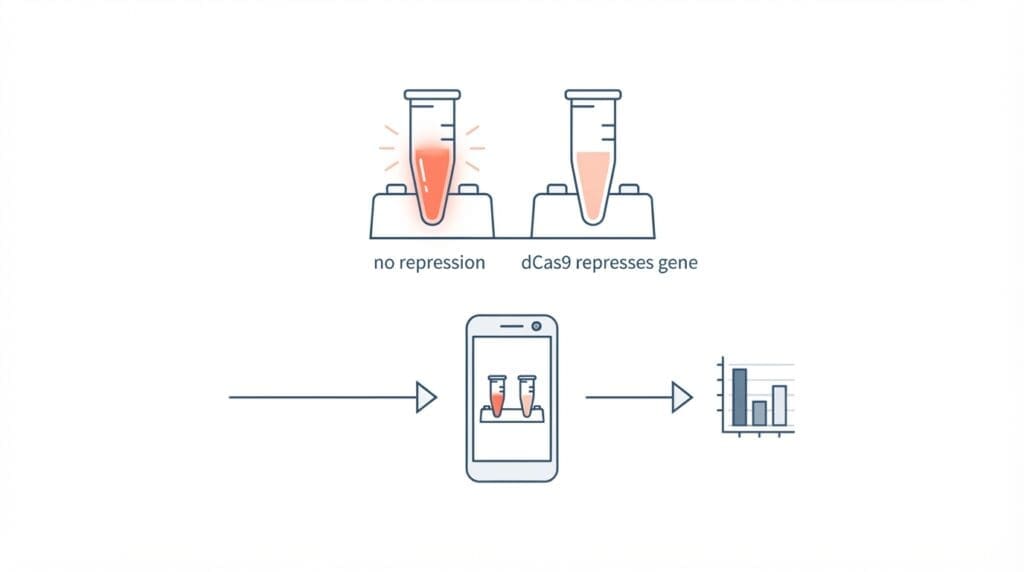
If cost is your main obstacle, consider this option. Researchers from Stanford University have published a peer-reviewed, cell-free CRISPR kit in Nature Communications (2024). They designed it with equitable access for high school students in mind. The researchers actually tested the kit with real students in real classrooms. One key point: this kit uses a ‘dead’, non-cutting form of Cas9 called dCas9. It switches a gene off without changing the DNA sequence. Researchers call this CRISPR interference (CRISPRi), unlike the other projects here, which cut the DNA.
It is still genuine, hands-on CRISPR work, just gene regulation rather than gene editing. Teach this difference explicitly. Instead of fluorescent proteins, which need special lighting, the kit uses colorful ‘chromoproteins’ you can see with the naked eye. When dCas9 successfully represses the target gene, the color disappears. Students measure their results with just a smartphone camera, not a lab plate reader. They use a free analysis method the researchers call CRISPectra.
What the Classroom Results Show
The evidence from the classroom is not only encouraging but also frankly honest. The developers gave the kit to a class of about 40 students at a local high school. The students split into 17 groups, and 15 groups got a measurable result. The two that failed had trouble with liquid-transfer technique, not the basic chemistry. Additionally, one student carried out the experiment nine times on different days and succeeded eight times. The published protocol takes about 30 minutes to set up. It costs $2.01 per experiment in reagents and plastic. The simplified “low-tech” version needs only a −20°C freezer for storage, with no incubator, pipettes, or plate reader.
What you’ll need:
- CRISPRkit reagents, requested through the project’s published reagent request form
- Inoculation loops and tubes instead of pipettes, plus a −20°C freezer for storage
- A smartphone for photos and the free CRISPectra analysis method
- About $2 per experiment, and a supervising teacher familiar with sourcing published reagents
Ideal for: classrooms with a limited budget, students working independently, or teachers who wish to carry out the experiment for the whole class at a low cost. As the procedure is based on research rather than coming from a commercial kit, it is advisable to consult your school’s science department before carrying it out.
Project 4: Go Deeper — The Full Knockout-and-Genotyping Path
Once students have the fundamentals down, this is the classic, more detailed CRISPR activity for the classroom. AP Biology and advanced biotechnology courses use it most often. The Bio-Rad Out of the Blue CRISPR Kit won the NSTA ‘Best New Technology Innovation’ award. It has students edit the lacZ gene in E. coli. Cells that lose lacZ function cannot process X-gal, so the colonies turn white rather than blue. The donor DNA molecule repairs the break and introduces a stop codon. The experiment therefore illustrates homology-directed repair (HDR), not just cutting. Two sibling kits cover similar ground. With miniPCR’s Knockout kit, you cut the plasmid and skip the HDR step, so it fits a two-hour period. Rockland’s CRISPR in a Box uses in vitro Cas12a cutting. It needs a benchtop centrifuge capable of 10,000×g, and older surplus units sometimes sell for around $150.
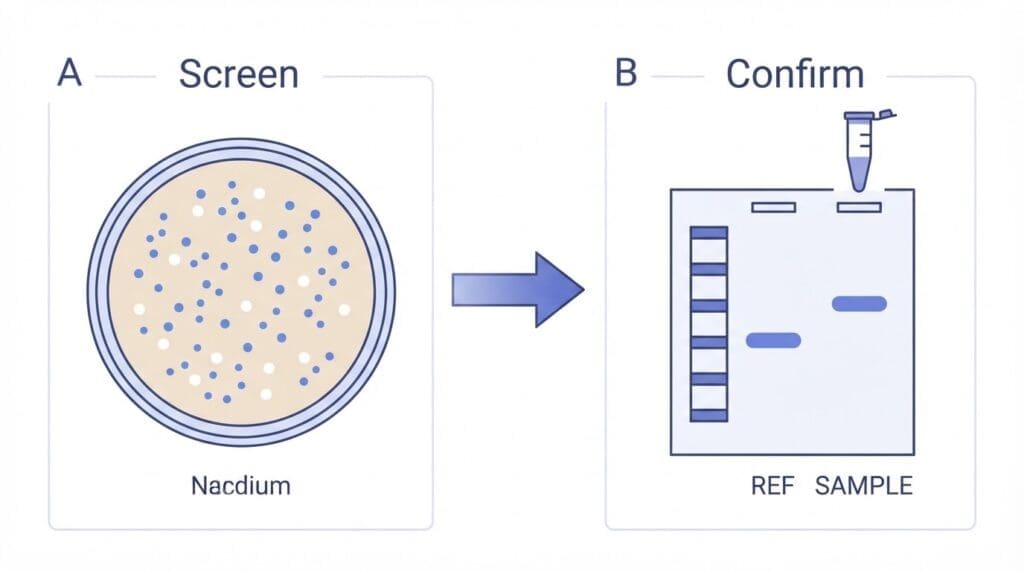
The optional genotyping extension makes the complete procedure different. Instead of relying on colour alone, students verify the precise edit at the molecular level. In this final step, they use PCR and gel electrophoresis, the same techniques researchers use to check real CRISPR results. Students extract DNA, amplify the edited area, and read the expected bands on the gel.
What you’ll need:
- A base editing kit (Bio-Rad, miniPCR, or Rockland) plus its genotyping extension for molecular confirmation
- Micropipettes, and for the extension, a thermal cycler and electrophoresis equipment. Cultures also need 24 to 48 hours of prep time before class.
- Time for a second lab session and a results discussion
Best for: students who already understand basic molecular biology and want the full cut-repair-confirm experience, typically an AP-level or upper-level course, and the strongest option for turning a class activity into a genuine, defensible science fair dataset.
Project 5: Zero Equipment — Design Guide RNAs with CRISPOR and CHOPCHOP
Not every CRISPR project needs a bench. Students practice one of the most transferable skills in genome editing, choosing the guide RNA, entirely on a laptop. It costs nothing. Students pick a target gene. The bacterial lacZ gene makes a satisfying full-circle choice. They find its DNA sequence and compare candidate guides using free design tools.
You can find CRISPOR at crispor.org. After students paste in a sequence, it identifies possible guide RNA targets. It then ranks each one using three separate scores: specificity, efficiency, and out-of-frame likelihood. The tool colours the guides green, yellow, or red. In addition, it predicts off-target sites with up to four mismatches. It even provides the cloning oligonucleotides and validation primers a real laboratory would need. For comparison, CHOPCHOP, another long-established free web-based tool for CRISPR/Cas9 targeting, gives students a useful second opinion on the same sequence.
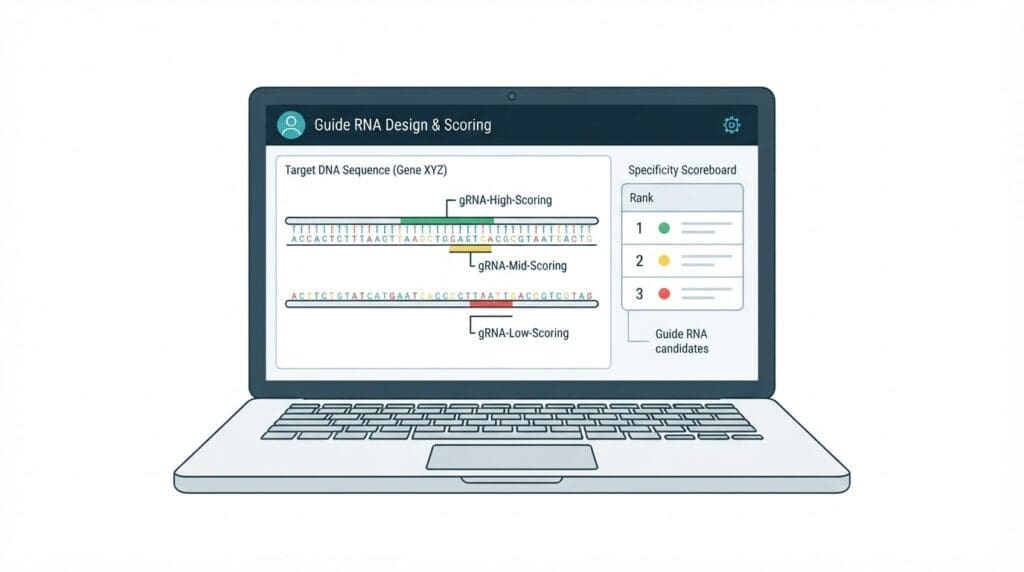
This is where the project teaches real judgment. CRISPOR’s own developers note that the scores have limited predictive value, especially efficiency. They also note that specificity, efficiency, and out-of-frame likelihood trade off against each other, depending on the goal. So students learn to weigh evidence rather than trust one number. That habit separates a real gene-editing project from a button-pressing exercise.
What you’ll need:
- A computer and a browser, since CRISPOR and CHOPCHOP are free web tools
- A target sequence, taken from a public sequence database such as NCBI Gene or a kit’s own plasmid documentation
- A mentor to review the final guide choice before anyone orders or uses it at the bench
Taking It Further: Competitions and Real Research
The most well-known stage to follow is iGEM, the International Genetically Engineered Machine competition organised by the iGEM Foundation. Each year, teams of students in grades 9 to 12 spend a season developing an original synthetic biology project. They usually use CRISPR to solve a real-world problem. They build the project and show the results to an international panel of judges. A faculty or mentor advisor supervises them throughout. iGEM holds annual events, and participation is competitive. Check the timeline and eligibility criteria for the current year before making any plans.
Two other documented pathways exist. Genes in Space invites U.S. students in grades 7–12 to propose DNA experiments for the International Space Station. Winning experiments fly, and astronauts carry them out. The competition has run since 2015. Student journals such as the Journal of Young Investigators and Frontiers for Young Minds publish student-written research and perspective pieces. That can turn a well-documented classroom project into a genuine credential.
You should also be aware of formal outreach initiatives. For example, the Innovative Genomics Institute offers intensive, application-driven workshops. So do various summer programs that focus on research at places such as The Jackson Laboratory. In these workshops, students work directly with scientists who use CRISPR-Cas technology. The programs are generally selective and last for several weeks. For students who have outgrown a single kit and want real laboratory research, these programs are a realistic next move. You can often get in by asking through a science teacher or applying directly to the program.
A Word on Safety and Supervision
Every project above assumes supervision by a teacher, mentor, or program. Each also assumes you have the materials and facilities its protocol requires. That’s not a formality; it’s the design. As the earlier “kitchen counter” example shows, even a well-marketed at-home kit can fail without proper technique and support. In contrast, the same experiment, run under real supervision and with a validated protocol, works reliably. If you’re a student, bring this guide to a teacher, club advisor, or mentor before ordering anything. If you’re an educator, you treat these as real laboratory activities that deserve proper preparation, not as toys.
Where to Go Next
No matter which project suits your classroom, your budget, or your students’ interests, the fundamental point remains that real CRISPR gene editing is now genuinely accessible to students, something which was not the case a decade ago. If you have decided on a starting point or if you would like to understand precisely how CRISPR cuts and repairs DNA at the molecular level before you begin, our comprehensive guide, Genetic Engineering: The Complete Guide for High School Students, explains the full mechanics of each of the projects listed here. After that, begin on a small scale by using the inexpensive $2 kit or carrying out a single cell-free cut, learn to recognize what a good gel looks like, and let the results determine your next project.
Frequently Asked Questions
Yes. Several classroom kits perform genuine CRISPR-Cas9The term CRISPR stands for "clustered regularly interspaced short palindromic repeats" and Cas9 refers to the enzyme that cuts DNA. More editing or cutting, and Stanford’s frugal CRISPRkit was tested by a local high school class, in which 15 of 17 student groups got it to work on the first attempt.
Yes, if the work is carried out at Biosafety Level 1 using the non-pathogenic strains of E. coli K-12 that are provided with the kit and standard microbiological techniques, with the supervision of a teacher, in accordance with the guidance of the CDC and NIH BMBL.
Not always. Cell-free kits need only micropipettes and a gel rig, the frugal CRISPRkit needs no lab equipment at all, and guide-RNA design with CRISPOR and CHOPCHOP needs only a computer.
For budget-limited classrooms, the frugal Stanford CRISPRkit starts at about $2.01 per experiment in reagents and plastic, and cell-free “cut and view” kits are designed as the least expensive way to cut DNA with CRISPR in a living-lab setting.
Competitions such as iGEM, which runs a dedicated high school division, and Genes in Space turn projects into team-based, mentor-guided research, and student journals publish the results.
How This Guide Was Compiled
The post draws on a range of primary and educational sources: the CDC/NIH BMBL 6th edition (covering BSL-1 criteria, exempt organisms, and standard practices); the peer-reviewed CRISPRkit study published in Nature Communications in 2024, together with the results of its classroom testing as reported in that study; the article on the CRISPOR web-server in Nucleic Acids Research from 2018; Dahlberg and Groat Carmona’s view from the classroom, which appears in The CRISPR Journal in 2018; and Wollert’s open-access chapter in Springer on using CRISPR in the high school classroom (2025), which looks at the specific kits mentioned here.
APA-Style References
Bio-Rad Laboratories. (n.d.). Out of the Blue CRISPR gene editing kit. https://www.bio-rad.com/en-us/sku/12012608EDU-out-blue-crispr-kit
Collins, M., Lau, M. B., Ma, W., Shen, A., Wang, B., Cai, S., La Russa, M., Jewett, M. C., & Qi, L. S. (2024). A frugal CRISPR kit for equitable and accessible education in gene editing and synthetic biology. Nature Communications, 15, Article 6563. https://doi.org/10.1038/s41467-024-50767-2
Concordet, J.-P., & Haeussler, M. (2018). CRISPOR: Intuitive guide selection for CRISPR/Cas9 genome editing experiments and screens. Nucleic Acids Research, 46(W1), W242–W245. https://doi.org/10.1093/nar/gky354
Dahlberg, L., & Groat Carmona, A. M. (2018). CRISPR-Cas technology in and out of the classroom. The CRISPR Journal, 1(2), 107–114. https://doi.org/10.1089/crispr.2018.0007
iGEM Foundation. (n.d.). International Genetically Engineered Machine competition. https://competition.igem.org/about
Innovative Genomics Institute. (n.d.). The Power of CRISPR classroom kit. https://innovativegenomics.org/crispr-classroom-kit/
miniPCR bio. (n.d.). Chopped! Using CRISPR/Cas9 to cut DNA. https://www.minipcr.com/product/chopped-crispr-cas9-lab/
miniPCR bio. (n.d.). Knockout! A CRISPR/Cas gene targeting lab. https://www.minipcr.com/product/knockout/
Wollert, D. (2025). CRISPR for the high school classroom. In M. J. Wolyniak, D. L. Pattison, J. N. Pieczynski, & M. S. Santisteban (Eds.), Introduction to CRISPR-Cas9 techniques (Learning Materials in Biosciences, pp. 19–50). Springer. https://doi.org/10.1007/978-3-031-73734-3_3
List of terms
- CRISPR-Cas9