
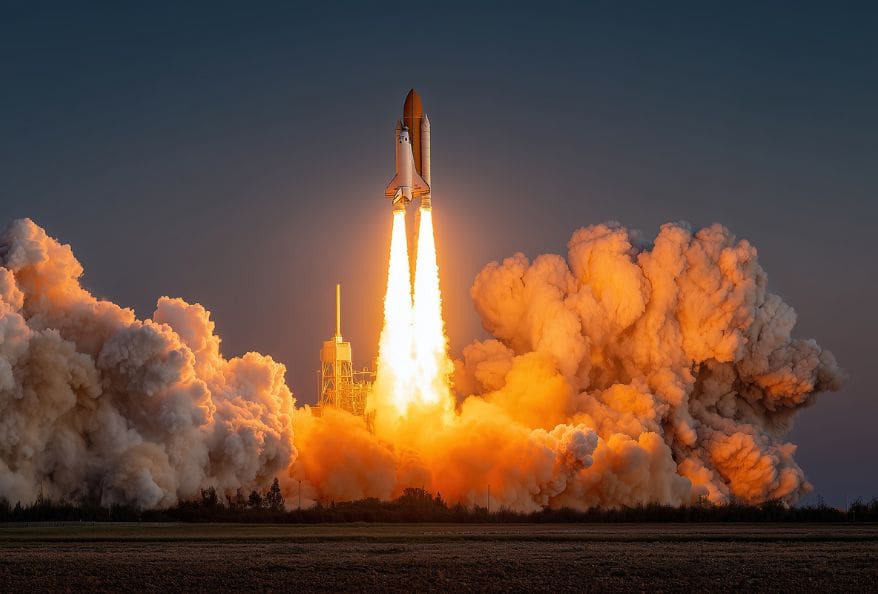
Aerospace engineering for students is a challenging path. At first, it seems like magic. However, it is pure physics. In fact, it drives global connection. You build machines that fly. You design craft for space. Above all, you push human limits. This guide explains the basics. It covers the skills you need. To illustrate, we look at real jobs. Sooner or later, you will decide your future.
To start, we must look at the core concepts. Physics rules the sky. As can be seen, nothing flies without math. Therefore, you must love numbers. In general, two branches exist. One is aeronautics, which deals with planes. The other is astronautics, which deals with spacecraft. All in all, both require dedication.
Understanding Aerodynamics
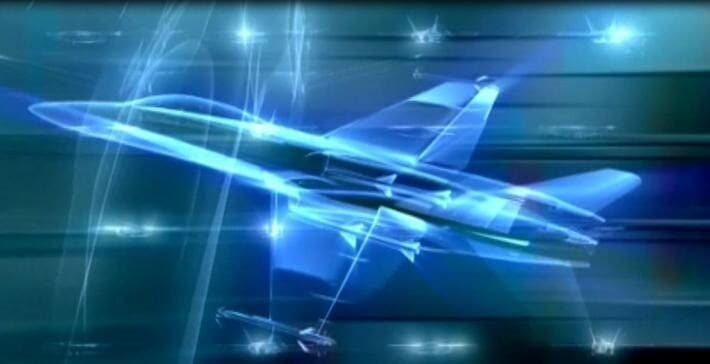
Aerodynamics is the study of moving air. To explain, air acts like a fluid. It flows around objects. Consequently, this flow creates forces. The four forces are lift, weight, thrust, and drag. In short, lift opposes weight, while thrust opposes drag. Provided that lift exceeds weight, you fly.
With this in mind, shapes matter. A wing shape is an airfoil. It curves on top. As a result, air moves faster and pressure drops. Higher pressure below pushes up. This is Bernoulli’s principle. To put it differently, pressure difference creates flight.
Propulsion Systems
Engines provide thrust. In this case, they push the plane forward. Take the case of a jet engine. First, it sucks in air. Then, it compresses the air. After that, it adds fuel. The mixture burns. At this instant, hot gas shoots out back. Newton’s third law applies here. Every action has a reaction. Consequently, the plane moves forward.
By comparison, propellers work differently. They act like spinning wings. Thus, they pull the plane. In sum, propulsion is vital.
Structural Integrity
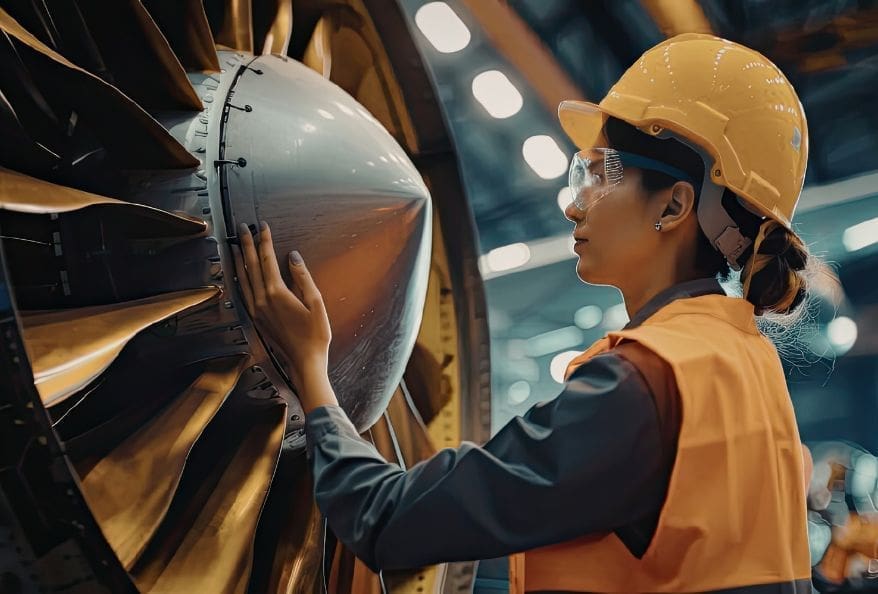
Planes must be strong. At the same time, they must be light. For the purpose of efficiency, weight is bad. Therefore, engineers use composites. Carbon fiber is a popular choice. In reality, it is stronger than steel and lighter.
To point out, metals fatigue over time. Cracks can form. With attention to safety, we test materials until they break. In light of this, safety margins are huge. After all, you cannot fail at 30,000 feet.
Essential Skills in Aerospace Engineering for Students
Prior to college, you need skills. While it may be true that you learn there, preparation helps. Aerospace engineering for students demands logic. To list, here are key traits.
Mathematics Proficiency in Aerospace Engineering for Students
Math is the language of engineering. To say nothing of physics, math is everywhere. You need Calculus. You need Linear Algebra. In due time, you will solve differential equations. So as to predict motion, math is used.
For the most part, you model systems. You calculate fuel loads. You estimate arrival times. In conclusion, do not fear math. Instead, embrace it.
Computer Programming in Aerospace Engineering for Students
Coding is now mandatory. At length, manual calculation is gone. Instead, computers run simulations. So far, Python and MATLAB are standard. To repeat, you must learn to code.
You write scripts to analyze data. You model airflow on screens. With this purpose in mind, take coding classes. It may be true that you are not a developer. Yet, you write software. In essence, code controls the hardware.
Communication Skills
Engineers work in teams. Therefore, you must communicate clearly. You write technical reports. Summing up, clear writing prevents errors. As a matter of fact, bad communication causes crashes.
You present to managers. You explain costs. To put it another way, soft skills matter. You cannot just be smart. You must be clear. At least, learn to make good slides.
Critical Thinking
Problems happen daily. All of a sudden, an engine fails. A sensor gives bad data. Then again, a test might fail. Therefore, you must find the root cause.
To that end, you use logic. You eliminate variables. In either case, you stay calm. As a result, you propose solutions and the mission continues. To be sure, this takes practice.
Educational Pathways in Aerospace Engineering for Students
Summing up, the road is long. You need a degree. At any rate, it is worth it. Aerospace engineering for students starts in university.
Choosing the Right Major in Aerospace Engineering for StudentsYou usually pick Aerospace Engineering. On one hand, you could pick Mechanical Engineering. It is similar. By and large, Aerospace is more specialized. You study fluids and orbital mechanics. In contrast, Mechanical is broader.
Provided that you love space, pick Aerospace. In the present time, many schools offer this. Look for ABET accreditation. This ensures quality.
The Importance of Internships in Aerospace Engineering for Students
Grades are not everything. To summarize, experience counts. So long as you have good grades, apply early. Work at NASA. Work at Boeing or SpaceX. Seeing that competition is high, apply early.
In fact, build a portfolio. Join a rocket club. Build drones. As an illustration, hands-on work impresses employers. To sum up, get your hands dirty.
Career Options in Aerospace Engineering for Students
Now, where can you work? To enumerate, the list is huge. Aerospace engineering for students leads to many jobs.
Commercial Aviation and Aerospace Engineering for Students
This is the biggest sector. You design airliners like the Boeing 777. Thousands of engineers built it. You improve fuel efficiency. You reduce noise. In like manner, you design interiors.
Although military jets are different, safety remains the top priority. With this intention, you test everything thoroughly.
Defense and Aerospace Engineering for Students
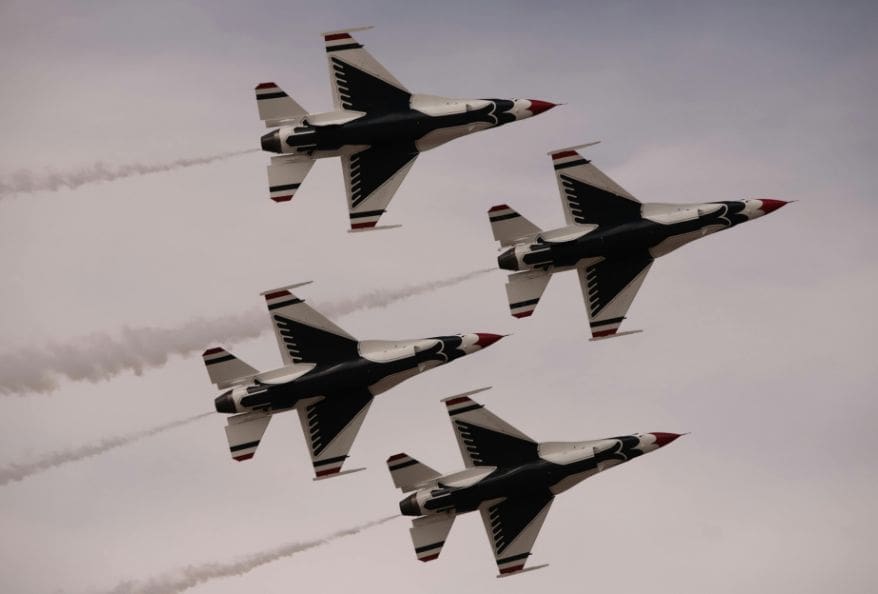
Governments buy many planes. In this case, you build fighters and bombers. To illustrate, look at the F-35. It is a flying computer. Another key point is missiles and guidance systems.
At the same time, you work on stealth. Of course, this requires security clearance. Balanced against pay, the work is confidential.
Space Exploration in Aerospace Engineering for Students
This is the dream. However, it is hard work. You build satellites and rovers. At this time, Mars is the goal. Companies like SpaceX and Blue Origin lead innovation.
You design life support. You calculate orbits. As a result, humans survive in space. To explain, space is harsh and radiation is deadly. Therefore, your designs protect the crew.
Emerging Trends in Aerospace Engineering for Students
The field changes fast. At this point, new technologies redefine aerospace engineering for students.
Electric Aviation in Aerospace Engineering for Students
Gas engines pollute. Therefore, electric planes are emerging. While batteries remain heavy, engineers fight energy limits. In the long run, short flights may become electric. As has been noted, this reduces carbon emissions.
Urban Air Mobility and Aerospace Engineering for Students
Imagine flying taxis. With this purpose in mind, engineers design VTOL aircraft. They act like large drones. Sooner or later, cities may build skyports. Nevertheless, safety and traffic control remain challenges.
Hypersonic Travel in Aerospace Engineering for Students
We want to go faster. Up to now, supersonic travel was rare. In contrast, hypersonic means Mach 5. However, friction generates extreme heat. In light of this, new materials are required. If solved, global travel changes forever.
Artificial Intelligence in Aerospace Engineering for Students
AI helps pilots. In general, planes already automate tasks. Moreover, AI optimizes designs. Engineers review computer-generated models. As a result, efficiency improves. In summary, AI supports—not replaces—the engineer.
Reusable Rockets in Aerospace Engineering for Students
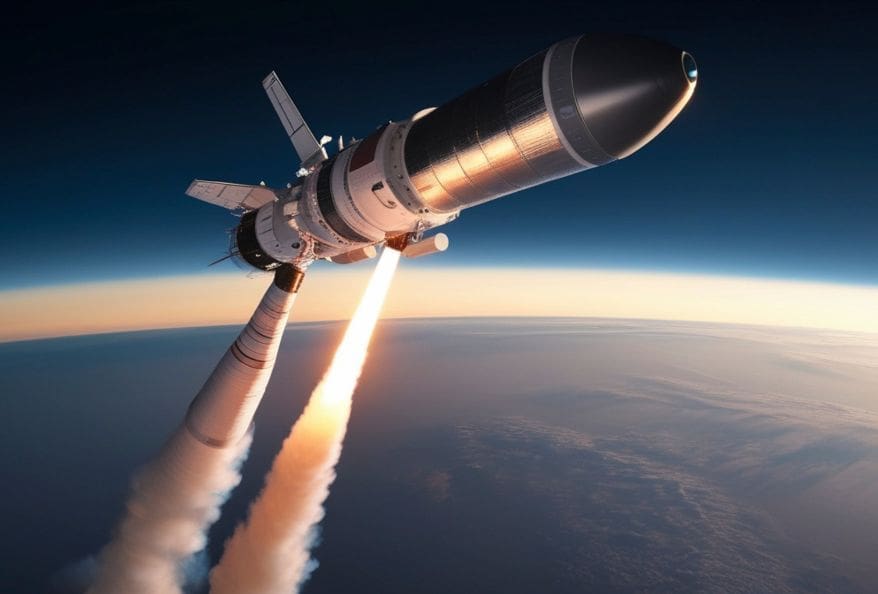
Rockets once flew once and were discarded. Now, they land and fly again. Reference the Falcon 9. As a result, launch costs drop. With this in mind, space becomes more accessible. In short, reusable rockets transform economics.
Conclusion: Aerospace Engineering for Students
In conclusion, the path is tough. Nevertheless, together with passion, you need grit. Aerospace engineering for students rewards hard work. As discussed above, you build the future. You connect the world. You explore the stars. Ultimately, the sky is not the limit—it is just the beginning.
References
- Botez, R. M., Koreanschi, A., & Mamou, M. (2018). Morphing wing technology for aircraft performance improvement: A review. Aerospace, 5(3), 72.https://doi.org/10.3390/aerospace5030072
- Zhang, Y., Sun, X., & Li, J. (2023). Advances in hypersonic vehicle aerothermodynamics and thermal protection systems. Aerospace, 10(2), 118. https://doi.org/10.3390/aerospace10020118