
Probability and statistics shape the way we understand, predict, and respond to the world around us. From weather forecasting and medical research to business decisions and artificial intelligence, these mathematical tools influence nearly every aspect of modern life. Although they may seem abstract at first, probability and statistical analysis help individuals and organizations make informed decisions when faced with uncertainty.
In today’s data-driven era, the importance of probability and statistics has grown significantly. As data volumes continue to increase and technology steadily advances, these concepts have become essential for effective problem-solving, innovation, and strategic planning. Therefore, this article explores the fundamentals of probability and statistics, their real-world applications, common misconceptions, and future trends that continue to shape the modern world.
The Basics of Probability and Statistics Explained
Before exploring advanced applications, it is important to understand the core ideas behind probability and statistics. While closely related, they serve different purposes and complement each other.
- Probability focuses on predicting the likelihood of future events.
- Statistics concentrates on analyzing and interpreting data that has already been collected.
Together, probability and statistics form the foundation of data science, analytics, and evidence-based decision-making; as a result, they enable more accurate insights and more reliable conclusions across diverse fields.
What Is Probability in Statistics?
Probability is the branch of mathematics that deals with uncertainty. It assigns a numerical value—between 0 and 1—to describe how likely an event is to occur.

Some simple examples include:
- What is the chance of rolling a six on a fair die?
- How likely is it that it will rain tomorrow?
- What is the probability of winning a lottery?
A probability of 0 means an event is impossible, while a probability of 1 means the event is certain. However, most real-world events fall somewhere in between, which is why probability models are so useful in everyday decision-making.
How Statistics Helps Analyze Data
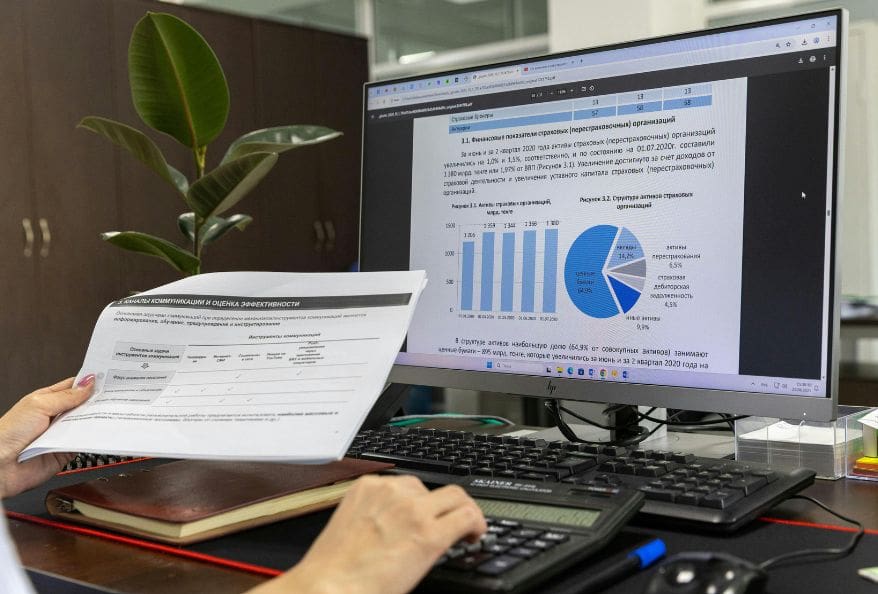
Statistics helps us make sense of data by organizing, summarizing, and analyzing numerical information. Rather than predicting outcomes directly, statistical methods focus on identifying patterns and trends in observed data.
Common uses of statistics include:
- Businesses analyzing sales data to forecast revenue
- Governments using census data to shape public policy
- Researchers interpreting survey results
- Educators evaluating student performance
Without statistics, large datasets would be overwhelming and difficult to interpret. As a result, data-driven decisions would be far less reliable.
Key Differences Between Probability and Statistics
Although probability and statistics are interconnected, they approach problems from different directions.
- Probability starts with a theoretical model and predicts possible outcomes.
- Statistics begins with real-world data and builds models to explain or infer patterns.
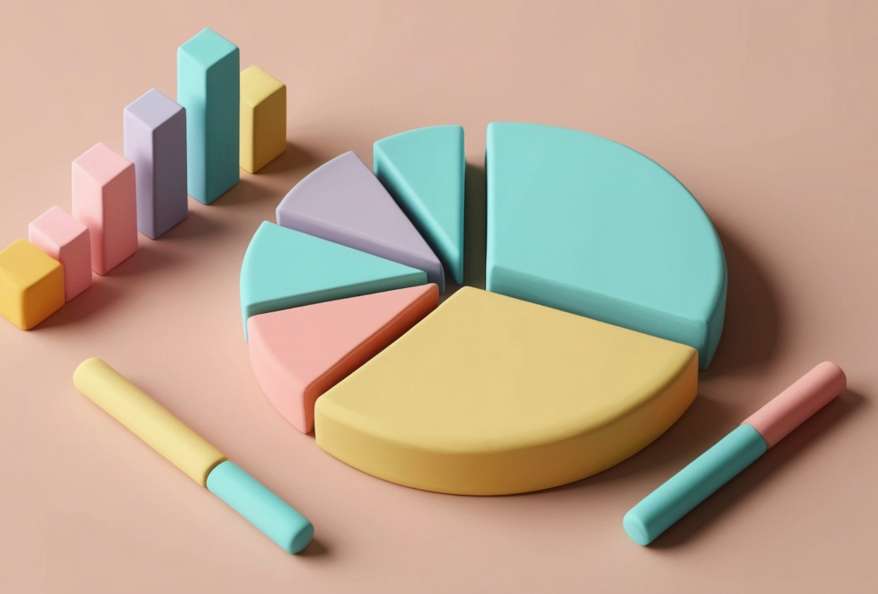
For example, probability can predict how often a coin should land on heads, whereas statistics analyzes actual coin toss results to determine whether the coin is fair.
Simple Probability and Statistics Examples in Daily Life
A classic example is flipping a coin:
- Probability tells us that a fair coin has a 50% chance of landing on heads.
- Statistics examines the results of hundreds or thousands of coin flips to see whether the observed outcomes match the expected probability.
Thus, this simple example clearly shows how probability and statistics work together to explain uncertainty.
Real-World Applications of Probability and Statistics
Probability and statistics play a critical role across many industries. Moreover, their applications continue to expand as data becomes more accessible and computational power increases.

Probability and Statistics in Medicine and Healthcare
In healthcare, probability and statistics save lives and improve outcomes.
Key applications include:
- Clinical trials, where probability helps determine whether a new drug is effective
- Epidemiology, which uses statistical models to track and predict disease outbreaks
- Medical diagnostics, where probabilities estimate the likelihood of diseases
In addition, hospitals analyze patient data to optimize resource allocation and improve treatment strategies.
Sports Analytics and Statistical Decision-Making
Modern sports rely heavily on statistical analysis and probability models. Coaches and analysts use data to gain a competitive edge.
Examples include:
- Using probability to decide whether to attempt a risky play
- Evaluating player performance using advanced metrics
- Predicting win probabilities during live games
Consequently, sports analytics has transformed how teams draft players, design strategies, and manage performance.
Business, Marketing, and Statistical Analysis
Businesses thrive on data-driven decision-making, and probability and statistics are at the heart of it.
Common uses include:
- Analyzing customer behavior and purchasing trends
- Forecasting future sales and demand
- Managing financial risk
- Conducting A/B testing in marketing campaigns
By applying statistical models, companies reduce uncertainty; consequently, their strategic decisions become more informed and data-driven.
Weather Forecasting Using Probability Models
Weather forecasting is one of the most visible applications of probability.
Meteorologists use probability-based models to estimate:
- Rainfall
- Storm intensity
- Temperature changes
- Extreme weather events
When a forecast states a 70% chance of rain, it means rain is likely—but not guaranteed—highlighting the probabilistic nature of predictions.
Essential Probability Concepts Everyone Should Know
To fully appreciate how probability works, it is therefore helpful to understand a few key principles that explain how uncertainty is measured and managed.
Random Events in Probability Theory
A random event is one whose outcome cannot be predicted with certainty.
Examples include:
- Rolling a die
- Drawing a card from a deck
- Spinning a roulette wheel
However, randomness does not mean chaos—it follows mathematical rules that probability helps quantify.
Probability Distributions in Statistics
Probability distributions describe how probabilities are assigned to possible outcomes.
Important distributions include:
- Normal distribution, which models natural phenomena like heights and exam scores
- Binomial distribution, which applies to yes/no outcomes such as success or failure
Therefore, these distributions allow researchers to model real-world behavior accurately.
Independent and Dependent Events in Probability
Events can be classified based on whether they influence each other.
- Independent events: The outcome of one event does not affect another
- Dependent events: The outcome of one event influences future outcomes
Understanding this distinction is essential for accurate probability calculations.
Core Statistical Tools Used in Data Analysis
Statistics offers practical tools that are useful not only for scientists but also for everyday life.
Mean, Median, and Mode in Statistics
These are measures of central tendency:
- Mean: The average value
- Median: The middle value in a sorted dataset
- Mode: The most frequent value
Each measure provides a different perspective on data distribution.
Standard Deviation and Data Variability
Standard deviation measures how spread out data values are from the mean.
- A low standard deviation indicates consistency
- A high standard deviation suggests greater variability
As a result, this concept is widely used in finance, education, and quality control.
Hypothesis Testing in Statistics
Hypothesis testing allows researchers to evaluate assumptions using data.
For example:
- Does a new teaching method improve exam scores?
- Is a new medication more effective than the old one?
Statistical tests help determine whether results are meaningful or due to chance.
Regression Analysis and Predictive Modeling
Regression analysis examines relationships between variables.
Common applications include:
- Predicting house prices based on size and location
- Estimating the impact of advertising on sales
- Modeling economic trends
Consequently, regression analysis is a cornerstone of predictive analytics.
Challenges and Misconceptions in Probability and Statistics
Despite their usefulness, probability and statistics are often misunderstood.
Misinterpreting Probabilities in Real Life
Many people confuse probability with certainty.
For instance:
- A 90% chance of rain does not guarantee rain
- A medical test with 95% accuracy can still produce false results
Therefore, understanding uncertainty is crucial for correct interpretation.
The Gambler’s Fallacy Explained
The gambler’s fallacy is the belief that past events influence future independent events.
For example, assuming a coin is “due” for heads after several tails is incorrect. In reality, independent events remain unaffected by past outcomes.
Statistical Significance and Sample Size Errors
Small sample sizes can lead to misleading conclusions. Without checking statistical significance, patterns may appear meaningful when they are actually random.
Real-Life Probability Example: Lottery Odds
Lottery games highlight common misconceptions about probability. Although winning is theoretically possible, the odds are extremely low—often 1 in millions. Yet many people overestimate their chances, showing how intuition often conflicts with statistical reality.
Future Trends in Probability and Statistics
The future of probability and statistics is closely tied to technological advancement.
Artificial Intelligence and Probabilistic Algorithms
AI systems rely heavily on probability-based algorithms. For example, these methods power recommendation systems, support fraud detection, and enable predictive text and voice recognition. Moreover, machine learning models continuously update probabilities as new data becomes available, allowing systems to adapt and improve over time.
Healthcare Innovation Through Statistical Models
Statistics is driving innovation in healthcare. In particular, personalized medicine tailors treatments using data, while predictive models help doctors anticipate potential complications. In addition, wearable devices generate continuous health data; as a result, patient outcomes continue to improve worldwide.
Climate Change Predictions Using Statistics
Scientists use probability and statistical models to analyze climate data. As a result, these methods are applied in several important areas, including predicting sea-level rise, estimating temperature increases, and modeling extreme weather scenarios. Together, these insights support evidence-based decision-making and, consequently, inform policy development and global climate strategies.
Conclusion: Why Probability and Statistics Matter
Probability and statistics are essential tools in the modern world. They help us understand uncertainty, analyze data, and make informed decisions across countless fields. From healthcare and business to sports and climate science, these concepts not only support everyday decision-making but also drive innovation and long-term progress.
As a result, as data becomes increasingly central to everyday life, learning probability and statistics is no longer optional—it is a valuable skill for everyone. By doing so, individuals can think more critically, interpret information more accurately, and ultimately navigate an increasingly complex world with confidence.
References:
- Smith, J., & Brown, L. (2021). Statistical modeling and data analysis in modern research. Mathematics, 9(15), 1784. https://doi.org/10.3390/math9151784
- Gómez, Y. M., & Barranco-Chamorro, I. (2025). Probability, statistics and estimation. Axioms, 14(2), 82. https://doi.org/10.3390/axioms14020082
- Zhao, J., Gong, X., & Zhenhua, C. (2024). Applied analysis of probability theory and mathematical statistics in data mining. In Application of Big Data, Blockchain, and Internet of Things for Education Informatization (pp. 90-100). Springer. https://doi.org/10.1007/978-3-031-63130-6_12