
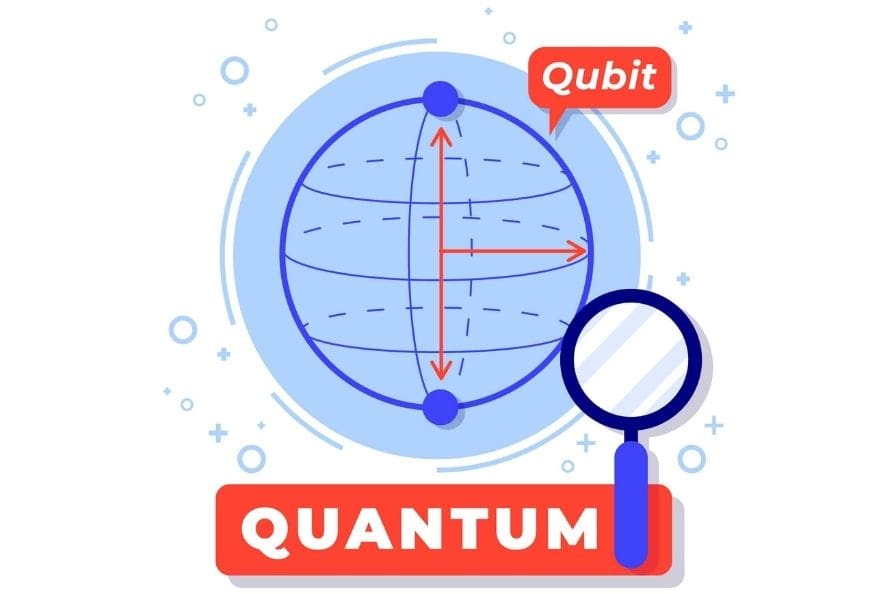
A qubit in quantum computing acts as the smallest unit of quantum information. Unlike a classical bit, which holds a 0 or a 1, a qubit exists in both states at once, much like a spinning coin shows heads and tails together. This unique property gives quantum computers their power. Open quantum system approaches to superconducting and building logical qubits in a superconducting quant both help scientists control these states for advanced calculations.
Key Takeaways: Qubit in Quantum Computing
- Qubits are the basic units of quantum information, capable of existing in multiple states at once, unlike classical bits.
- Superposition allows qubits to represent many values simultaneously, enabling quantum computers to solve complex problems faster than classical computers.
- Entanglement links qubits, meaning the state of one qubit can affect another, enhancing the power of quantum computing for tasks like cryptography.
- By leveraging the unique properties of qubits, quantum algorithms can explore all solutions at once, which consequently provides significant speed advantages over classical algorithms.
- Despite challenges like error rates and scalability, advancements in qubit technology are paving the way for breakthroughs in fields such as drug discovery and secure communication.
Qubit in Quantum Computing
What Is a Qubit?
A qubit in quantum computing serves as the quantum information. Scientists also call it a quantum bit. This unit can hold a value of 0, 1, or both at the same time. This ability sets it apart from classical bits. A qubit in quantum computing allows computers to solve problems that are too hard for regular computers. Each qubit in quantum computing can store and process more information than a classical bit.
Two-Level Quantum System
A qubit in quantum computing uses a two-level quantum system. This means it can exist in two basic states, called 0 and 1. It can also exist in a mix of these states, called a superposition. This property gives a qubit in quantum computing special powers:
- A qubit can exist in a superposition, so it can represent many values at once.
- Measuring a qubit changes its state and removes its superposition.
- A qubit can hold more information than a classical bit. For example, it can use superdense coding to store two bits of information.
These features make a qubit in quantum computing very powerful for information processing.
Qubit vs. Classical Bit
A classical bit can only be 0 or 1 at any time, whereas a qubit in quantum computing can be both simultaneously. This key difference gives quantum computers their remarkable computational power. Moreover, qubits can become entangled, meaning the state of one qubit directly affects another, even if they are far apart. Consequently, this property enables quantum computers to tackle complex problems more efficiently than classical systems.
Imagine you flip a coin. While it spins, someone asks, “Is it heads or tails?” The answer is both. The coin is in a state where it could be either one. Only when it lands and you look does it become heads or tails.
This analogy helps explain how a qubit in quantum computing works. It can be in both states until measured. This is different from a classical bit, which always has a clear value.
Core Properties of Qubits
Superposition in Qubits
Superposition lets a qubit exist in more than one state at once. This means a qubit can be both 0 and 1 at the same time. The famous double-slit experiment illustrates this concept, as quantum particles pass through two slits simultaneously and create an interference pattern, demonstrating superposition. In addition, scientists use qubits to control the order of quantum gates, providing a practical example of superposition in action.
| Evidence Description | Key Findings |
|---|---|
| Experimental superposition of orders of quantum gates | Demonstrates the ability to control the order of quantum gates using a qubit, showcasing superposition in operations. |
Superposition helps quantum computers solve problems faster. It allows them to explore many paths at once. Interference then cancels wrong answers and boosts correct ones.
- Constructive interference enhances correct answers.
- Destructive interference cancels wrong answers.
- Superposition allows exploration of many paths, while interference ensures only the correct paths contribute to the final answer.
Entanglement
Entanglement links two or more qubits. When one qubit changes, the other changes too, even if they are far apart. This property makes quantum computers powerful. Many experiments confirm entanglement in different systems.
| Experiment Type | Qubit Count | Reference |
|---|---|---|
| Superconducting Quantum Computer | 16 | Wang, Y., Li, Y., Yin, Z.-Q. & Zeng, B. 16-qubit IBM universal quantum computer can be fully entangled. npj Quantum Inf (2018). |
| Ion Trap System | 20 | Friis, N. et al. Observation of entangled states of a fully controlled 20-qubit system. Phys. Rev. X 8, 021012 (2018). |
| Photonic System | 18 | Wang, X.-L. et al. 18-qubit entanglement with six photons’ three degrees of freedom. Phys. Rev. Lett. 120, 260502 (2018). |
Entanglement helps with many tasks. It enables quantum cryptography, super-dense coding, and teleportation. It also helps with error correction and makes quantum computers better than classical ones.
| Feature | Classical Bits | Entangled Qubits |
|---|---|---|
| Information Growth | Linear | Exponential |
| Problem Solving | Limited to classical capabilities | Capable of solving numerically intractable problems. |
| Measurement Sensitivity | Classical limits | Exceeds classical limits. |
| Security | Based on computational assumptions | Guaranteed by quantum mechanics (QKD). |
Measurement of a Qubit in Quantum Computing
Measuring a qubit changes its state, collapsing it from a superposition into a definite value of 0 or 1. Because of this probabilistic nature, determining the exact state of a qubit can be challenging. To obtain reliable results, scientists often perform repeated measurements, as inherent uncertainties and environmental factors can significantly affect accuracy.

Several techniques help reduce these errors. Projective measurements isolate specific quantum states and minimize error, while commuting observables provide redundancy to aid in error detection. In addition, classical error-correcting codes are employed to identify and correct mistakes during measurement. Quantum Detector Tomography (QDT) offers an accurate characterization of noise, and combined with noise mitigation strategies, it enhances the overall reliability of qubit measurements.
Through these approaches, scientists can more precisely read qubit states, enabling quantum computers to perform complex calculations with higher confidence and stability.
Quantum Interference
Quantum interference plays a key role in quantum computing because it increases the likelihood of correct answers while reducing the chances of incorrect ones. For example, in Grover’s algorithm, interference amplifies the correct solution and cancels out the wrong ones, resulting in a significant speedup during search operations. Similarly, Shor’s algorithm uses interference to identify patterns, which enables quantum computers to factor large numbers much faster than classical methods.
Quantum interference ensures that only the correct answers remain after computation.
Qubits Enable Quantum Computing
Parallelism
A quantum computer uses parallelism to solve problems faster than classical computers. Each qubit can exist in many states at once. This means a quantum computer can process many possibilities at the same time. Classical computers must divide tasks among processors. They handle one operation at a time. Quantum computers do not need to split tasks. They use superposition and entanglement to work on many outcomes together.
| Aspect | Qubit Parallelism | Classical Parallelism |
|---|---|---|
| Method | Utilizes superposition and entanglement | Divides tasks across multiple processors |
| Execution | Processes multiple possibilities simultaneously | Executes operations one at a time |
| Efficiency | Inherently efficient for complex problems | Requires explicit coordination of resources |
Quantum computers can evaluate many answers at once. This makes them very efficient for complex problems.
Quantum Algorithms
Quantum algorithms use the power of qubits to explore all solutions at the same time. They use quantum interference to find the correct answer. Shor’s algorithm helps quantum computers factor large numbers quickly. Grover’s algorithm lets a quantum computer search through data much faster than a classical computer. The Quantum Fourier Transform is important for many quantum algorithms. Simon’s algorithm also shows the speed of quantum computers.
Quantum algorithms use superposition and entanglement. They perform many operations at once. This gives quantum computers a big advantage over classical computers.
Quantum Computer Applications
Quantum computers solve problems that classical computers cannot handle. They help in cryptography by making secure communication possible. Quantum key distribution keeps data safe. Shor’s algorithm can break old encryption methods. Quantum computers also help in artificial intelligence and machine learning. They speed up training and improve results.
Drug discovery benefits from quantum computers. They can model molecules and find new drugs faster. Financial modeling becomes easier with quantum computers. They help optimize investments and manage risks. Quantum computers also improve design and traffic flow. They help create better materials and solve logistics problems.
Quantum computers open new doors for science, security, and industry.
Physical Qubit Implementations
Superconducting Qubits
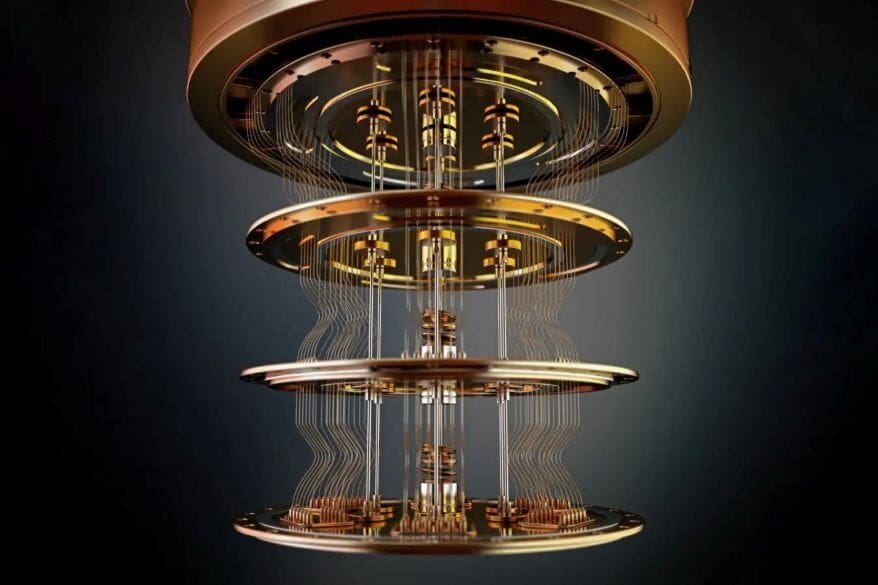
Superconducting qubits use circuits made from special metals, and as a result, these circuits must operate at very low temperatures. Because of their reliability and speed, many companies use this type of qubit in their quantum computers. For example, some of the most well-known organizations include Google, IBM, Intel, IMEC, BBN Technologies, and Rigetti. Together, these companies build machines capable of running complex calculations. In addition, superconducting qubits can switch between states very quickly, which helps scientists test and develop new ideas in quantum computing.
Trapped Ions
Trapped ion qubits use charged atoms held in place by electric fields. These qubits stay in their state for a long time. This makes them very stable. However, building large systems with many trapped ion qubits is hard.
| Qubit Technology | Advantages | Disadvantages |
|---|---|---|
| Trapped Ion Qubits | Long Coherence Times | Scalability Challenges |
| Topological Qubits | Error Resistance | Experimental Challenges |
| Neutral Atom Qubits | Long coherence times; high fidelities; naturally identical qubits | Scalability challenges |
Trapped ion qubits help researchers study how to keep information safe for longer periods.
Photonic Qubits
Photonic qubits use particles of light. These qubits can work at room temperature. They travel long distances without losing their state. This makes them useful for quantum networks.
| Advantage | Description |
|---|---|
| Room Temperature Operation | Photonic qubits can function at room temperature, unlike many other qubit types that need cooling. |
| Ideal for Quantum Communication | Photons can travel long distances while maintaining coherence, making them perfect for quantum networks. |
| Scalability | They can be generated and manipulated on chips, which supports the development of scalable quantum systems. |
Scientists use photonic qubits to send information across cities and countries.
Spin Qubits
Spin qubits use the spin of electrons in tiny devices. These qubits can be very small. They may help build large quantum computers in the future. However, spin qubits face two main challenges.
| Challenge | Description |
|---|---|
| Difficult to Isolate from Environmental Noise | Spin qubits are susceptible to decoherence caused by external magnetic fields and other environmental factors. |
| Scalability | While spin qubits have the potential for scalability, precise control of individual qubits is still a major challenge. |
Researchers work to solve these problems. They want to make spin qubits more stable and easier to control.
Challenges in Qubit Technology
Error Rates
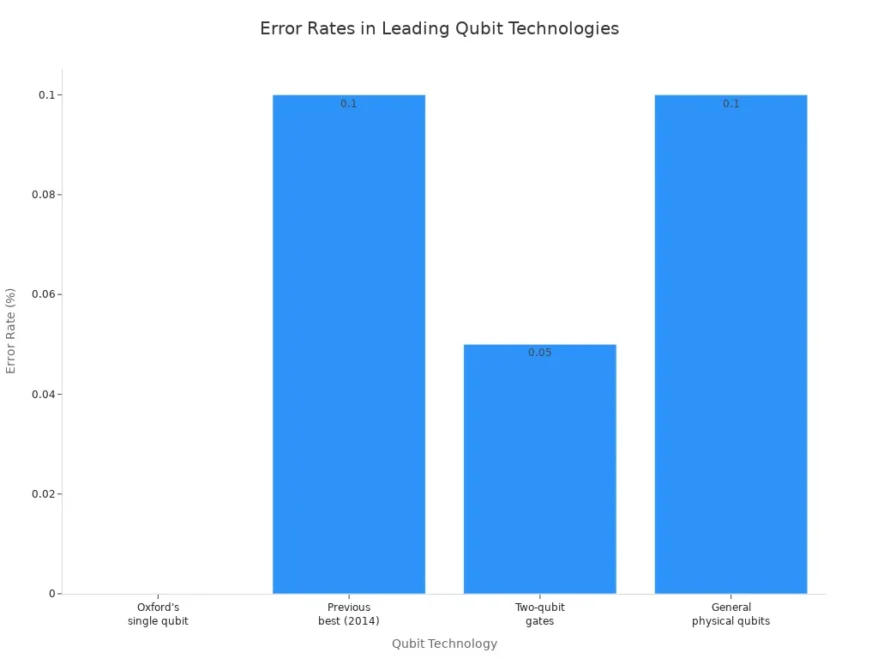
Error rates remain a major challenge for quantum computers. Even the best physical qubits today have error rates around 1 in 1,000 per operation. This matters because running complex quantum algorithms requires billions of operations. A 0.1% error rate could cause failure before reaching a result. Some technologies, like Oxford’s single qubit, have achieved much lower error rates. Two-qubit gates still show higher error rates, which makes building reliable machines difficult.
| Qubit Technology | Error Rate |
|---|---|
| Oxford’s single qubit | 0.000015% (1 in 6.7 million) |
| Previous best (2014) | 0.1% (1 in 1 million) |
| Two-qubit gates | 0.05% (1 in 2,000) |
| General physical qubits | 0.1% (1 in 1,000) |
Researchers use several strategies to reduce errors:
- Error suppression programs circuits to reduce noise.
- Error mitigation averages out noise after running circuits.
- Quantum error correction spreads information across many qubits for real-time fixes.
Scalability
Scalability is another big hurdle. Qubits are fragile and lose information quickly. High error rates mean thousands of physical qubits are needed for one logical qubit. As more qubits are added, noise and crosstalk increase. This makes it hard to keep performance steady. Quantum hardware also needs special environments, which are costly and complex.
- Qubit coherence and error rates block scaling.
- Gate fidelity affects operation reliability.
- Integration with classical systems is needed for real-world use.
Recent Advances
Recent years have seen big steps forward. Companies have built quantum computers with over 100 qubits. IBM targets 1,386 qubits by 2025. Google and Fujitsu have also made chips with over 100 qubits. Microsoft has shown 28 logical qubits with lower error rates.
| Company/Research | Breakthrough | Qubit Count | Year |
|---|---|---|---|
| Willow chip demonstrates exponential error reduction | 105 superconducting qubits | 2025 | |
| IBM | Fault-tolerant roadmap with Quantum Starling system | 200 logical qubits (target) | 2029 |
| Microsoft | Majorana 1 architecture with reduced error rates | 28 logical qubits (demonstrated) | 2025 |
| Fujitsu & RIKEN | 256-qubit superconducting quantum computer | 256 qubits | 2025 |
| IBM | Kookaburra processor with multi-chip configuration | 1,386 qubits (target) | 2025 |
| Atom Computing | Utility-scale quantum operations | 1,000 qubits (planned) | 2026 |
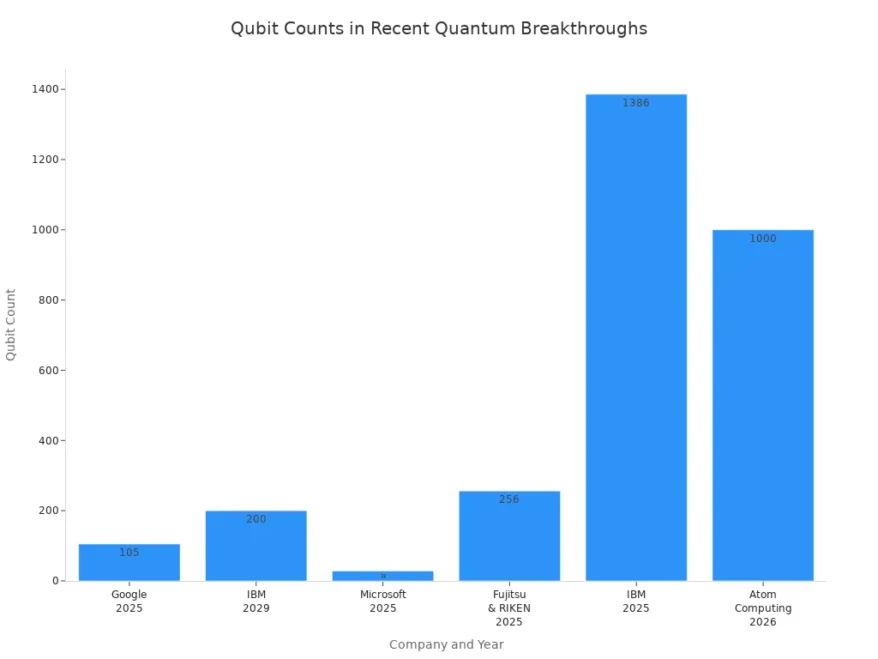
Improvements in two-qubit gate fidelity now allow more complex algorithms. New materials, like tantalum, help reduce energy loss and improve qubit stability. These advances bring quantum computing closer to solving real-world problems, such as encryption and secure communication.
Qubits give quantum computing its unique power because they use superposition and entanglement to solve hard problems. In contrast, classical bits cannot do this. As a result, quantum computers can process many combinations at once. Meanwhile, private investment in quantum technology has grown quickly, and similarly, patent filings and government support show strong interest in the field. Looking ahead, experts see future impacts in artificial intelligence, climate modeling, and drug discovery. Consequently, many industries will benefit from quantum advances. Ultimately, curiosity about quantum science will help drive new discoveries.
FAQ
What makes a qubit different from a classical bit?
A qubit can exist in two states at once. A classical bit can only be 0 or 1. This difference gives quantum computers more power.
How does superposition help quantum computers?
Superposition lets a qubit hold many values at once. Quantum computers use this to solve problems faster than classical computers.
Why is entanglement important in quantum computing?
Entanglement links qubits together. When one changes, the other changes too. This helps quantum computers process information in new ways.
What challenges do scientists face with qubits?
Scientists struggle with error rates and scaling up qubit numbers. They work to make qubits more stable and easier to control.
Where do people use quantum computing today?
People use quantum computing for secure communication, drug discovery, and financial modeling. It helps solve problems that classical computers cannot handle.
References:
- Gambetta, J. M., Chow, J. M., & Steffen, M. (2017). Building logical qubits in a superconducting quantum computing system. npj Quantum Information, 3(2). https://doi.org/10.1038/s41534-016-0004-0
- Naeij, H. R. (2025). Correction: Open quantum system approaches to superconducting qubits. Quantum Information Processing, 24, 371. https://doi.org/10.1007/s11128-025-04989-y