

Quantum cryptography protects your data using the science of quantum mechanics. You gain security because quantum systems behave in ways that classical cryptography cannot match. Quantum cryptography uses principles like the Heisenberg Uncertainty Principle and the No-Cloning Theorem. These principles make quantum cryptography unhackable. When you try to measure a quantum state, you change it. You cannot copy a quantum bit without disturbing it. This makes quantum cryptography a powerful tool in modern cybersecurity.
| Principle | Explanation |
|---|---|
| Heisenberg Uncertainty Principle | Measuring a quantum property changes other properties, stopping secret interception attempts. |
| No-Cloning Theorem | You cannot copy unknown quantum states, so eavesdropping is always detectable. |
Key Takeaways on Quantum Cryptography
- Quantum cryptography uses the laws of quantum mechanics to secure your data, making it unhackable.
- You can detect eavesdropping because measuring quantum states changes them, alerting you to any interference.
- Quantum key distribution (QKD) allows you to share secret keys securely, ensuring long-term protection against future threats.
- Unlike classical methods, quantum cryptography does not rely on complex math, making it more resilient against quantum computer attacks.
- As quantum technology advances, quantum cryptography will become essential for protecting sensitive information in various sectors.
Quantum Cryptography Basics
Definition and Purpose
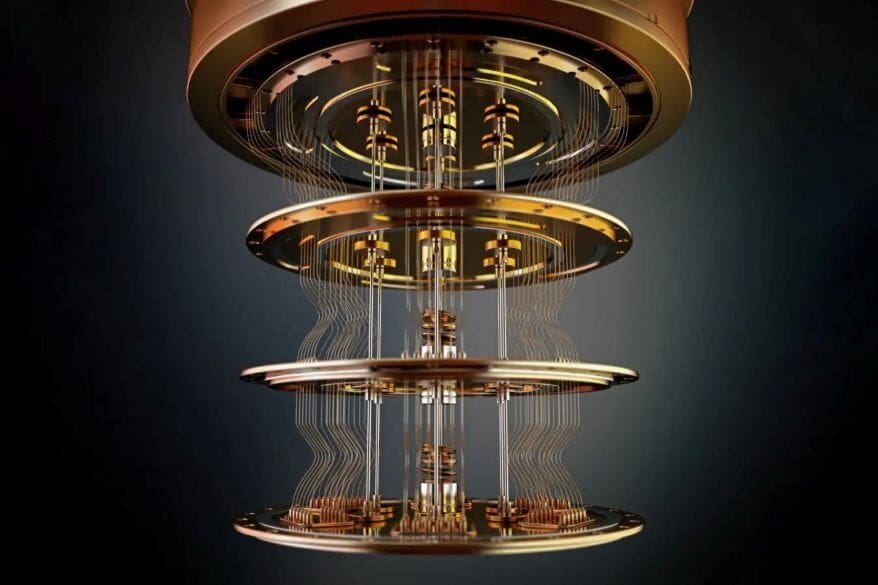
Quantum cryptography uses the laws of quantum mechanics to protect your information. You use quantum key distribution (QKD) to share secret keys. This method stands out because you can always detect if someone tries to eavesdrop. The BB84 protocol is a well-known example. Many systems use it to exchange secure keys. You gain a new level of security because quantum states change when observed. This makes your communication safer than ever before.
- Quantum cryptography ensures absolute safety in communication encryption.
- It protects your data from quantum computers that can break classical codes.
- You use QKD to share keys securely.
- You can detect eavesdroppers quickly.
- It gives you long-term protection against decryption risks.
Quantum Cryptography vs. Classical Methods: Key Differences
Fundamentally, quantum cryptography and classical cryptography work in very different ways. Unlike traditional methods, you rely on quantum mechanics, not math problems, for security. To illustrate this distinction, here is a table that shows the main differences:
| Classical Cryptography | Quantum Cryptography |
|---|---|
| Based on mathematical computation. | Based on quantum mechanics. |
| Widely used. | Sophisticated and emerging technology. |
| Digital signatures are present. | Digital signatures are absent. |
| Bit rate depends on computational power. | Average bit rate is 1 MBPS. |
| Communication range is millions of miles. | Maximum communication range is 10 miles. |
| Deployed and tested. | In initial stages, not fully tested. |
| Requires upgrades as computing power increases. | Based on immutable laws of physics. |
| Communication medium independent. | Communication medium dependent. |
| Expenditure is very low. | Expenditure is high. |

You see that quantum cryptography does not depend on the power of computers. Instead, it uses the unbreakable rules of physics. This makes it much harder for attackers to break your codes.
The Importance of Quantum Encryption in Cybersecurity
This technology matters because it keeps your data safe from new threats. Since quantum computers can break many classical systems, you need new tools to protect your secrets. This technology gives you that protection.
- Quantum cryptography creates secure keys that are immune to interception.
- Classical cryptography relies on math problems that quantum computers can solve.
- Quantum networks let you connect devices securely in ways classical methods cannot.
- You need quantum-safe algorithms because old systems like RSA will not last.
- Quantum cryptography helps you defend against attacks on blockchains, IoT devices, and critical infrastructure.
You can see that quantum cryptography is not just a new idea. It is a vital part of your future security.
Principles of Quantum Cryptography
The Quantum Mechanics Behind Cryptography
This technology stands fundamentally on the laws of quantum mechanics. In fact, these laws shape how you protect data today. Specifically, you use quantum information to create unbreakable encryption. Specifically, the main principles driving this include superposition, entanglement, uncertainty, measurement disturbance, and the no-cloning theorem. Taken together, each principle helps you build secure systems that classical cryptography cannot match.
- Quantum cryptography guarantees security through the principles of quantum physics.
- Superposition lets quantum bits exist in many states until you measure them.
- Entanglement links particles, so a change in one affects the other.
- The uncertainty principle means that observing a quantum system disturbs it.
You rely on these quantum properties to keep your information safe. Quantum encryption uses these features to stop attackers from stealing your secrets.
Superposition and Uncertainty in Quantum Security
Superposition is a key idea in quantum cryptography. A quantum bit, or qubit, can be both 0 and 1 at the same time. You only see a clear value when you measure it. This makes unauthorized access very hard. If someone tries to read your quantum information, the act of measuring changes the state. This change alerts you to the attack.
The uncertainty principle also plays a big role. When you measure one property of a quantum system, you disturb another property. This means you cannot secretly observe quantum information. In quantum key distribution, you and your partner can spot any eavesdropper. The BB84 protocol uses this principle. It encodes information in photon polarization. Any interception changes the data, so you know if someone tries to listen.
Ultimately, superposition and uncertainty work together to give you unbreakable encryption. As a result, you get security that classical systems cannot offer.
Quantum Entanglement
Quantum entanglement links two particles in a special way. When you change one, the other changes too, even if they are far apart. This property helps you share quantum information securely. In quantum cryptography, you use entangled particles to create shared keys. If anyone tries to intercept the key, the entanglement breaks. You and your partner will notice the change right away.
- Entangled states are crucial for secure quantum key distribution.
- You use quantum mechanics to create a shared cryptographic key.
- The uncertainty principle ensures that eavesdropping disturbs the entangled particles.
Experiments show that quantum entanglement gives you completely secure communication. If someone tries to measure or intercept the entangled particles, the link breaks. Both you and your partner know that a breach has happened.
Measurement Disturbance
Measurement disturbance is another important principle. When you measure a quantum state, you change it. This change introduces errors. You and your partner can detect these errors. If you see too many errors, you know someone tried to eavesdrop.
- Measurement disturbance happens when you measure a quantum state.
- This disturbance creates errors that you can detect.
- Detecting errors is key for secure quantum cryptography protocols.
You use this property to make sure your communication stays private. If an attacker tries to listen, you will always know.
No-Cloning Theorem
The no-cloning theorem states that you cannot copy an unknown quantum state. Crucially, this rule is vital for quantum cryptography. Because of this theorem, hackers cannot intercept and duplicate your quantum keys. In contrast to classical systems, where attackers can copy data without changing it, copying in quantum systems destroys or changes the data. As a result, you can always detect this.
- The no-cloning theorem means you cannot perfectly duplicate a quantum state.
- This guarantees security by stopping hackers from copying quantum keys.
- Any attempt to copy quantum information will destroy or alter it in ways you can detect.
You get unbreakable encryption because of this principle. Your quantum information stays safe from attackers who want to steal or copy your keys.
Quantum cryptography uses these principles to give you security that cannot be broken. You protect your data with the laws of physics, not just math.
Quantum Key Distribution Process
Photon Transmission in Quantum Cryptography
You start the quantum key distribution process by sending photons between two parties. These photons travel through fiber optic cables. Each photon carries a random quantum state. This state represents either a one or a zero. First, the photons move in a stream, forming a sequence of quantum bits. As each photon travels, it then passes through a beam splitter. At this point, the splitter forces the photon to choose a random path into a photon collector.
Typically, photons in quantum key distribution are often created by splitting a high-energy photon into two entangled photons. Crucially, this method ensures that any attempt to intercept the photons changes their state. Consequently, you can detect any eavesdropping right away.
Basis Selection and Measurement
First, you and your partner must choose measurement bases for each photon. Essentially, the basis is like a set of rules for reading the quantum state. Randomly, sometimes you both pick the same basis, while other times, you pick different ones. However, only the photons measured with matching bases give you useful data. Therefore, the choice of basis is crucial for security, as incompatible measurements make it hard for attackers to guess the key.
| Evidence Description | Significance |
|---|---|
| Crucially, incompatible measurements are necessary for ensuring security against eavesdropping. | Therefore, this highlights the importance of basis selection in QKD, as it directly influences the security of the key generation process. |
| In essence, the choice of measurement bases determines the information that can be extracted. | Consequently, this indicates that the selection of bases is crucial for maintaining the integrity of the key against potential attacks. |
Key Comparison
After measuring the photons, you then compare your results with your partner. Specifically, you both share which bases you used, but not the actual results. From there, you keep only the bits where your bases matched. Technically, this process is called sifting. Following this, you correct any errors and remove leaked data. Finally, you use error correction and privacy amplification to create a secure key exchange.
| Step | Description |
|---|---|
| Sifting | The raw data is sifted to distill maximally correlated data between Alice and Bob. |
| Error Correction | An information reconciliation protocol is performed to correct errors between the two users. |
| Privacy Amplification | A privacy amplification algorithm is used to ensure the secrecy of the final key. |
Detecting Eavesdropping in Quantum Cryptography
Quantum cryptography lets you detect eavesdropping. If someone tries to intercept the photons, their measurement disturbs the quantum state. You and your partner notice this as errors in your data. If the error rate is too high, you know someone tried to listen. You can then stop the communication and try again.
- Quantum key distribution uses quantum mechanics to spot interference in the signals.
- Any attempt to intercept the quantum signals alerts you to an intruder.
Alice, Bob, and Eve Example
Imagine you and your friend want to share a secret using quantum encryption. You send photons to your friend. If an eavesdropper tries to intercept the photons, the quantum rules make this impossible to hide. The act of measuring the photons changes their state. You and your friend see this as errors. Quantum cryptography uses the Heisenberg Uncertainty Principle and the No-Cloning Theorem to keep your communication safe. Any interception is always detected, so your secure key exchange stays private.
Why Quantum Cryptography Matters
Quantum Computing Threats

Quantum computers bring new risks to your data security. You face threats that did not exist before. Quantum algorithms can break many current cryptography systems. Here are some of the main risks:
- Quantum computers can break public-key cryptography like RSA and ECC.
- Algorithms such as Shor’s can factor large numbers quickly.
- Attackers could decrypt data, forge signatures, and break secure channels.
- The “harvest now, decrypt later” approach means attackers can store your data today and decrypt it in the future.
- Critical infrastructure, such as energy grids and financial systems, could be at risk.
- Military and national security systems may become vulnerable.
- Countries with quantum technology could gain a big advantage in cyber warfare.
You need to prepare for these threats now. The timeline for quantum computers breaking encryption is getting shorter.
| Timeline for Quantum Computers Breaking Encryption | Strategy Description |
|---|---|
| Early-to-mid 2030s | Harvest now, decrypt later strategy |
Limits of Classical Systems vs. Quantum Cryptography
Crucially, classical cryptography cannot protect you from quantum attacks. In fact, quantum algorithms can break many of the systems you use today. Consequently, here are some limits you should know:
- Shor’s algorithm can break RSA and ECC, which are common public-key systems.
- Grover’s algorithm can weaken symmetric cryptography, like AES.
- Attackers can store encrypted data now and decrypt it later with quantum computers.
In today’s digital landscape, you need new tools to keep your data safe. Fortunately, quantum cryptography gives you a way to detect eavesdropping. Fundamentally, it uses the laws of quantum mechanics, not just math. Specifically, Quantum key distribution lets you create secret keys that are safe from quantum attacks. Crucially, this method does not rely on hard math problems; instead, it uses the physical laws of nature.
Quantum Cryptography and the Future of Secure Data
Quantum cryptography will shape the future of secure data. The market for this technology is growing fast. Experts expect it to reach over 9 billion dollars by 2032. You will see new standards and guidelines for postquantum cryptography soon. Many organizations will start using quantum-safe systems.
You can expect these trends:
- Hybrid protocols will protect cloud services.
- Systems will switch encryption methods without stopping operations.
- Quantum key distribution networks will secure banks and governments.
- AI will help improve quantum cryptography.
Therefore, you need to stay ready for these changes. Fortunately, quantum cryptography will help you protect your data in a world with quantum computers.
By now, you have seen how quantum cryptography uses science to keep your data safe. To summarize, the table below shows the main principles and processes:
| Principle/Process | Description |
|---|---|
| Quantum Entanglement | Entangled photons help you detect eavesdropping right away. |
| Eavesdropping Detection | Measuring a photon changes it, so you spot any interception. |
| Quantum Key Distribution | You exchange keys securely, and any interference alerts you. |
| Privacy Measures | You trust the laws of physics, not just hard math. |
| Error Correction | You check for errors to keep your key safe. |
Quantum computers can break old encryption. You need new ways to protect your secrets.
You will see new cryptography methods soon. Experts recommend post-quantum cryptography and hash-based signatures. Agencies warn that attackers may collect your data now and decrypt it later. You must act fast to stay safe in the future.
FAQs
What makes quantum cryptography different from classical cryptography?
Most importantly, you use quantum mechanics instead of math problems. Consequently, quantum cryptography lets you detect eavesdropping. In contrast, classical cryptography relies on computational difficulty. Ultimately, quantum methods use the laws of physics for security.
Can someone hack quantum cryptography?
You cannot hack quantum cryptography easily. Any attempt to intercept or copy quantum keys changes their state. You always detect eavesdropping because of the measurement disturbance principle.
How does quantum key distribution keep your data safe?
You send photons with random quantum states. If someone tries to intercept them, you see errors. You use error correction and privacy amplification to create a secure key.
Tip: Always check for errors in your quantum key exchange. This helps you spot attacks.
Is quantum cryptography ready for everyday use?
You see quantum cryptography in some banks and research labs. Most systems are still in development. You will see more quantum-safe networks soon as technology improves.
| Area | Quantum Use Today |
|---|---|
| Banking | Limited trials |
| Research | Active development |
| Government | Early adoption |
Why do you need quantum cryptography in the future?
You need quantum cryptography because quantum computers can break old codes. Quantum cryptography gives you long-term protection. You stay ahead of new threats and keep your secrets safe.
References:
- Bennett, C. H., & Brassard, G. (1984). Quantum cryptography: Public key distribution and coin tossing. Theoretical Computer Science, 560, 7-11. https://doi.org/10.1016/j.tcs.2014.05.025
