
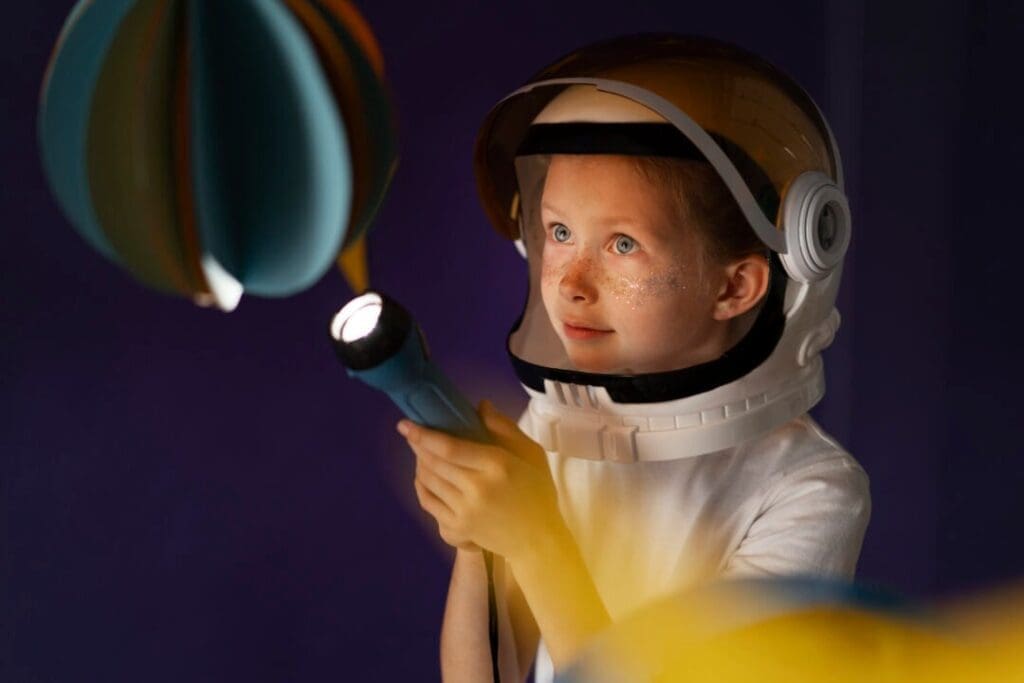
“I never thought I would lead a research team at a NASA event,” shared a high school student at a recent space exploration conference. Young minds now drive missions and research.
Students and NASA staff work together. They shape the future through collaboration, inspiring future generations. NASA supports over 8,000 students in real space projects. Collaboration and bold ideas move exploration forward.
Young Minds in Space Exploration

Hands-On Learning
Young people today experience learning through real missions and activities. In fact, the Challenger Learning Center stands out as a leader in STEM education. Many of these programs are inspired by Space Exploration, which sparks curiosity and encourages students to look beyond our planet. Over the years, it has reached over six million students worldwide. Furthermore, each year, hundreds of thousands join its simulation-based program. Through these opportunities, hands-on space missions let students work together, solve problems, and think like astronauts. Specifically, the Wheeling University Challenger Learning Center brings learning to every U.S. state and 23 countries. In addition, it even supports education in juvenile correctional facilities.
The Astronaut Scholarship Foundation offers unique STEM opportunities. For example, their program includes summer camps, scholarships, and volunteer roles. During these programs, students build rockets, design habitats, and simulate rover missions. As a result, these activities spark curiosity and teamwork. Moreover, they also teach critical thinking.
Also Read: Aerospace engineering : The Energy That Lifts Us
Hands-on projects include:
- Building and launching rockets
- Creating solar system models
- Designing astronaut habitats
- Simulating rover missions with obstacle courses

These activities help students learn physics and engineering. In addition, they also encourage collaboration and resilience. As a result, children develop a love for space and exploration. For instance, a participant once said, “I kept learning about planets for months.” Ultimately, this excitement shows the power of learning by doing.
Connecting Students with Real NASA Experiences
The Power to Explore Challenge inspires students through writing and real-world experiences. As part of the program, winners visit NASA’s Glenn Research Center. There, they meet engineers and see research up close. In this way, the program connects learning to real NASA missions. Ultimately, it helps the next generation of space explorers imagine their future.
A study at George Mason University found that hands-on research keeps students interested in STEM. In fact, over 92% said lab work helped them stay committed. Moreover, these experiences build confidence and critical thinking. Most importantly, they also support learning for all backgrounds.
Mentorship and Role Models
Mentors and role models shape the next generation of space leaders. They show that anyone can join space exploration. Programs connect students with NASA scientists and engineers. These mentors share their stories and guide young researchers.
“My mentor helped me see myself as a future astronaut,” said one participant.
Mentors break stereotypes in STEM. They support underrepresented groups and help students build confidence. The VIRTEX program lets students talk with NASA scientists. These talks make learning personal and inspiring.
NASA’s NIFTY program trains professionals to engage youth. They use storytelling and inclusive practices. One educator praised a NIFTY mentor for making NASA careers feel real and exciting. Roxy Williams, a mentor in Central America, inspires girls to dream big. She leads robotics and space events. Her work helps children see themselves as future explorers.
Mentors also open doors to internships and networks. They teach students how to ask for help and practice collaboration. These skills are key for the next generation of space explorers.
Success Stories
Young people achieve great things in space education. Jeanette Epps, a NASA astronaut, works on the ISS and supports moon mission operations. She shares her journey at public events. Her story shows that dedication can break barriers.
Abigail Harrison, known as Astronaut Abby, dreamed of Mars since age three. With support from mentors, she started The Mars Generation nonprofit. She created the Student Space Ambassador program and a scholarship for Space Camp. Her book, Dream Big!: How to Reach for Your Stars, guides youth from all backgrounds. Abby’s work empowers others to join moon mission and space exploration.
Programs measure success in many ways:
- Students join three-month internships using NASA data.
- They present research at conferences.
- They compete for awards and scholarships.
- Families celebrate their achievements.
- Some become finalists in contests like the Regeneron Science Talent Search.
- Many write research papers ready for publication.
- They use advanced telescopes and real NASA data.
A recent NASA Summer program participant became a Regeneron finalist. This honor shows the high level of learning and achievement.
The power to explore challenge also celebrates winners. Students visit NASA centers and meet real engineers. These moments inspire the next generation to join moon mission and space exploration.
“Winning the power to explore challenge made me believe I could work at NASA one day,” shared a young winner.
Learning through hands-on activities, mentorship, and real achievements prepares the next generation for future missions. The journey starts now, and every student can play a part.
Space Exploration Conference Opportunities

Student Challenges
Space exploration conference events create real-world challenges for young people. These challenges push students to design and fly experiments. Some use Astrobotic’s Xodiac rocket-powered lander. Others use high-altitude balloons from World View. Students build payloads that fly in unique environments. They collect data on lunar surfaces and in the stratosphere.
- Students learn:
- Teamwork
- Problem-solving
- Technical skills like soldering
- Experimentation and data collection
- Perseverance
Educators say these challenges change lives. Students remember the teamwork and the thrill of real missions. The Robert H. Herndon Memorial Science Competition lets students build robots and write essays about space. They meet engineers and tour labs. Other competitions include the Base 11 Space Challenge, Spaceport America Cup, and NASA’s Watts on the Moon Challenge. Each event builds confidence and STEM skills.
International Initiatives
International groups join forces at every space exploration conference. The Students and Young Professionals program brings together the SpaceOps committee, Mohammed Bin Rashid Space Centre, and the Space Generation Advisory Council. They offer workshops, speed mentoring, and free registration. Students from every continent join these events.
- Programs include:
- Technical workshops on CubeSat operations
- Speed mentoring with experts
- Women in SpaceOps events
Scholarships help students attend the Space Generation Congress and International Astronautical Congress. Awards like the Space Generation Leadership Award and Nebula Award support global participation. The Space Foundation connects students worldwide. It offers leadership academies, teacher liaisons, and forums. These programs build a global network for young professionals.
Inclusivity in Space
Space exploration conference events focus on diversity and access. Outreach programs reach students from all backgrounds. Scholarships like A Bridge to the Stars help underrepresented students join NASA fields. PinkSTEM Workshops in Georgia teach girls teamwork and entrepreneurship. Academic Year Fellowships in New Jersey offer research to undergraduates. The ACC Space Grant in Colorado funds hands-on projects.
| Program Name | Program Type | Target Group/Goal |
|---|---|---|
| A Bridge to the Stars Scholarships UMKC | Scholarship/Internship/Fellowship | Increase enrollment of underrepresented students in NASA-related STEM fields. |
| PinkSTEM Workshops (Georgia) | Pre-College Workshops | Promote teamwork, communication, and entrepreneurship for girls through STEM challenges. |
| Academic Year Fellowships (NJ) | Fellowship | Year-long research for undergraduates with public poster sessions. |
| ACC Space Grant (Colorado) | Internship/Fellowship/Scholarship | Funding for students in hands-on space hardware and research projects. |
Astronomers Without Borders’ OpenSpace initiative makes astronomy accessible. It includes people with blindness, deafness, autism, and mobility disabilities. NASA’s TechRise Student Challenge and Student Launch Challenge invite all students to design experiments and rockets. The NASA Virtual Guest Program lets everyone join launches online.
Future Pathways for Space Exploration
Every space exploration conference opens doors to future careers. Students meet mentors and employers. They join internships and co-ops. NASA offers paid internships and fellowships. These programs teach accountability, teamwork, and decision-making. Students work at NASA centers nationwide.
| Opportunity Type | Description | Target Audience | Career Pathway Benefits |
|---|---|---|---|
| Student Internships & Co-ops | Hands-on project responsibility, mentorship by experts, networking, and professional activities | College students (sophomores to grads), some high school | Real-world experience, mentorship, networking, skill development |
| University Partnership Program | Collaboration with top universities providing resources, mentorship, and hands-on experience | University students | Exploration of career paths in space sector, practical experience |
| Recruiting Events | Virtual and in-person events to meet employees and learn about career opportunities | Students and professionals | Direct engagement with employers, career information |
| Recent Graduates | Opportunities spanning the space enterprise with mentorship and career advancement | Graduates (undergrad to doctoral) | Career launch, matching with mentors, full-time employment opportunities |
Students gain real experience. They build resumes and grow networks. Many move into full-time jobs at NASA or other space organizations. Some publish research or win awards. The measurable outcomes show real impact.

“I met my future mentor at a space exploration conference. That changed my life,” shared one student.
Networking at these events brings students together with industry leaders. They attend workshops, poster sessions, and receptions. They tour places like Kennedy Space Center. These experiences inspire and prepare the next generation for future missions.
Young people can start their journey in space today. They can join hands-on activities, competitions, and citizen science projects.
- Students, educators, and parents can find free STEM resources, lesson plans, and interactive guides online.
- NASA, AIAA, and other groups offer internships, scholarships, and mentoring.
- Educators can use printable kits and professional development from Discover Space.
- Families can explore astronomy with beginner guides and fun activities at home.
- Students can follow NASA STEM channels for new opportunities.
Every young mind can help shape the future. Space exploration is truly mission possible for all.
References:
- Corrado, L., et al. (2023). Space exploration and economic growth: New issues and persistent questions. Proceedings of the National Academy of Sciences. https://doi.org/10.1073/pnas.2221341120
- Aslan, S. et al. \”Exploring Kid Space in the wild: a preliminary study.\” 2022, DOI: 10.3389/frym.2024.1225146 (Immersive learning environment combining physical activity and screen-based space science education for young children)
Link: https://pmc.ncbi.nlm.nih.gov/articles/PMC8741584/
