
You often wonder what is neuroscience. Neuroscience is the scientific study of the nervous system, including the brain. This field helps you understand how your brain works and how it affects your health. Many people think we only use 10 percent of our brain. In fact, you use all of your brain. Neuroscience research also shows how the nervous system shapes your behavior and daily choices. Learning about neuroscience can help you make better decisions about your own health.
Key Takeaways
- Neuroscience studies the nervous system, including the brain, to understand how it affects thoughts, emotions, and behaviors.
- Importantly, learning about neuroscience can help you make better health decisions. Simultaneously, it can improve your cognitive functions like memory and focus.
- Neuroplasticity shows that your brain can change and adapt through experiences, so practicing new skills can strengthen your brain’s connections.
Neuroscience Overview
You may ask, what is neuroscience? Fundamentally, neuroscience is the study of the nervous system. Specifically, this field explores how your brain, spinal cord, and nerves work together. Consequently, scientists use neuroscience to answer questions about how you think, feel, and move. Furthermore, the study of the nervous system itself covers many topics, from the smallest molecules to complex behaviors.
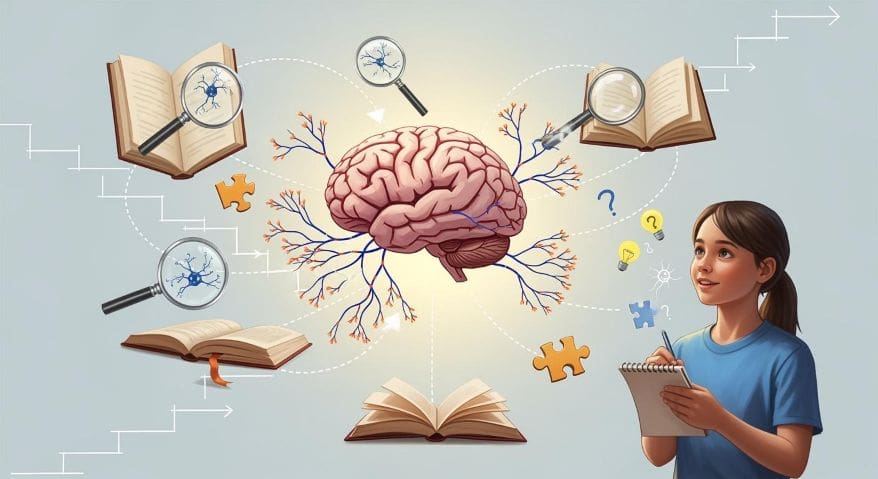
Neuroscience has several main branches. Each branch looks at a different level of the nervous system.
| Branch of Neuroscience | Focus Area |
| Molecular Neuroscience | Studies molecules in the nervous system that help nerve cells work. |
| Cellular Neuroscience | Looks at how neurons and other nerve cells function. |
| Systems Neuroscience | Examines how groups of neurons communicate in networks. |
| Cognitive and Behavioral Neuroscience | Explores how these networks shape thoughts and actions. |
Over the past century, neuroscience has changed a lot. Key moments range from René Descartes describing the brain as a machine to modern researchers discovering that drugs can change how nerve cells work. Today, neuroscience combines ideas from biology, psychology, and other fields.
Focus on the Brain

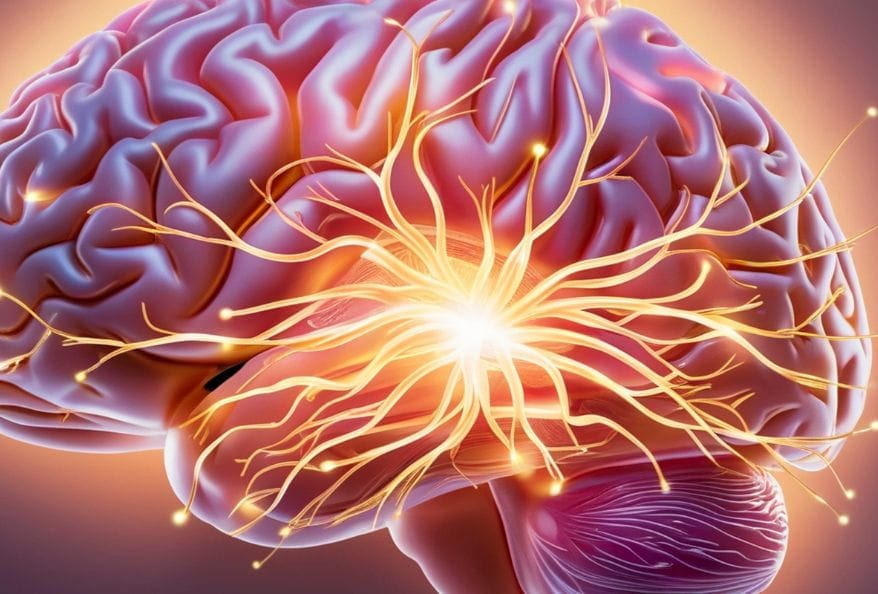
Undoubtedly, the brain is the main part of the nervous system. In fact, it controls almost everything you do. For this reason, neuroscience helps you understand how the brain manages your body and mind. Ultimately, the study of the nervous system shows that the brain has many important jobs.
- Body Control: Controls heart rate, appetite, and other body functions.
- Emotion, Learning, and Memory: Handles feelings, learning, and memory.
- Immune Response: Affects how your body fights illness.
- Thought and Imagination: Shapes your ideas, dreams, and creativity.
- Sensory Processing: Processes sight, sound, smell, touch, and taste.
- Motor Function: Coordinates movement and balance.
- Speech and Language: Helps you speak and understand language.
You use your brain every moment. For instance, it keeps your heart beating and helps you remember names. Moreover, it lets you dream, plan, and talk with others. Overall, the brain works with the rest of the nervous system to keep you healthy and active.
Also Read: Beyond the Double Helix: Exploring the World of Genetic Engineering
The Building Blocks of the Brain
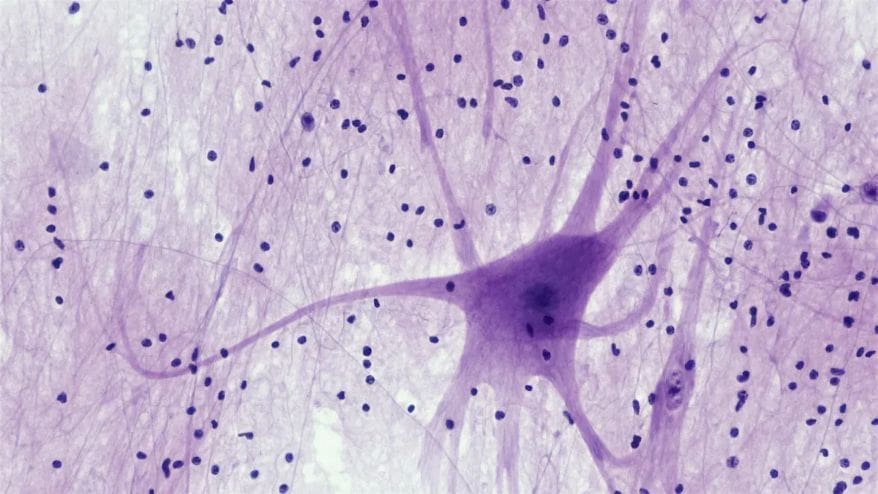
Neurons are the main cells in the nervous system. Commonly, you may also hear them called nerve cells. In fact, your brain has about 85 to 100 billion neurons. Crucially, these neurons connect with each other to form networks. However, along with neurons, your brain has about 40 to 50 billion glial cells. Specifically, these glial cells support and protect neurons.
How Neurons Communicate
Neurons communicate chemically and electrically. To begin, a neuron opens membrane pores when signaled. Consequently, the neuron activates when sodium ions enter. This causes an action potential to go down the neuron axon. Eventually, neurotransmitters are released at the axon’s end. Then, these molecules reach the next neuron through the synapse. Finally, the next neuron receives the message and may activate.
Some important neurotransmitters include:
- Glutamate: Helps with thinking, learning, and memory.
- GABA: Keeps brain activity balanced and prevents anxiety.
- Serotonin: Affects mood, sleep, and appetite.
- Dopamine: Involved in reward, motivation, and learning.
Neural communication is complex. Specifically, excitatory neurotransmitters make neurons more likely to fire. Conversely, inhibitory neurotransmitters make them less likely to fire. Ultimately, this balance helps your brain work smoothly.
Neuroscience uses many perspectives to understand the nervous system. For instance, the molecular branch looks at tiny molecules. Next, cellular studies examine how nerve cells work. Moving up a level, the systems approach explores how groups of neurons form networks. Finally, cognitive and behavioral research connects these networks to thoughts and actions. By combining these views, you get a full picture of how the nervous system works. Additionally, models and simulations help scientists see how all these parts fit together.
Core Concepts and the Nervous System
Nervous System Basics
You use your nervous system every moment. In fact, it controls your thoughts, feelings, and actions. Structurally, the nervous system has two main parts: the central nervous system and the peripheral nervous system. First, the central nervous system includes your brain and spinal cord. Meanwhile, the peripheral nervous system connects the central nervous system to the rest of your body.
| Component | Description |
| Neurons | Specialized cells that transmit signals; comparable to electrical wires. |
| Glia | Support cells that assist neurons; involved in myelination and ionic regulation. |
| Central Nervous System (CNS) | Comprises the brain and spinal cord; responsible for processing sensory input and motor output. |
| Peripheral Nervous System (PNS) | A network of nerves connecting the CNS to the body; includes sensory and motor pathways. |
| Autonomic Nervous System | Controls involuntary functions; regulates internal organs and muscles. |
| Somatic Nervous System | Controls voluntary movements; connects to skin, bones, and skeletal muscles. |
Neurons send signals quickly. In contrast, glia support and protect neurons. Furthermore, the spinal cord acts as a highway for messages between your brain and body. Functionally, the autonomic nervous system keeps your heart beating and your lungs breathing. Conversely, the somatic nervous system lets you move your muscles on purpose.
Brain Structure and Function
Your brain has many parts. Specifically, each part has a special job. However, brain structures work together to help you think, feel, and move. For instance, the brain controls higher cognitive functions like reasoning, planning, and memory. Ultimately, different brain regions handle different cognitive functions.
To begin, you use attention to focus on tasks. In addition, memory helps you learn and remember. Meanwhile, executive function lets you plan and solve problems. Together, these cognitive functions rely on networks of neurons in your brain.
Neuroscience uses many tools to study brain structures and brain functions. Common methods include MRI, fMRI, EEG, and PET scans. These neuroimaging studies help scientists see how your brain works during different tasks. They also help find changes in the brain caused by disorders.
How Experiences Shape the Brain
Your brain changes with experience. This ability is called neuroplasticity. When you learn new things, your brain forms new neural pathways. Repeating actions or thoughts makes these pathways stronger. If you stop using a pathway, your brain may remove it.
Neuroplasticity helps you learn and adapt. It works through two main processes:
- Long-Term Potentiation (LTP): Strengthens connections between neurons.
- Long-Term Depression (LTD): Weakens less-used connections.
In fact, you can shape your brain by practicing skills, solving problems, and staying curious. For example, activities like reading, learning new skills, and solving puzzles make your brain more efficient. Additionally, quality sleep also helps your brain store memories.
Early experiences matter a lot. When you interact with caregivers as a child, your brain builds strong connections. Supportive relationships help protect your brain from stress. If you face negative experiences early in life, your brain development can change. Early help can improve outcomes and support healthy brain and mind growth.
Neuroscience Goals
Neuroscience has several main goals. First, you learn how the nervous system works. Second, you study how the brain and spinal cord develop. Furthermore, you explore how neurons and neural networks support cognition and behavior. Finally, you also learn how disorders affect the nervous system.
Some key goals include:
- Understand the structure and function of the nervous system.
- Use research techniques to study the brain.
- Develop critical thinking and research skills.
- Analyze and interpret neuroscience research.
- Apply neuroscience knowledge to real-world problems.
Neuroscience core concepts help you connect the biological bases of behavior to your daily life. Cognitive and behavioral neuroscience links brain activity to actions and thoughts. You see how neuroscience psychology and cognitive neuroscience work together to explain cognition and behavior.
Health and Disease
Health is affected daily by the neurological system. It controls respiration, movement, emotions, and healing. Tragically, nervous system illnesses change lives. Neurological illnesses like stroke, migraine, and Alzheimer’s are frequent worldwide. Over 3 billion people have neurological diseases in 2021. Neurological illnesses are 43% worldwide.
Neuroscience advances these illnesses’ remedies. Scientists identify brain data patterns using neuroimaging and AI. Blood testing also detect illnesses early. Innovative treatments target brain cells and neurological circuits. After accidents and disorders, deep brain stimulation and non-invasive brain treatments help.
Knowledge of the neurological system helps wellness. Stroke and injury recovery are helped by neuroplasticity. Neuropsychology and cognitive neuroscience inform new mental and behavioral diseases treatments. Finally, staying active, learning, and cultivating relationships improves brain health.
FAQ
What can you learn from neuroscience?
You discover how your brain controls thoughts, emotions, and actions. Neuroscience helps you understand learning, memory, and health.
How does neuroscience research help your daily life?
Neuroscience guides you to improve focus, memory, and stress management. You use this knowledge to support your brain health.
Can your brain change as you grow older?
Yes, your brain adapts through neuroplasticity. You build new connections by learning, practicing skills, and staying active.
Reference
- Merre, P. L., Heining, K., Slashcheva, M., Jung, F., Moysiadou, E., Guyon, N., Yahya, R., Park, H., Wernstal, F., & Carlén, M. (2026). A prefrontal cortex map based on single-neuron activity. Nature Neuroscience. https://doi.org/10.1038/s41593-025-02190-z
