
Reviewer's noteNote: The article includes external links to third-party services; readers should independently evaluate any referenced platforms before engaging.Edited by Ishika Tawar
Estimated reading time: 3 minutes
A sunny roof does not guarantee that a business can use its midday generation. A battery can shift part of that output into later operating hours, provided the energy balance is tested. Start with an operating requirement that can be verified in the field. Procurement language is much more useful when engineers, owners and operators agree on the same boundary of responsibility.
Read the Load Curve
Billing peaks often occur when a short burst of demand coincides with production activity. Use interval readings to identify the hours worth shifting, and distinguish recurring patterns from one-off events. A battery sized around the worst recorded spike may sit idle for most of the year. The tariff, not just the waveform, determines whether reducing that peak is financially useful.
Budget for Degradation
Capacity changes with age, temperature and the number and depth of cycles. Lifetime calculations should use a consistent definition of usable energy and include realistic assumptions for replacement or augmentation. Asking vendors for a single warranty percentage is not enough: the operating duty, exclusions and test method determine what that figure means. Compare bids on a common duty profile.

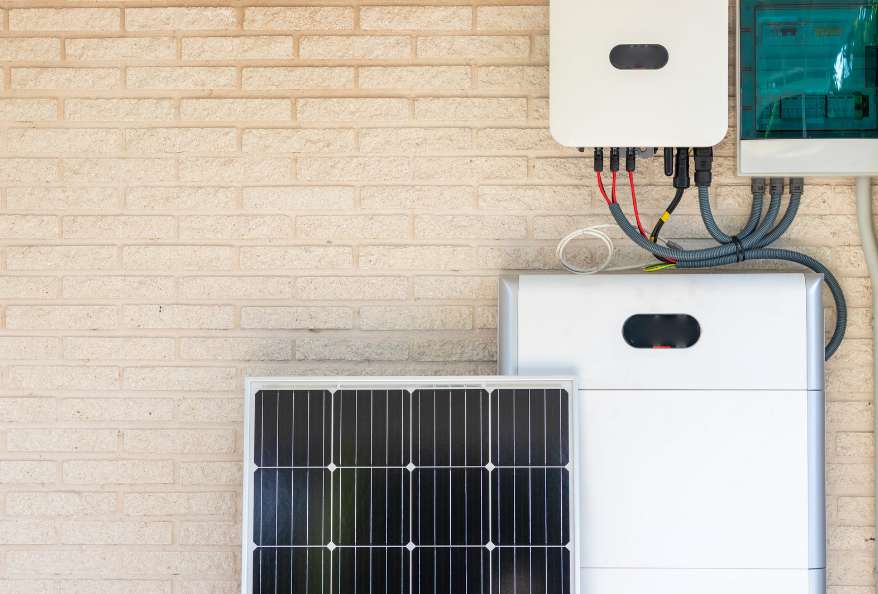
A practical way to evaluate a solar battery storage system against the real constraints of this location, not the capabilities of an ideal test site. PV inverter capacity, export restrictions and battery charge rates should be modeled together rather than purchased in isolation.
Make Service Workable
A useful maintenance strategy names the party responsible for batteries, converters, controls and fire systems. It also defines spare-parts availability, software access and safe work boundaries. On multi-vendor installations, fault ownership can otherwise become a lengthy argument. Owners should request example service workflows and check whether repairs require a whole-site shutdown.
A design that fills the battery by noon may have no room for generation during the afternoon peak.
Watch the Meter Boundary
A battery may look efficient at the inverter terminals while delivering less value at the utility meter. Auxiliary cooling, transformer losses and the choice of metering boundary can explain the difference. Compare performance guarantees using the same electrical point and the same measurement interval. That prevents apparently precise efficiency numbers from obscuring commercial outcomes.
Also Read: Renewable Energy Projects for Students and Sustainable Innovation
Agree an Operating Hierarchy
Solar power, stored energy and any generator need control priorities that operators can understand. The plan should state reserve limits, curtailment rules and how the system responds to sudden load changes. An automated schedule needs a transparent override for essential services. Unexplained mode changes become especially troublesome where local technicians are few.

The case for a solar battery storage system is best established through a measurable site-level outcome. Compare annual self-consumption and avoided imports across several realistic weather and load cases.
Also Read: Sustainable Power Systems Transform Global Energy Future
Document Control Interfaces
Inverters, batteries, meters and generator controllers may come from different suppliers. Each interface requires agreed data points, timing and fallback behavior. Test communication loss as carefully as normal dispatch. Without clear ownership, operators can struggle to diagnose a problem that crosses two otherwise functioning devices.
A relevant product reference for solar battery storage system can help frame the final acceptance tests. Supplier documentation still needs to match the selected configuration.